
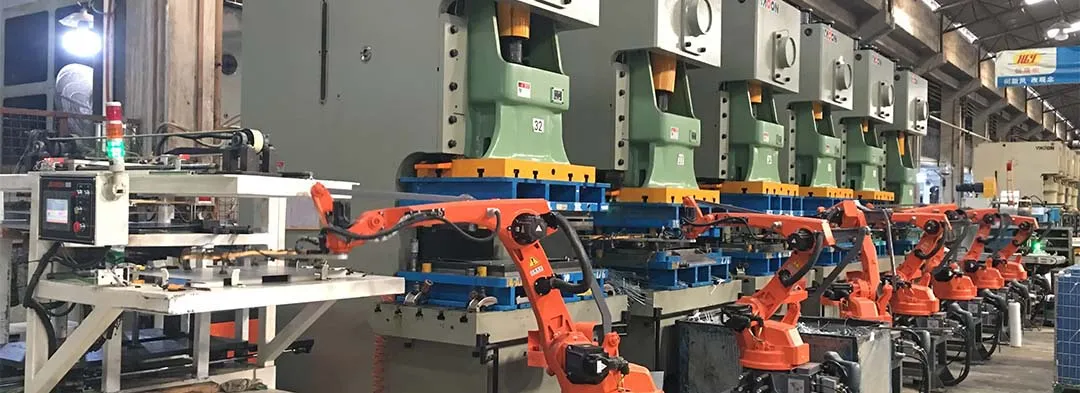
China Metal Stamping Manufacturer
Custom Metal Stamping Services
Engineering-led progressive die, deep draw and precision stamping for custom metal parts from drawing review through repeat production.
Request for QuoteEngineering-Led Manufacturing
Custom Metal Stamping Built Around the Part
Balford provides custom metal stamping services in China for components that must combine repeatable geometry, controlled material flow and a production route suited to the required volume. The project starts with the drawing, material specification, annual demand and critical-to-function dimensions. Our engineering review then considers blank development, forming sequence, tool access, burr direction, springback, inspection and any joining or finishing work required after stamping.
The objective is not simply to make a part fit the drawing once. A production-ready process must also protect the functional datums, manage material variation and create practical inspection points. For this reason, tooling, press selection, feeding, lubrication and quality planning are reviewed as one manufacturing system. Prototype or pre-production samples can be used to confirm form, fit and function before repeat orders are released.
Projects include housings, sleeves, brackets, clips, washers, terminals, sensor components, solenoid parts and other OEM metal components. Balford can also coordinate secondary operations such as tapping, deburring, cleaning, surface treatment and assembly when these operations are defined in the quotation and approved production plan.
Discuss Your DrawingProcess Options
Choose the Right Metal Stamping Process
The three stamping routes below solve different geometry and production requirements. Balford reviews the complete part rather than forcing every design into the same process.
Progressive Die Stamping
Progressive tooling moves strip material through a controlled sequence of stations. Blanking, piercing, bending, drawing, coining or in-die operations can be integrated when the geometry and demand justify the tooling. This route is normally considered for repeat programs that benefit from automated feeding, stable station-to-station control and reduced handling.
Learn MoreDeep Draw Stamping
Deep drawing transforms a flat blank into a cup, shell, sleeve or housing while controlling material flow through the die. It is suitable for seamless parts that would otherwise require multiple fabricated pieces. Draw stages, radii, lubrication and intermediate operations are developed around the material and required depth.
Learn MorePrecision Metal Stamping
Precision stamping is used when edge condition, feature position, flatness or dimensional repeatability has a direct effect on assembly or function. Fine blanking, coining and controlled forming may be evaluated together with dedicated inspection. Capability is confirmed against the specific drawing rather than assumed from a general tolerance.
Learn MoreTechnical Comparison
Progressive, Deep Draw and Precision Stamping Compared
| Process | Best suited to | Primary advantage | Engineering focus |
|---|---|---|---|
| Progressive die stamping | Repeat parts with several formed or pierced features | Multiple operations within one automated strip progression | Strip layout, station balance, carrier design and feed stability |
| Deep draw stamping | Seamless cups, sleeves, shells and housings | Produces depth and enclosed geometry from sheet metal | Blank shape, draw ratio, material flow, radii, thinning and wrinkling |
| Precision stamping and fine blanking | Functional features and high-quality cut edges | Controls geometry and edge condition for assembly-critical parts | Tool clearance, die guidance, flatness, burr direction and measurement |
| Compound or staged tooling | Parts that need a controlled combination of operations | Matches tooling investment to geometry and order pattern | Operation sequence, handling, datum transfer and inspection access |
Manufacturing Control
Metal Stamping Engineering and Quality Planning
A stable stamped part depends on decisions made before steel is cut. Balford reviews the following areas during quotation, tooling and sample approval.
Design for Manufacturability
The team reviews bend relief, hole-to-edge distance, formed feature spacing, corner radii, drawing direction and accessible datums. Potential splitting, wrinkling, distortion, difficult trimming or unnecessary secondary work is identified early so that the drawing and process can be aligned before tooling release.
Tooling and Process Control
Tooling is planned around the required operations, material behavior and expected production pattern. Wear areas, replaceable components, scrap removal, feeding and mistake-proofing are considered. A defined setup and maintenance approach helps preserve repeatability over the life of the program.
Inspection and Documentation
Inspection is based on the drawing and agreed control plan. First-piece, in-process and final checks may cover dimensions, visual condition, material or functional requirements. PPAP, IMDS, RoHS-related records or other customer documents can be discussed when they are part of the stated project requirements.
Secondary Operations
Tapping, deburring, washing, heat treatment, plating, coating, welding or subassembly can be coordinated where required. The order of operations is reviewed because finishing buildup, heat input and handling can change dimensions or appearance after stamping.
Material Planning
Materials and Part Design Considerations
Material grade, temper, thickness and surface condition affect forming behavior and tool design. Final capability is therefore confirmed from the actual material specification and drawing.
Carbon and low-alloy steels
Common for brackets, washers, retainers and structural stamped parts. Strength, coating condition, springback and corrosion protection are reviewed together.
Stainless steels
Used for corrosion resistance and demanding formed parts. Work hardening, galling risk, grain direction and lubrication require careful process planning.
Aluminum alloys
Useful where weight and corrosion resistance matter. Alloy and temper influence bend radius, marking, springback and drawability.
Copper and brass
Selected for conductivity, appearance or formability. Surface protection and handling are important for appearance-critical and electrical parts.
Titanium and special alloys
Possible for selected applications after material and geometry review. Formability, springback, tool wear and process window must be evaluated before commitment.
Application Experience
Applications Supported by Custom Stamped Parts
Automotive and Mobility
Sensor housings, motor components, retainers, washers, brackets and formed parts that must assemble consistently within controlled production systems.
Solenoid and Valve Systems
Deep-drawn housings, sleeves, spring seats and magnetic or fluid-control components where geometry, cleanliness and material selection affect performance.
Industrial and Electrical Equipment
Clips, covers, terminals, shields, mounting parts and fabricated subcomponents produced to customer drawings and application requirements.
Medical and Specialized Equipment
Selected precision parts requiring documented material, controlled features and confidential handling. Requirements are reviewed project by project.
Evidence and Resources
Representative Metal Stamping Case Studies
These examples and technical resources explain how drawing requirements are translated into a practical production plan.
Precision Stainless Steel Nut Washer
A precision stamping example focused on repeatable formed geometry and assembly fit. The case illustrates why datum definition, feature position and inspection planning must be considered together.
Learn MoreStamped Metal Bracket
A bracket application combining blanking, piercing and forming. The manufacturing route must control bend location, hole position and final profile so the part installs without secondary adjustment.
Learn MoreSpring Cup for Valve Application
A formed cup demonstrates how stamping can replace a multi-piece fabrication with a consistent one-piece component when material flow, radii and trimming are engineered correctly.
Learn MoreProject Preparation
From RFQ to Repeat Production
A useful quotation package includes a controlled 2D drawing, a 3D model when available, material grade and condition, expected order quantities, surface finish, functional requirements and any special inspection or documentation needs. Clearly marking critical dimensions helps the team separate function-driving controls from general manufacturing dimensions.
During review, Balford identifies the likely tooling route, secondary operations and information that still needs confirmation. If a tolerance, radius or feature creates avoidable risk, the team can explain the tradeoff and discuss a practical alternative. This engineering exchange is especially valuable before the customer freezes the design or commits to production tooling.
After tooling and sample approval, repeat production follows the agreed process and inspection plan. Changes to the drawing, material or finish are reviewed before implementation because even a small revision can affect strip layout, forming behavior, gauges or downstream assembly.
How to Start Working
A Controlled Project Workflow
Send the RFQ package
Share the drawing, model, material, target volume, finish and required delivery plan.
Engineering review
Confirm the manufacturing route, critical features, tooling concept, secondary operations and open questions.
Tooling and sampling
Develop the approved tool plan, produce samples and document the requested dimensional or functional checks.
Approval and production
Release production after sample approval and establish the agreed in-process and final inspection controls.
Repeat supply
Maintain the controlled process while reviewing engineering changes, tool maintenance and delivery performance.
Frequently Asked Questions
Custom Metal Stamping Services FAQ
Answers are intentionally based on drawing review because material, geometry and production volume change what is practical.
Ask an EngineerWhat information is needed for a metal stamping quotation?
Please send a 2D drawing, a 3D model when available, material grade and condition, annual and batch quantities, finish, critical dimensions and any documentation or functional test requirements. This lets Balford evaluate tooling, process sequence and secondary operations accurately.
How do I choose between progressive die, deep draw and precision stamping?
The decision depends on geometry, material, feature relationships, edge requirements and order volume. Progressive dies suit repeat multi-operation strip parts, deep drawing suits seamless shells and housings, and precision stamping is considered when functional geometry or edge quality needs tighter process control.
Can Balford support low-volume samples before production tooling?
Sampling strategy is reviewed with the project. Depending on geometry and demand, the team may recommend prototype methods, soft or staged tooling, or production-intent tooling. The quotation should clearly separate sample goals from the expected repeat-production route.
Which tolerances can be held on stamped parts?
Tolerance capability is not a single universal number. It depends on material, thickness, feature type, distance from datums, tooling route and inspection method. Balford confirms drawing-specific capability during engineering review and identifies dimensions that may need a special control plan.
Can secondary operations and finishing be included?
Yes, operations such as tapping, deburring, washing, plating, coating, welding or assembly can be coordinated when specified. The team reviews how these processes affect dimensions, surface condition, masking and packaging before they are added to the production plan.
How are customer drawings protected?
Customer drawings and project details are handled as confidential manufacturing information. NDA requirements can be discussed before detailed files are exchanged, and project information is used only for quotation, engineering, quality and production activities associated with the authorized program.
Secure Project Review
Send Balford Your Drawing
Share the latest revision, material, quantity, finish and functional priorities. NDA requirements can be discussed before detailed project files are exchanged.
Request for Quote