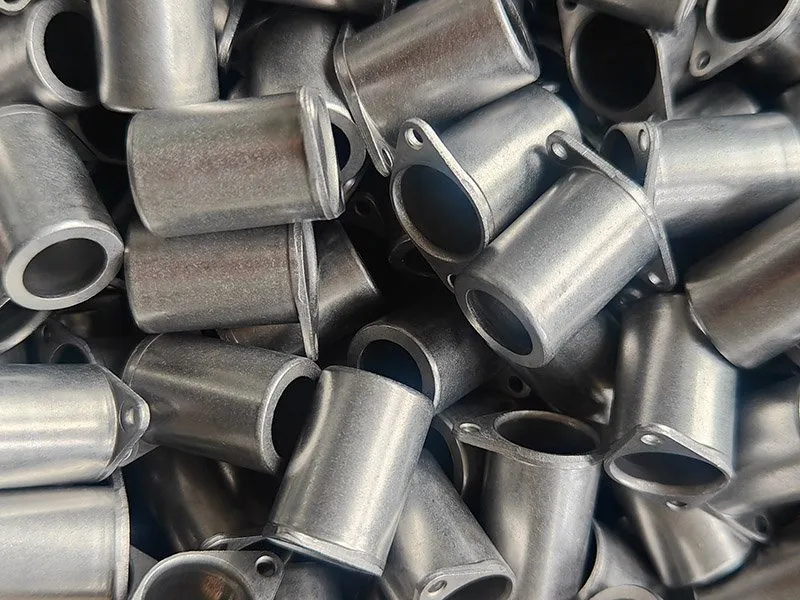
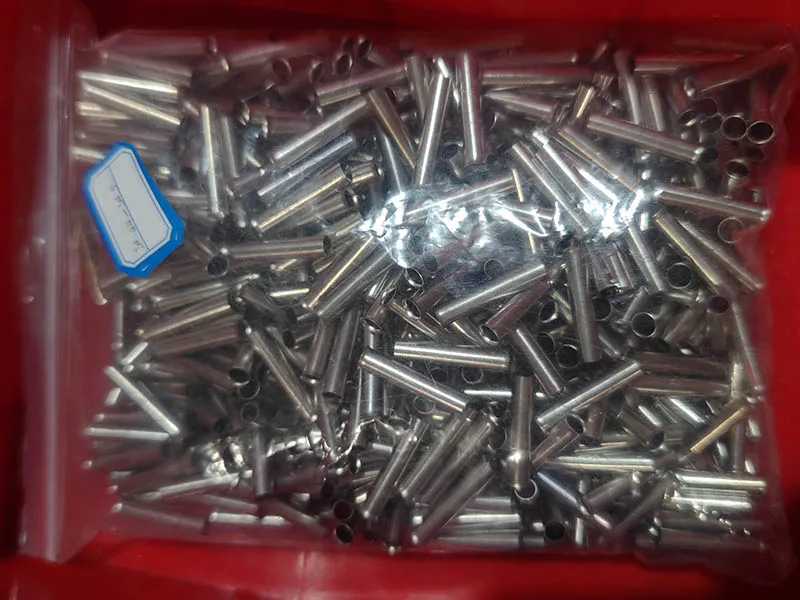
Direct answer: Balford provides custom CNC machining services in China for CNC turning, CNC milling and wire EDM. We review drawings for datums, tool access, workholding, tolerances, material and finishing, then quote a production route from prototype to repeat production. Before you send files, use our CNC machining RFQ checklist to assemble the information that makes quoting faster and more accurate.
Choose Your Machining Route
CNC Turning
Rotational geometry: shafts, bushings, sleeves, pins, fittings, threaded components.
- Best for: OD/ID, grooves, threads and concentric features on round parts.
- Strength: efficient, repeatable cylindrical accuracy on one setup.
- Review: datum sharing, thin-wall stability, thread class, runout.
CNC turning services →
CNC Milling
Prismatic geometry: plates, blocks, housings, brackets and 3D profiles.
- Best for: faces, pockets, slots, holes and contoured surfaces.
- Strength: flexible feature geometry with tight positional control.
- Review: tool access, internal radii, workholding, setup count.
CNC milling services →
Wire EDM
Intricate profiles, narrow features and hardened conductive materials.
- Best for: through profiles, slots and features milling cannot reach.
- Strength: low cutting force, accurate profile, burr-free edges.
- Review: start hole, corner radius, taper, skim passes, inspection access.
wire EDM machining →
CNC Process Selection Guide
| Process | Typical part geometry | Materials & hardness | Best-suited features | Design review questions | Recommended combinations |
|---|
| CNC turning | Rotational OD/ID, grooves, threads | Aluminum, steels, stainless, brass, copper, plastics | Concentric bores and diameters, threads | Can critical diameters share a common datum and setup? | Turning + milling (live tooling) |
| CNC milling | Faces, pockets, slots, holes, contoured surfaces | Aluminum, steels, stainless, plastics | Prismatic features, 3D contours, precise hole patterns | Can the tool reach the feature with a practical radius? | Milling + wire EDM (small radii) |
| Wire EDM | Through profiles, narrow slots, hard conductive parts | Hardened tool steel, stainless, carbide, conductive alloys | Tight profiles, burr-critical edges, thin sections | Is a start hole required, and what corner radius is acceptable? | Wire EDM after heat treatment |
| Combined machining | Parts with rotational and prismatic features | Per feature group | Multi-axis or multi-setup geometry | Which setup protects the most critical datum relationships? | Turning + milling in one program |
| Fabrication + machining | Stamped, drawn or cut blanks with machined interfaces | Steel, stainless, aluminum | Sealing faces, threads, precise bores on formed parts | Can near-net manufacturing reduce stock removal and cycle time? | Deep drawing/stamping + CNC machining |
Many parts use more than one operation. The datum and setup plan stay clear throughout the route — see combined CNC machining for how we sequence operations.
Design for Machinability and Repeatability
A machinable model can still be costly or unstable in production. Early review identifies features that require long tools, tricky workholding or excessive inspection.
Datums and Workholding
The part must be located without blocking critical features or distorting thin sections. Stable reference surfaces and clamping access reproduce the same geometry setup after setup. Read the CNC milling design guide for datum and workholding details.
Tool Access and Internal Radii
Rotating tools need clearance to enter, cut and exit. Deep pockets, hidden undercuts and sharp internal corners can demand special tooling or a secondary process; a practical radius improves stability and cost. See the wire EDM design guide for radii and start-hole planning.
Tolerance and Surface Finish
Tight tolerances and fine finishes belong only where they protect function. Feature-specific requirements reduce setup time, cycle time and inspection cost. We review each callout against the drawing during DFM.
Inspection Strategy
Dimensions, threads, position, runout, profile and surface condition each need a defined method. The control plan identifies critical characteristics, sampling and first-article documentation. Follow the drawing-to-production guide to prepare your package.
Machined Materials and Finishing
Material grade, stock condition, heat treatment and final finish all affect tool life, distortion, dimensional stability and process sequence. Specify them on the RFQ so the route is planned correctly.
Aluminum alloys
Lightweight housings, plates and equipment parts; alloy and temper drive cutting behavior, thread quality and anodizing response. See aluminum machining.
Carbon and alloy steels
Shafts, fasteners, fixtures and structural parts; hardness and heat-treatment sequence determine machining allowances. See carbon steel machining.
Stainless steels
Corrosion resistance and strength; work hardening needs controlled feeds and speeds. See stainless steel machining.
Copper and brass
Conductive, fluid and precision components; burr control and surface protection matter on threads and seals. See copper machining and brass machining.
Special alloys and plastics
Evaluated per application with certification, stability and contamination control confirmed up front. See special alloy machining.
Surface treatment & heat treatment
Anodizing, plating, coating and heat treatment are coordinated with qualified partners. Review the surface treatment and heat treatment flows before quoting.
Custom Machined Part Applications
Automotive and Mobility
Shafts, spacers, fittings, housings and precision interfaces for sensor, motor and fluid assemblies — tight tolerances with high-volume repeatability. See automotive machining and sensor housings.
Industrial Equipment
Machine components, tooling details, brackets, plates and replacement parts machined to controlled drawings. See industrial machining.
Machining Case Studies
Selected projects where machining was combined with other Balford processes. Material, process and key requirement data come from each case record.
Browse the full case study library →
What the Machined Part Starts From
Machining cost is set by the pre-form, not by the machine. Every machined part begins as a stamped blank, a length of round bar or tube, or a bought-in near-net blank, and that choice decides how much material is cut away, how many operations the route needs and where the strength sits in the finished part. We review it at the DFM stage, before the route is quoted. The pre-forms we buy in are covered in detail on machining pre-forms.
Stamped blanks — made in-house
Blanking, piercing and forming run on our own presses from 25 t to 350 t, and the blank is then machined in the same plant. One review covers both steps and there is no hand-over between two suppliers. Where a part is a flat or lightly formed profile with a machined feature, this is normally the cheapest pre-form.
Round bar
The default for rotational parts at low and medium volume: no tooling, no minimum order, and it suits any diameter the bar feeders take. Its cost sits in the chips, so a part machined from bar that removes most of the input material is the first candidate for a near-net blank.
Steel tube
Chosen where the bore is already a hole. Sleeves, spacers, bushes and housings machined from tube keep the inside diameter as bought and finish only the functional surfaces, so the tube’s wall thickness and concentricity become part of the drawing review.
Bought near-net blanks — subcontracted
Hot forging (红冲), cold extrusion (冷挤压), cold heading (冷镦), casting (铸件) and powder metallurgy (粉末冶金) are supplied by qualified subcontractors and then machined here. Balford is not a forge, a foundry or a powder-metallurgy plant, and the page says so. Each partner is bound to confidentiality terms at least as strict as a customer NDA, receives only the information needed for its process step, and is named on request. The supplier list for these pre-forms is being extended; the route quoted for a part names the pre-form it uses.
Compliance and Quality
A Clear CNC Machining RFQ Reduces Rework
Include matching 3D and 2D files at the same revision, material grade, finish, prototype quantity, expected batch size and annual demand. Mark functional datums and critical dimensions so the setup is built around the assembly — not every feature treated as equally tight. If plating, anodizing, heat treatment or assembly follows, include it in the quote from the start; masking, finish buildup and distortion shift machining allowances and the operation sequence.
Before sending files, check the CNC machining RFQ checklist and read how to evaluate a machining supplier for an independent view of what to verify. Then request a quote with your drawing.
CNC Machining Services FAQ
What files are required for a CNC machining quotation?
Send a 3D model and a controlled 2D drawing at the same revision, plus material grade, finish, prototype and production quantities, critical dimensions, thread standards, and any first-article or certification requirements. Matching files at one revision let us review the part once and quote the route that fits it.
What is the difference between CNC turning and CNC milling?
CNC turning rotates the workpiece while a fixed tool cuts it, so it suits round and rotational geometry: shafts, bushings, sleeves, pins, fittings and threaded parts. CNC milling rotates the cutter and moves it across a stationary workpiece, so it suits prismatic geometry: faces, pockets, slots, holes and 3D profiles. Parts with both rotational and prismatic features are often turned first, then milled with live tooling or on a second setup.
When should wire EDM be used instead of milling?
Use wire EDM when the feature is difficult or impossible to mill: through profiles in hardened material, narrow slots, small corner radii, burr-critical edges, or parts where cutting force would distort thin sections. Wire EDM needs a start hole and works only on electrically conductive materials, and it is slower than milling on open geometry. We review the drawing and recommend the process that meets the tolerance at the lowest practical cost.
How should I specify threads, datums and surface finish?
Define the datum scheme first so every critical dimension is measured from the same references. For threads state the standard (for example ISO metric, UNC/UNF, NPT), class and length; for datums identify the surfaces that locate the part in assembly; for finish give Ra or equivalent values with the areas that need them. Tight tolerances and fine finishes should be applied only where they protect fit, sealing, motion or alignment.
Can Balford combine machining with stamping or deep drawing?
Yes. Stamped, deep-drawn or sheet-metal-fabricated blanks can be machined where the forming process cannot hold the required interface: sealing faces, threads, precise bores and datum surfaces. We review the full route together so tolerances are assigned to the process that can hold them, and near-net blanks reduce stock removal and cycle time.
What material documentation and certifications can be provided?
Material certifications (mill certificates), RoHS and REACH compliance declarations, IMDS data for automotive programs, first-article inspection reports and PPAP-aligned documentation are available on request. Certificate of conformity accompanies shipments where required.
How does Balford handle NDA and drawing confidentiality?
We sign NDAs before detailed file exchange, store customer files on controlled internal systems and restrict access to the project team. Your revision control and confidentiality requirements can be written into the agreement before any drawings or models are shared.
Can sharp internal corners be CNC milled?
A standard rotating cutter leaves a radius. Sharp internal corners typically require a relief, wire EDM, broaching or another secondary process. If the corner is not functionally sharp, allowing a practical radius cuts cost and improves tool stability.
Can finishing and assembly be included?
Yes. We coordinate deburring, cleaning, heat treatment, plating, anodizing, coating, marking and selected assembly. Before approving the route we review how these affect dimensions, masking, surface condition and packaging.
Which materials can be CNC machined?
We machine aluminum alloys, carbon and alloy steels, stainless steels, copper and brass, engineering plastics and selected special alloys. Grade, hardness, stock form, certification and finish requirements are confirmed per project.
How are machining tolerances best specified?
Apply tight tolerances only to features that control fit, sealing, motion or alignment, and use a sensible general tolerance elsewhere. Define datums, measurement conditions and surface finish clearly. We confirm drawing-specific capability during the DFM review.
Can Balford handle both prototypes and repeat production?
Yes. Prototype work leans on flexible setups and faster delivery; repeat production justifies dedicated fixtures, optimized tooling and a documented in-process control plan. Give us prototype quantity, expected batch size and annual demand so we quote the right route.
Secure Project Review
Send Balford Your Drawing
Share the latest revision, material, quantity, finish and functional priorities. NDA before detailed file exchange. Drawing-based DFM review. Prototype-to-production route.