How Do You Choose a Soft Magnetic Metal for a Solenoid Valve?
Direct answer: Start with the magnetic requirement of the finished valve, then work backwards: geometry, forming route, internal stress, heat treatment, surface and corrosion requirements. Compare candidate material families only against that requirement list — and validate on finished components, not raw-material datasheets.
Start With the Magnetic Requirement
Define what the valve needs before naming any material:
- Working field region (which permeability matters)
- Coercivity or residual-magnetism limit
- Saturation requirement for peak flux
- Operating frequency (dynamic loss)
- Magnetic response time and repeatability
Define Mechanical and Manufacturing Requirements
Geometry, wall thickness, deep-drawn depth, tolerances and volume all constrain the material choice. A material family that cannot be formed to the geometry is disqualified regardless of its magnetic properties.
Evaluate Forming-Induced Stress
Cold extrusion, deep drawing and stamping introduce internal stress that shifts coercivity and permeability. The deformation level of the chosen route is part of the material decision — see the route comparison in cold extrusion vs. deep drawing for solenoid valve housings.
Decide Whether Heat Treatment Is Required
If magnetic requirements are tight and the forming route adds significant stress, plan a stress-relief or magnetic annealing step and validate its result. Heat treatment is application dependent — the treatment question is decided by the same requirement list as the material question. The mechanics are covered in magnetic annealing after forming.
Consider Surface and Corrosion Requirements
Plating and surface treatment protect the housing and control its appearance. They interact with the magnetic decision through added dimensions and, in some cases, added stress. Evaluate material and surface as one system.
Compare Candidate Material Families
| Material family | Permeability | Coercivity | Saturation | Formability | Typical direction |
|---|---|---|---|---|---|
| Electrical pure iron | Medium–high | Low (annealed) | High | Good | Magnetic housings, formed parts |
| Silicon steel | Medium | Low–medium | High | Limited at high Si | AC-oriented parts, laminations |
| Permalloy (Fe-Ni) | Very high | Very low | Medium | Good (thin) | High-permeability, shielding |
| Fe-Al / Fe-Si-Al | High | Low | Medium | Application dependent | Wear-resistant magnetic parts |
| Fe-Co alloys | High | Low–medium | Highest | Limited | High-saturation duty |
| Soft ferrites | Application dependent | Application dependent | Low | Not formed | High-frequency elements |
| Amorphous / nanocrystalline | Very high | Very low | Medium–high | Specialized | Tape cores, specialized elements |
Soft magnetic composites (SMCs) — iron powder cores with insulating layers — are another category used in some solenoid and actuator designs. SMC parts are typically pressed and annealed rather than deep drawn or extruded, so for a formed metal housing the pressed SMC route is a different manufacturing conversation; for certain pole and core elements it may be worth evaluating. Selection should follow the requirement list, not fashion.
Figure 1 — SMC material example
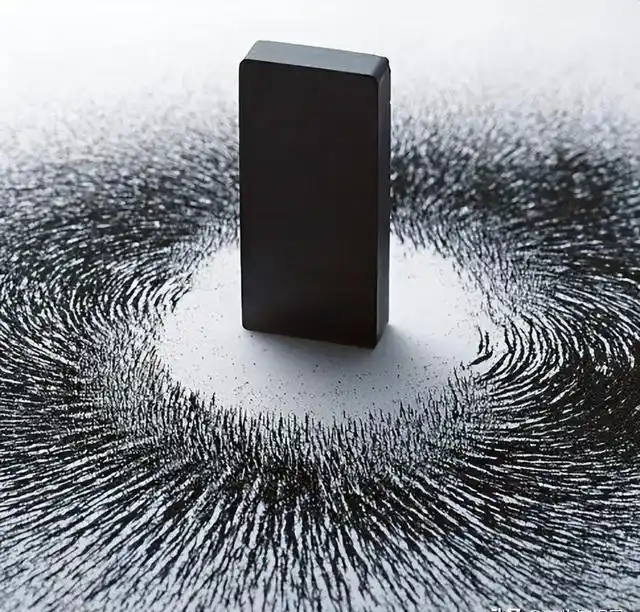
Pressed soft magnetic composite elements; forming routes differ from drawn or extruded metal housings.
Validate the Final Component
Test finished parts through the complete process sequence. Raw-material datasheets describe the starting condition; the formed, machined, treated and plated housing defines the magnetic result. Real examples of this validation logic are documented in Balford's solenoid valve manufacturing case studies, and representative parts can be evaluated physically through the metal parts stock and samples library.
10-Point Engineer's Checklist
- Magnetic function of the part
- Initial permeability requirement
- Maximum permeability requirement
- Coercivity limit
- Saturation requirement
- Operating frequency
- Formability to geometry
- Internal stress / forming route
- Heat treatment decision
- Surface / corrosion / final-part validation
When to Ask a Manufacturer for a Manufacturing Review
When the requirement list is defined but the material-and-route combination is uncertain — or when magnetic performance must hold through high-volume production — a manufacturing review adds more value than another datasheet comparison. Balford performs exactly this review for solenoid valve housing programs: material, forming route, machining, heat treatment and surface evaluated as one system, then validated on parts. The full property background — permeability, coercivity, saturation and processing effects — is covered in the soft magnetic material selection guide.
Engineering Takeaway
A material family is a starting point, not a decision. The decision belongs to the finished component: requirement list, forming route, treatment plan and measured validation.