
Currently, the vast majority of stamping die materials are primarily steel. Common working component materials for dies include: carbon tool steel, low-alloy tool steel, high-carbon high-chromium or chromium tool steel, medium-carbon alloy steel, high-speed steel, matrix steel, cemented carbide, and steel-bonded cemented carbide, among others.
At present, customers generally select common cold-work tool steels, including Cr12, Cr12MoV series materials, Cr8 series, high-speed steel series, etc. These materials have relatively high alloy content, relatively high service hardness, and relatively poor toughness. If internal stresses are not sufficiently relieved after heat treatment, they can easily cause die plate deformation and cracking at stress concentration points. To address issues such as deformation and cracking in stamping dies, die steel with stable quality should be selected.
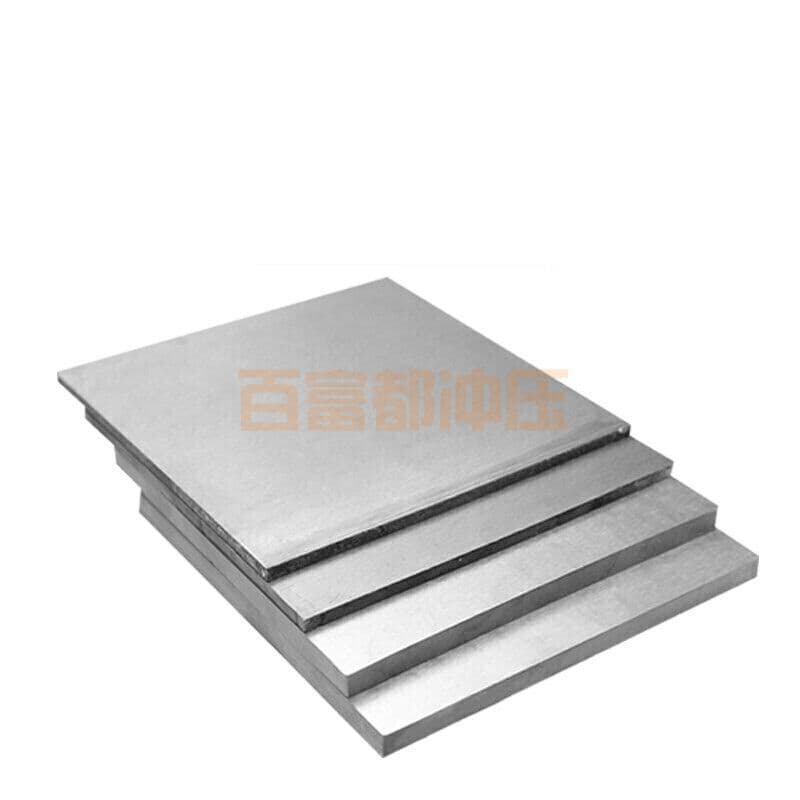
The TOOLOX series materials are a new type of pre-hardened tool steel featuring high toughness, high wear resistance, and essentially no internal stress. They also possess high purity, fine grain size, very low S and P content, and low, uniformly distributed precipitated carbides. Due to their special composition design, TOOLOX series materials exhibit excellent surface treatment performance. After nitriding, TOOLOX44 achieves a surface hardness of HRC 65 or above, TOOLOX40 reaches a surface hardness of HRC 62 or above, and TOOLOX33 can achieve a surface hardness of HRC 58 or above, with a maximum case depth of 1.8 mm.
The aforementioned characteristics of TOOLOX series materials give them distinct advantages in certain stamping die applications:
1. Stamping and forming dies for thicker steel plates (a typical case is shearing/punching 35 mm thick steel plates), stainless steel plates, and non-ferrous metal plates, with the typical example being air conditioner fin dies.
2. Drawing dies, including stainless steel drawing dies.
3. Cold extrusion dies, such as cold extruding 304 stainless steel with a thickness of 0.5 mm or more, effectively replacing materials like DC53 with excellent results.
4. Large stamping die plates requiring high dimensional stability.
Currently, the vast majority of stamping die materials are primarily steel. Common working component materials for dies include: carbon tool steel, low-alloy tool steel, high-carbon high-chromium or chromium tool steel, medium-carbon alloy steel, high-speed steel, matrix steel, cemented carbide, and steel-bonded cemented carbide, among others.
At present, customers generally select common cold-work tool steels, including Cr12, Cr12MoV series materials, Cr8 series, high-speed steel series, etc. These materials have relatively high alloy content, relatively high service hardness, and relatively poor toughness. If internal stresses are not sufficiently relieved after heat treatment, they can easily cause die plate deformation and cracking at stress concentration points. To address issues such as deformation and cracking in stamping dies, die steel with stable quality should be selected.
The TOOLOX series is a new type of pre-hardened tool steel with high toughness, high wear resistance, and essentially no internal stress. It also has high purity, fine grain size, low S and P content, and low, uniform precipitated carbide content. Due to its special composition design, the TOOLOX series offers excellent surface treatment performance. After nitriding, TOOLOX44 achieves a surface hardness of HRC65 or above, TOOLOX40 reaches HRC62 or above, and TOOLOX33 can reach HRC58 or above, with a maximum depth of 1.8mm.
The above characteristics of the TOOLOX series give it special advantages in certain stamping die applications:
1. Stamping and forming dies for thick steel plates (typical case: shearing 35mm thick steel plates), stainless steel plates, and non-ferrous metal plates, typically air conditioner fin dies.
2. Drawing dies, including stainless steel drawing dies.
3. Cold extrusion dies for cold extruding 304 stainless steel with a thickness of 0.5mm or more, replacing materials such as DC53 with excellent results.
4. Large stamping die plates requiring high dimensional stability.