Sheet Metal Processing China
Sheet Metal Cutting and Blanking for Production-Ready Parts
Precision cutting of sheet metal blanks and profiles — shearing, blanking, punching and laser cutting for parts ready to form, weld or assemble.
Direct answer: Sheet metal cutting services at Balford produce accurate blanks and profiles for downstream forming, joining and assembly. We review material, thickness, tolerances, edge quality and volume before quoting, and supply blanks ready for bending, deep drawing or welding.
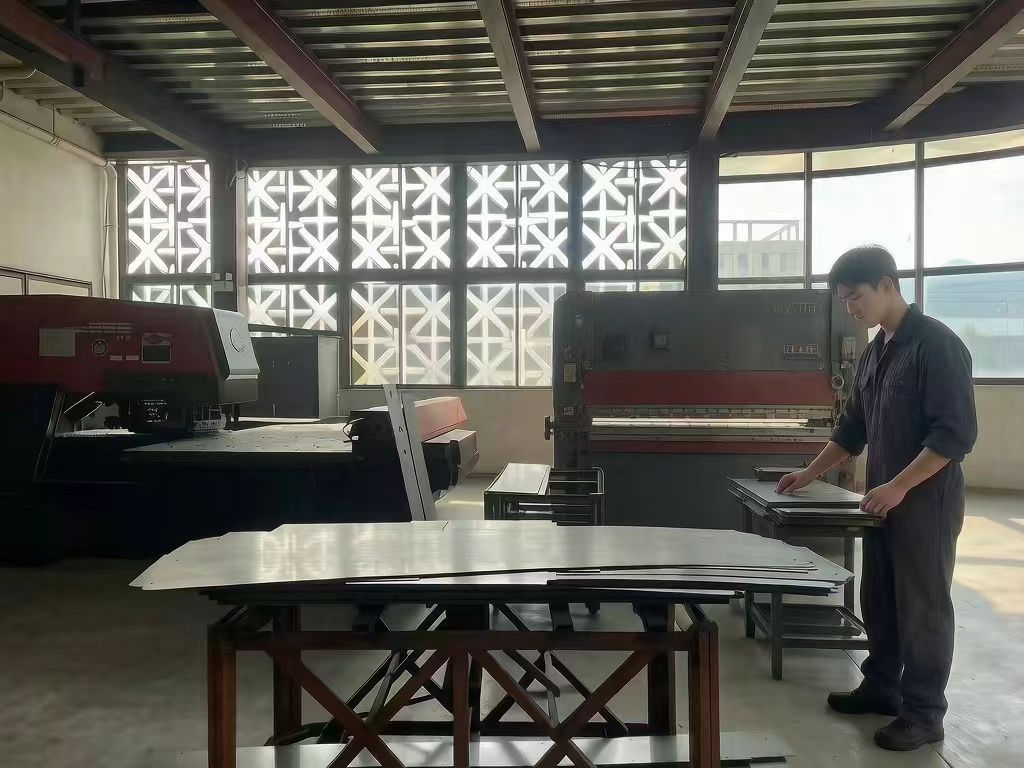
Core Capability: Sheet Cutting
Shearing & blanking
Straight cuts and high-volume blanks with controlled dimensions and consistent edges.
Profile cutting
Holes, cutouts and complex outlines by punching or laser where the part requires them.
Nesting & utilisation
Nesting planned to maximise sheet yield and respect grain direction for forming.
Ready-to-process blanks
Deburred, protected blanks ready for forming, welding or assembly.
Design Review for Cut Parts
Material and thickness
Grade, thickness and coating drive the cutting method and edge quality. Confirm them on the drawing before quoting.
Edge quality
Specify which edges matter: sheared, laser or stamped edges behave differently and tolerances should reflect function.
Grain direction
On parts that will be bent or drawn afterwards, note grain direction so nesting and cutting support the forming step.
Burr control
Where burrs affect seating, welding or handling, define the acceptable level; fine blanking or deburring can be planned.
Materials We Cut
Stainless steel
Corrosion-resistant blanks for food, medical and outdoor parts. See stainless steel cutting.
Carbon steel
Structural and enclosure blanks with predictable edge quality. See carbon steel cutting.
Aluminum
Lightweight blanks for enclosures and equipment. See aluminum cutting.
Copper and brass
Conductive and decorative blanks with controlled edge finish. See copper and brass cutting.
Applications
Sheet metal fabrication
Blanks feeding the full sheet metal workflow at Balford. See sheet metal fabrication China.
Automotive and equipment
Enclosure, bracket and structural blanks for vehicle and industrial programs. See automotive machining.
Precision stamping feed
Coil and blank preparation for progressive and precision stamping lines.
Related Case Studies
Projects where blanking and cutting were the first step of the route.


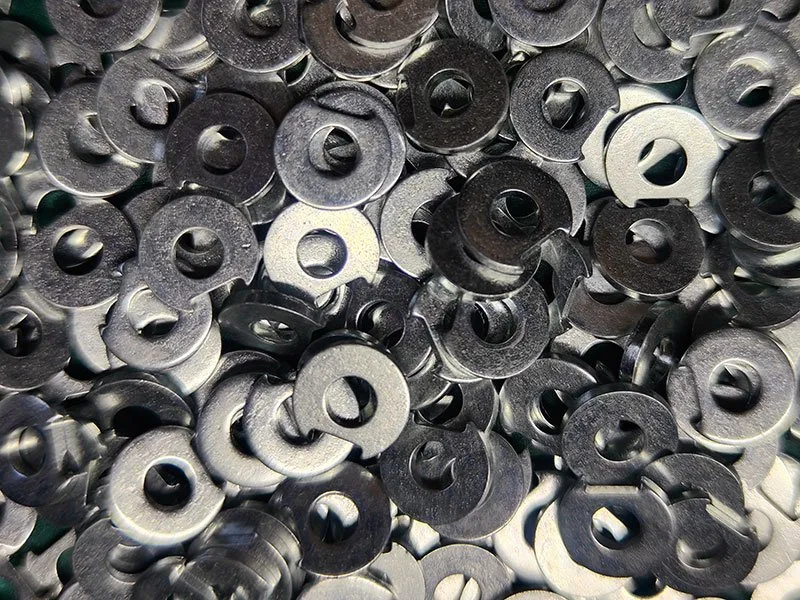
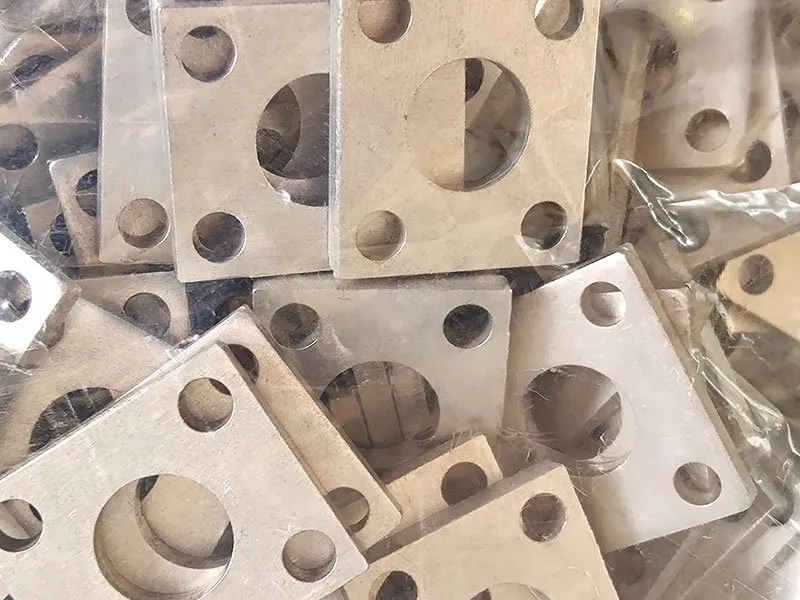
Browse the full case study library →
RFQ Notes
See the CNC machining RFQ checklist for the file list we need, then request a quote. For cutting limits and edge terminology, read sheet metal cutting methods.
Compliance and Quality
- Automotive material compliance — IMDS, REACH, RoHS and GADSL for automotive programs.
- Balford IMDS process — material data from quotation to delivery.
- IMDS compliance checklist — 15 steps for automotive suppliers.
- Quality and certifications — ISO 9001:2015 and IATF 16949-aligned controls.
Frequently Asked Questions
What sheet metal cutting methods does Balford use?
We plan cutting around the part: shearing and stamping blanking for straight, high-volume blanks; CNC punching and laser cutting for profiles, holes and complex outlines. The method is chosen by material, thickness, tolerances, edge quality and quantity during the DFM review.
What thickness range do you cut?
Range depends on material and method — typical sheet steel and stainless up to several millimetres for laser and shearing, with heavier sections reviewed case by case. We confirm the practical limit for your material and edge requirements against the drawing.
Do you provide blanks ready for forming or welding?
Yes. Cut blanks are supplied with controlled dimensions and edge quality, ready for downstream bending, deep drawing, stamping or welding. Deburring and surface protection can be included.
What edge quality can I expect?
Edge quality follows the method and material: sheared edges show rollover and burnish, laser edges are cleaner with a small heat-affected zone, stamped blanks give consistent edges with controlled burr. Requirements are agreed on the drawing so the right method is quoted.
Can you nest parts to reduce material cost?
Yes. Nesting is planned to maximise sheet utilisation, especially for production volumes, and we review part geometry and grain direction so nesting does not compromise forming quality downstream.
What files do you need to quote cutting?
Flat pattern DXF/DWG or STEP with material, thickness, quantity, finish and any edge or tolerance requirements. For formed parts send the 3D model and the bend/blank development requirement.
Secure Project Review
Send Balford Your Drawing
NDA before detailed file exchange. Drawing-based DFM review. Prototype-to-production route. Check the RFQ checklist before sending files.
Related manufacturing capability: laser cutting, sheet metal fabrication or sheet metal bending — all reviewed from the same drawing before quoting.
Sheet metal cutting service scope
Balford turns sheet into blanks and shaped parts that are ready for the next operation: shearing for straight cuts, CNC punching for repeated profiles and hole patterns, laser cutting for contours and one-off shapes, and blanking where the volume justifies a die. Cutting method is chosen from the part, not from habit - the same drawing can be sheared, punched or lasered, and each carries a different cost and edge quality.
- Sheared blanks and rectangular parts with straight edges
- Punched profiles, hole patterns and formed features
- Laser-cut contours, complex outlines and one-off parts
- Blanks sized for stamping feed, bending and welding
Which cutting process does your part need?
| Method | Best for | Tooling | What it gives you |
|---|---|---|---|
| Laser cutting | Complex contours, protos and one-off parts, tube and sheet | None | Clean edges without a die; parts nest to save material |
| Shearing | Straight cuts and rectangular blanks | None | Fastest and cheapest route when every edge is straight |
| CNC punching | Repeated profiles, hole patterns, louvers | Punch tooling | Economical once the same profile repeats |
| Blanking / die cutting | High-volume flat parts with tight tolerances | Dedicated die | Highest repeatability; tooling amortised over the volume |
Where more than one route works, the deciding factors are quantity, edge quality and whether a die is needed anyway for a later forming operation. State the annual quantity and the critical edges at enquiry stage and Balford will quote the route that fits rather than the route that is free.
Downstream operations after cutting
A cut part is rarely a finished part. Cut blanks move straight into the next operation in the same plant: sheet metal bending, tube bending, forming, welding and assembly, or metal stamping and deep drawing where the volume justifies a die. Cutting to the wrong blank size is one of the most common reasons a later operation fails, so the blank is planned together with the downstream route - not after it.
Start from the parent capability page: sheet metal fabrication and processing.