Sheet Metal Processing China
Precision Sheet Metal Bending for Repeatable Angles and Profiles
Controlled sheet metal bending — air bending, bottoming and folding for repeatable angles, flanges and profiles with managed springback.
Direct answer: Sheet metal bending services at Balford produce repeatable angles, flanges and profiles with controlled springback so parts keep their fit and final geometry. We review material, thickness, bend radius, springback and tooling before quoting, and confirm flat pattern development on your drawing.
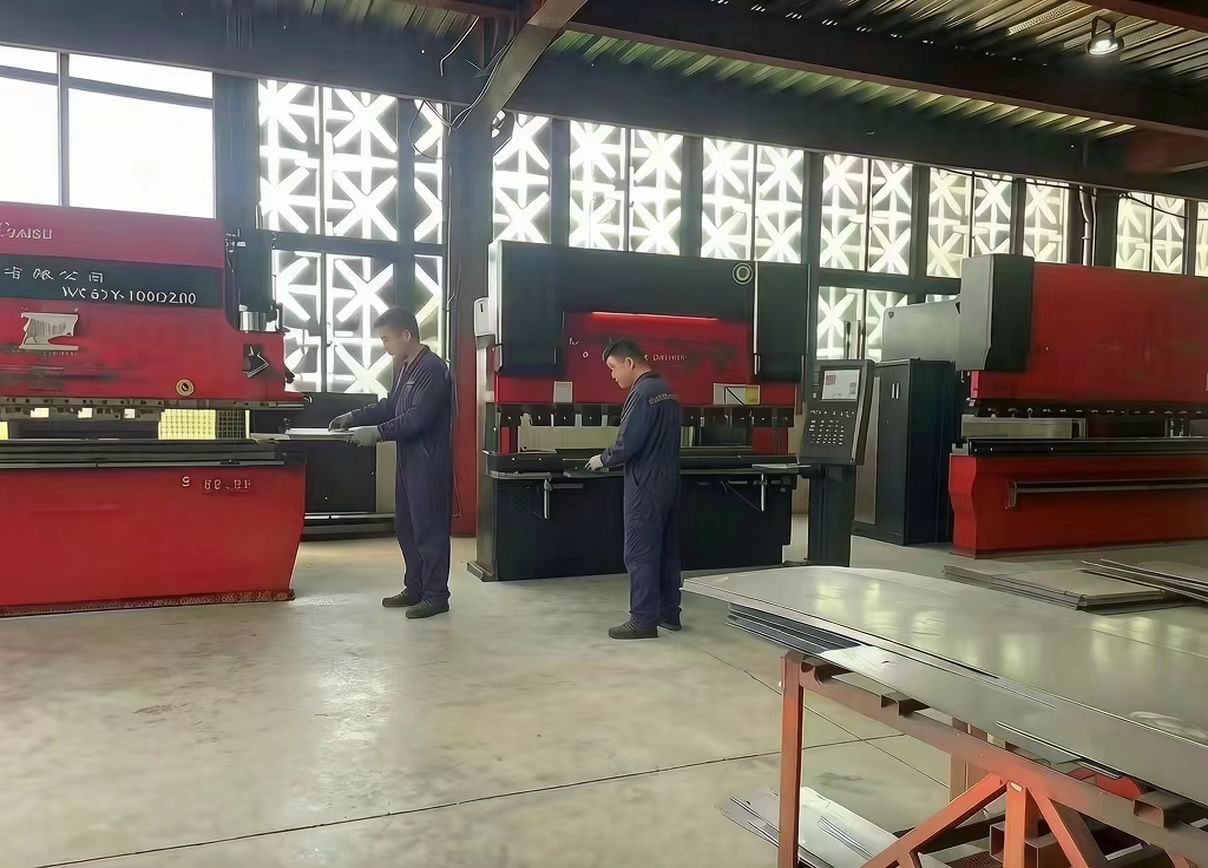
Core Capability: Metal Bending
Controlled angles
Air bending and bottoming with consistent angles across the run.
Flanges & profiles
Formed edges and profiles that keep fit in assembly.
Springback management
Tooling and program compensation confirmed on first pieces.
Sequenced forming
Bending planned with cutting and finishing so tolerances survive.
Bending Design Review
Bend radius vs thickness
Radius, material temper and thickness set the practical limit; tight radii are reviewed before quoting.
Bend allowance / K-factor
Flat pattern development is confirmed against material; use the bend allowance calculator for a first estimate.
Springback
High-strength and thicker materials spring back more; we compensate in tooling and verify on first pieces.
Feature placement
Holes and features close to the bend line distort; review placement against the bend sequence.
Materials We Bend
Stainless steel
Corrosion-resistant enclosures and brackets with consistent bend quality. See stainless steel bending.
Carbon steel
Structural parts and frames. See carbon steel bending.
Aluminum
Lightweight enclosures and panels. See aluminum bending.
Applications
Sheet metal fabrication
Angles, flanges and enclosures inside the sheet metal workflow. See sheet metal fabrication China.
Enclosures and brackets
Equipment housings, brackets and mounting plates. See industrial machining.
HVAC and appliance parts
Formed panels and components for HVAC systems. See HVAC components.
Related Case Studies
Projects where stamping and forming controlled bends and geometry.


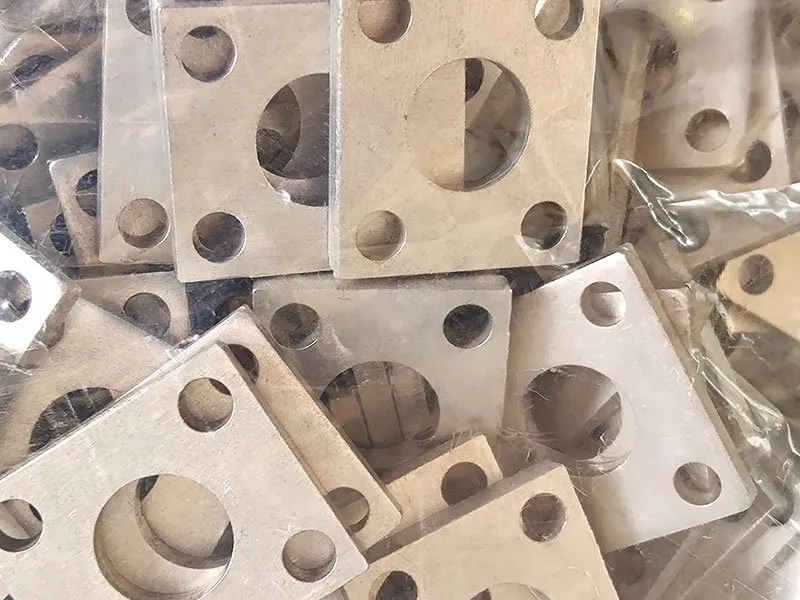
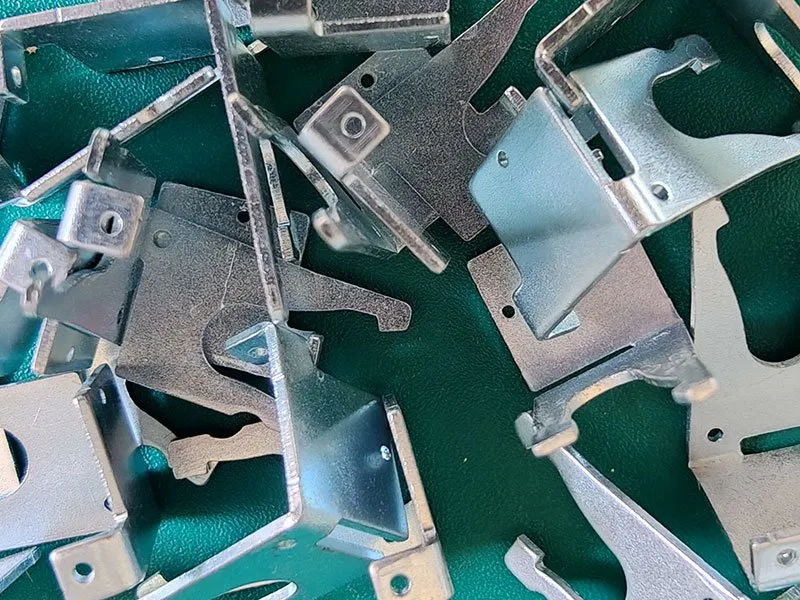
Browse the full case study library →
RFQ Notes
Send the material, thickness, bend lines and angle tolerances with your drawing. For bend allowance theory read the bend allowance and springback guide, then request a quote.
Compliance and Quality
- Automotive material compliance — IMDS, REACH, RoHS and GADSL for automotive programs.
- Balford IMDS process — material data from quotation to delivery.
- IMDS compliance checklist — 15 steps for automotive suppliers.
- Quality and certifications — ISO 9001:2015 and IATF 16949-aligned controls.
Frequently Asked Questions
What bending methods do you use?
Air bending and bottoming on press brakes for sheet metal angles and flanges, with folding used for long, consistent bends. Method selection follows material, thickness, bend radius and angle tolerance from the drawing.
How do you control springback?
Springback is compensated in tooling and programming based on material grade, thickness and bend radius, then confirmed with first-piece inspection. For high-strength or thicker material we review the bend radius against material limits up front.
What minimum bend radius can you hold?
The practical minimum depends on material and thickness — generally several times the thickness for common grades, with harder tempers requiring larger radii. We confirm the achievable radius for your material during DFM review rather than quoting a blanket value.
Do you calculate bend allowance?
Yes. Flat pattern development uses bend allowance/deduction and K-factor reviewed against the material. Use our bend allowance calculator for a first estimate, and we confirm the development on your drawing.
Can you bend parts before or after other processes?
Yes. Bending is sequenced with cutting, stamping, forming and surface treatment so that tolerances and finish are preserved. Parts that need plating or coating are reviewed for bend-first or finish-first decisions.
What tolerances apply to bend angles?
Angle tolerance is agreed against the drawing and measured on first pieces; air bending typically holds standard commercial tolerances while bottoming or folding improves repeatability. Critical angle requirements should be marked on the print.
Secure Project Review
Send Balford Your Drawing
NDA before detailed file exchange. Drawing-based DFM review. Prototype-to-production route. Check the RFQ checklist before sending files.
Related manufacturing capability: sheet metal fabrication, tube bending or sheet metal cutting — all reviewed from the same drawing before quoting.
Which bending method does your part need?
| Method | Best for | Tooling | What it gives you |
|---|---|---|---|
| CNC press-brake bending | Boxes, brackets, panels, enclosures and multi-bend sheet parts | Standard or dedicated press-brake tooling | Controlled angles, fast set-up, repeatable across a batch |
| Rotary draw tube bending | Structural and fluid tubing with a tight, consistent radius | Bend dies and mandrel matched to the tube | Controlled radius and ovality; the standard route for tube |
| Mandrel bending | Thin-wall or tight-radius tube where collapse must be avoided | Mandrel set matched to bore | Keeps the bore open, limits flattening at the bend |
| Roll bending | Large-radius curves, arcs and rings | Rolls, no dedicated die | Long sweeping bends that a press brake cannot form |
| Compression bending | Simple, less demanding bends on thicker tube | Simple tooling | Economical where radius tolerance is not critical |
Where more than one method works, the deciding factors are the drawing radius, the wall thickness, the tube wall's tendency to flatten, and the quantity. Send the drawing with the bend radius and wall thickness marked and Balford will say which route holds it.
Downstream operations after bending
A bent part usually still needs its ends and holes. Bent blanks move into the next operation in the same plant: cutting and blanking, sheet metal fabrication, welding and assembly, CNC machining for interfaces, and finishing. The bend allowance and the blank size are planned with those operations, because the flat pattern, the holes and the bend relief all move together.
Parent capability page: sheet metal fabrication and processing.
Bend quality control
Bending is checked against the drawing, not against feel. Every setup is verified before the batch runs, and these checks continue through production.
- Angle: measured against the drawing angle, with springback compensated in the tool setup rather than adjusted out of the part afterwards
- Flange length: checked from the bend line, because a flange that is short at the first bend is short at every bend after it
- Inside radius and cracking: the formed radius is checked against the specified radius, and the outside of the bend is inspected for cracking or orange peel on tight-radius work
- Bend relief and hole distortion: holes near a bend are measured after forming, not before
- Flatness and twist: long parts are checked for twist as well as angle, since a twisted part still measures correctly on a single bend
- First article: the first part off every setup is measured and recorded before the batch continues
Inspection uses digital height gauges, micrometers, radius gauges and vision measurement, alongside the optical measuring projector and hardness and salt-spray equipment used for qualification work. PPAP Level 3 documentation is available for new programmes.
Sheet metal bending FAQ
What sheet metal bending methods do you use?
CNC press-brake bending is the standard route for sheet parts: brackets, panels, enclosures and boxes. Simple parts run on standard press-brake tooling, and dedicated tools are made where a profile repeats and the quantity justifies them. Tube and pipe follow their own route - rotary draw, mandrel, roll or compression bending - on the tube bending page.
What is the minimum inside bend radius?
It depends on material and thickness: the harder and thicker the sheet, the larger the radius has to be before the outside of the bend cracks. As a rule of thumb soft mild steel forms to roughly one material thickness, while stainless and high-strength grades need more. State the material and thickness at enquiry stage and the minimum radius for that combination comes back with the quotation.
How do you handle springback?
Springback is compensated in the tool setup and in the machine's angle control, rather than over-bending and hoping. That is also why a new material lot can need a setup adjustment even when the drawing has not changed.
Do you need the flat pattern, or do you work it out?
If the flat pattern is defined we work to it. If it is not, the blank is calculated from material, thickness and radius, and the assumption is stated on the quotation - so the flat pattern, the hole positions and the bend reliefs all agree. There is a bend allowance and springback guide if you want to check the numbers yourself.
Which materials can you bend?
Stainless steel, carbon steel, aluminium, copper and brass sheet, plus galvanised and coated stock. Grade and material certificate are confirmed on the quotation.
What tolerances can you hold on a bent part?
Angles and flange dimensions hold well because they are set by the tooling. The stack grows where several bends accumulate, so state which dimensions are functional and the rest of the stack can be left open - usually cheaper than tightening everything.
Can bending be combined with cutting and welding?
Yes, and it usually should be: cutting, bending, welding and assembly and sheet metal fabrication run in the same plant, so the blank, the bend sequence and the weld fixturing are planned together instead of negotiated between suppliers.