
There are many types of dies, which can be classified according to the processing target and processing technology: 1. Dies for processing metal. 2. Dies for processing non-metals and powder metallurgy. Today, the editor of Zhejiang Baifudu Electromechanical will mainly introduce the design methods and operation steps of stamping dies in Jiangsu. Here, the editor will provide a detailed introduction for everyone.
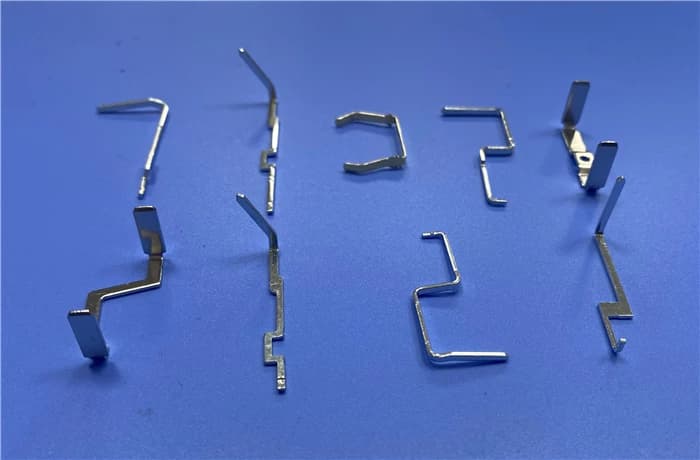
I. Analysis of the stamping processability of stamping parts
Stamping parts must have excellent stamping processability to produce qualified stamping parts in the simplest and most economical way. The processability analysis can be completed according to the following methods:
1. Be able to read the part drawing: In addition to the shape and dimensions of the part, the key is to understand the part accuracy and surface roughness requirements.
2. Analyze whether the structure and shape of the part are suitable for stamping.
3. Analyze whether the datum selection and dimension marking of the part are reasonable, and whether the accuracy of dimensions, positions, and shapes is suitable for stamping.
4. Whether the surface roughness requirements of the sheared surface of the blanked part are too high.
5. Whether there is a sufficiently large production batch.
If the processability of the part is too poor, communication should be made with the designer, and a plan for modifying the design should be proposed. If the production batch is too small, consideration should be given to using other production methods for processing.
II. Stamping process plan design and optimal process design.
1. Based on the shape and dimensions of the stamped part, begin determining the nature of the stamping operations, such as blanking, bending, deep drawing, bulging, hole expanding, and other stamping die planning methods and processes.
2. Calculate the degree of deformation for each stamping forming method. If the degree of deformation exceeds the limit of deformation, the number of stamping operations for that process should be calculated.
3. Based on the deformation characteristics and quality requirements of each operation, organize a reasonable stamping sequence. It should be ensured that the deformation zone of each operation is the weak zone, and the formed part (including holes or external shapes already pierced) must not participate in deformation in subsequent operations. For multi-angle bending parts, bend the outer angles first and then the inner angles, and arrange necessary auxiliary operations as well as operations such as sizing, flattening, and heat treatment.
4. On the premise of ensuring part precision, determine a reasonable process combination method based on production batch and blank positioning and stripping requirements.
5. Two or more process plans should be designed and compared in terms of quality, cost, productivity, die sharpening and repair, die life, and operational safety, and the optimal process plan should be selected.
6. Begin determining the stamping equipment for each operation.
III. Blank Planning and Strip Layout Design for Stamped Parts
1. Based on the performance specifications of the stamped part, calculate the blank dimensions and create the blank drawing.
2. Based on the blank property specifications, plan the strip layout and calculate the material utilization rate. Multiple strip layout plans should be designed, and the best one should be selected through comparison.
IV. Stamping Die Design
1. Determine the die structure method for each stamping process step and create a schematic diagram of the die.
2. Carry out specific structural planning for 1-2 designated process steps of the die, and create the die working drawing. The planning method is as follows:
(1) Determine the type of die: whether it is a simple die, a progressive die, or a compound die.
(2) Design of die working components: Calculate the cutting edge dimensions of the punch and die, as well as the lengths of the punch and die; determine the structural configuration of the punch and die and their attachment and fixing methods.
(3) Determine the positioning and pitch-setting methods for the blank, and design the corresponding positioning and pitch-setting components.
(4) Determine the methods for blank holding, stripping, ejecting, and pushing out, and design the corresponding blank holder, stripper plate, ejector block, and other components.
(5) Die set design: This includes the design of the upper and lower die shoes and the guiding method; standard die sets may also be adopted.
(6) Upon completing the above tasks, create the die working drawing to scale. First, draw the blank using two-dot chain lines, then draw the components, followed by the positioning and pitch-setting components; connect all the above parts using connecting components, and finally draw the blank holding and stripping components in appropriate positions. Depending on the specific conditions of the die, the above sequence may be adjusted as necessary.
(7) The working drawing should indicate the overall dimensions of the die, the die shut height, the fit dimensions, and the fit types. The methods and procedures for stamping die design should be noted. The working drawing should specify the manufacturing accuracy and technical requirements of the die. The drawing must be prepared in accordance with national drafting standards and include a standard title block and bill of materials. If it is a blanking die, a layout (strip layout) drawing should be placed in the upper left corner of the working drawing.
(8) Calculate the pressure center of the die and check whether it coincides with the centerline of the shank. If they do not coincide, make corresponding corrections to the die design.
(9) Calculate the stamping force, finalize the selection of the stamping equipment, and verify the relevant dimensions between the die and the stamping equipment (shut height, worktable surface, shank mounting dimensions, etc.).