
Stamping is used in aerospace, aviation, military, machinery, agricultural machinery, electronics, information technology, railways, posts and telecommunications, transportation, chemicals, medical devices, daily-use electrical appliances, and light industry, among other sectors. Every industry relies on it, and everyone comes into direct contact with stamped products in their daily lives. For example, aircraft, trains, automobiles, and tractors contain many large, medium, and small stamped parts. The body, frame, and wheel rims of passenger cars are all produced through stamping. According to relevant surveys and statistics, 80% of the components in bicycles, sewing machines, and watches are stamped parts; 90% of the components in televisions, radios, and camcorders are stamped parts; and food metal cans, aluminum cookware, enamel basins and bowls, and stainless steel tableware are all stamped products made using dies. Even computer hardware cannot do without stamped parts.
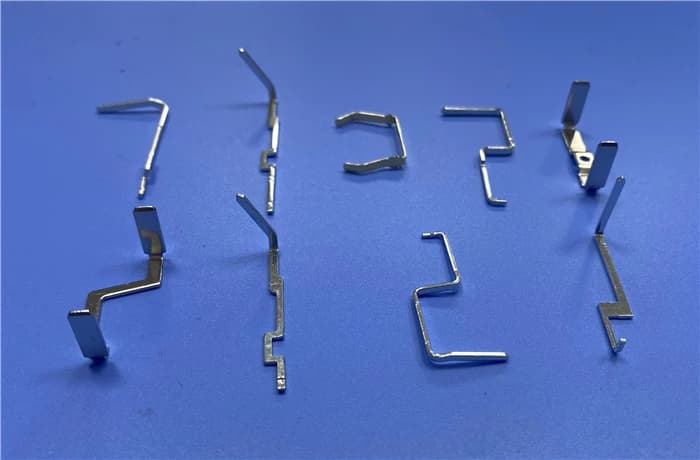
However, the dies used in stamping are generally application-specific. Sometimes a complex part requires multiple sets of dies to be formed, and die manufacturing demands high precision and technical expertise, making it a technology-intensive product. Therefore, only when stamping parts are produced in large batches can the advantages of stamping be fully realized, thereby achieving better economic benefits.
Of course, stamping also has certain problems and drawbacks. These are mainly manifested in the noise and vibration generated during the stamping process, which are two types of pollution, and operator safety accidents occur from time to time. However, these issues are not entirely caused by the stamping process and dies themselves, but are mainly the result of traditional stamping equipment and outdated manual operations. With the advancement of science and technology, particularly the development of computer technology, and with the progress of mechatronics technology, these problems will certainly be properly resolved in the near future.
I. Characteristics of Stamping
Compared with machining and other methods of plastic forming, stamping offers many unique advantages in both technical and economic terms. The main ones are as follows.
(1) Stamping has high production efficiency, and the operation is relatively convenient, making it easy to achieve mechanization and automation. This is because stamping relies on dies and stamping equipment to complete the process. The stroke rate of a conventional press can reach dozens of times per minute, while a high-speed press can reach hundreds or even over a thousand strokes per minute, and each stroke can produce one stamped part.
(2) During stamping, the dies ensure the dimensional and shape accuracy of the stamped parts, and the surface quality of the parts is generally not compromised. Since die life is typically long, stamping quality is stable, interchangeability is good, and the parts have the characteristic of being "exactly identical."
(3) Stamping can produce parts with a wide range of sizes and complex shapes, from small items like watch second hands to large components such as automobile side rails and body panels. Additionally, due to the cold work hardening effect of the material during stamping, the strength and stiffness of the stamped parts are relatively high.
(4) Stamping generally does not generate chips or scrap, consumes less material, and does not require additional heating equipment. It is therefore a material-saving and energy-efficient processing method, and the cost of stamped parts is relatively low.
II. Materials
1. Ordinary cold-rolled steel sheet SPCC. SPCC refers to steel ingots that are continuously rolled by a cold rolling mill into steel coils or sheets of the required thickness. SPCC has no surface protection and is highly susceptible to oxidation when exposed to air, especially in humid environments where oxidation accelerates, resulting in dark red rust. When in use, the surface must be painted, electroplated, or otherwise protected.
2. Electro-galvanized steel sheet SECC. The base material of SECC is ordinary cold-rolled steel coil, which is processed through degreasing, pickling, electroplating, and various post-treatment processes in a continuous electro-galvanizing line to become an electro-galvanized product. SECC not only possesses the mechanical properties and similar formability of ordinary cold-rolled steel sheets but also offers superior corrosion resistance and decorative appearance. It is highly competitive and substitutable in the markets for electronic products, home appliances, and furniture. For example, SECC is currently widely used in computer chassis.
3. Hot-dip galvanized steel sheet SGCC. Hot-dip galvanized steel coil refers to semi-finished products that are hot-rolled, pickled, or cold-rolled, then cleaned, annealed, and immersed in a molten zinc bath at approximately 460°C to coat the steel sheet with a zinc layer, followed by temper rolling and chemical treatment. SGCC material is harder than SECC, has poorer ductility (avoid deep drawing designs), a thicker zinc layer, and poorer weldability.
4. Stainless steel SUS301. The chromium (Cr) content is lower than that of SUS304, resulting in poorer corrosion resistance. However, it can achieve good tensile strength and hardness through cold working, and has good elasticity. It is commonly used for spring plates, springs, and EMI shielding.
5. Stainless steel SUS304. One of the most widely used stainless steels. Due to its nickel (Ni) content, it offers better corrosion resistance and heat resistance than chromium (Cr)-only steels. It has excellent mechanical properties, no hardening by heat treatment, and no elasticity.