
The drawing process is a commonly used processing method in mechanical machining and production. However, in the actual operation of many factories, it is found that the dies for drawn parts are easily scored. We should change the handling approach. Below, Zhejiang Baifudu Electromechanical introduces the relevant knowledge. For the above problem, before implementation, adhesive wear should be reduced and the characteristics of the contact pair should be changed. Let us briefly analyze how to solve common problems in the processing of drawn parts?
1. In terms of raw materials, after surface treatment of the raw materials, such as phosphating, spray coating, or other appearance treatments, a non-metallic film layer is formed on the appearance of the formed data, which can greatly reduce or eliminate scoring on the workpiece. This method is usually costly and requires additional production equipment and processes. Although this method sometimes has some effect, it is rarely used in actual production.
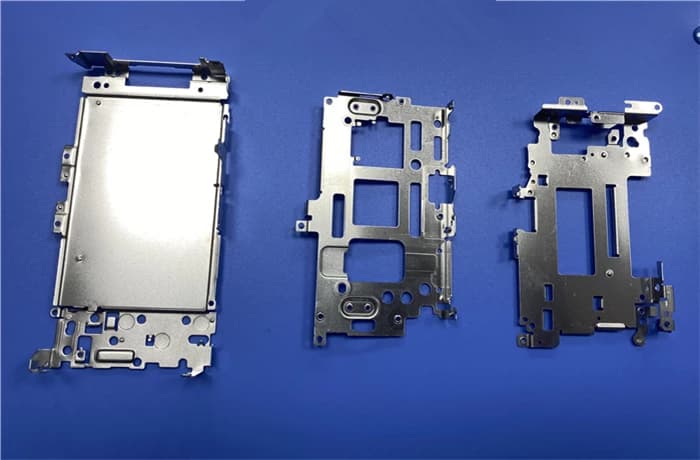
2. Adding a metal workpiece and a PVC film between the die and the forming data can sometimes handle the drawing problem of the workpiece. In terms of production line organization, continuous film supply, and cycle production, each workpiece needs to add a film layer, which affects production speed. This method is generally costly and also generates a large amount of waste. For small-batch production of large workpieces, this method is advisable. When certain forming loads are very small, the scoring problem of the workpiece can be solved by adding lubricating oil or adding EP lubricants to the lubricating oil.
3. Modify the die convexity, the surface treatment of the die data or the punch convexity, the concave die, or select appropriate die data so that the contact properties between the drawing data and the punch and die are changed. From a practical perspective, this is an economical and practical treatment method and has been widely used. In summary, there are many methods to handle scoring on drawn parts and punch surfaces. The specific method should be determined based on the workpiece and load size, production batch, and the type of processing material used.
Drawn parts have complex and diverse shapes, high dimensional accuracy requirements, and the processed products are equivalent to cutting-processed products. The processed cross-section is very flat, smooth, and bright, making it more difficult than other processing techniques. High-precision fine-blanking gears can be fine-blanked, and the drawn parts have clear contours and small concave angles. During processing, drawn parts mainly rely on press pressure to stamp metal or non-metal materials. During the processing of drawn parts, the precision of the workpiece is very high, reaching micron levels. Compared with other processed parts, this product has significant advantages such as being light, thin, uniformly distributed, and resistant to pressure. During processing, it can be mass-produced, shortening processing time, and forming in one step without additional processing. This product is mainly used in automotive handbrakes, cars, motorcycles, and other products, and is an economical and fast electromechanical component.
Next, we will popularize some issues about drawn parts so that you can clearly understand them through learning. In this way, you can add some professional knowledge to the products on this website.
1. Blanking-drawing: Is it suitable for shallow drawn parts or deep drawn parts?
Blanking-drawing is suitable for shallow drawn parts because the steel plate is pressed during blanking and also during drawing. Therefore, based on this, there will be the corresponding theory mentioned above. There is no doubt about this.
2. How to thread-roll the pull rod?
In this case, according to Zhejiang Baifudu Electromechanical manufacturer, it cannot use the ordinary thread rolling method because it is not applicable. Instead, first insert a mandrel through the pull rod, and then perform the thread rolling operation to complete the work smoothly.
3. How to prevent scoring (galling) issues on the draw rod?
To prevent scoring issues during the drawing process, the methods we can adopt may be the aspects we should pay attention to, mainly including the following:
(1) The surface of the die used should be smooth, and proper polishing should be performed during the drawing operation;
(2) The hardness of the mold material is too low.
(3) Thirdly, proper cleaning of the drawn parts should be carried out, ensuring no dust or dirt remains on the surface.
For drawn parts, it can be said that the above issues are very important and fundamental, and there are no exceptions. Therefore, I hope you will study and understand them carefully so that you can grasp them in a timely manner. This way, you can gain new insights, achieve some development and breakthroughs in the learning process, and also prevent yourself from gaining nothing.
I hope you will take the above issues seriously and resolve them properly, knowing how to correctly address them. In this way, even if you encounter them in actual work, you can handle them calmly and resolve them promptly, avoiding some unnecessary problems or troubles. I hope this is useful to the readers.