
Instruments, household appliances, bicycles, office machinery, daily utensils and other products also contain a large number of stampings. Compared with castings and forgings, stampings have the advantages of being thin, uniform, light and strong. Stamping can produce workpieces with reinforcing ribs, ribs, undulations or flanges that are extremely difficult to produce by other methods, thereby improving their rigidity. Due to the use of precision dies, workpiece accuracy can reach micron level, and with high repeatability and identical specifications, holes, bosses and other features can be stamped. To improve workpiece manufacturing efficiency, cold stampings generally do not require further machining, or only require a small amount of cutting.
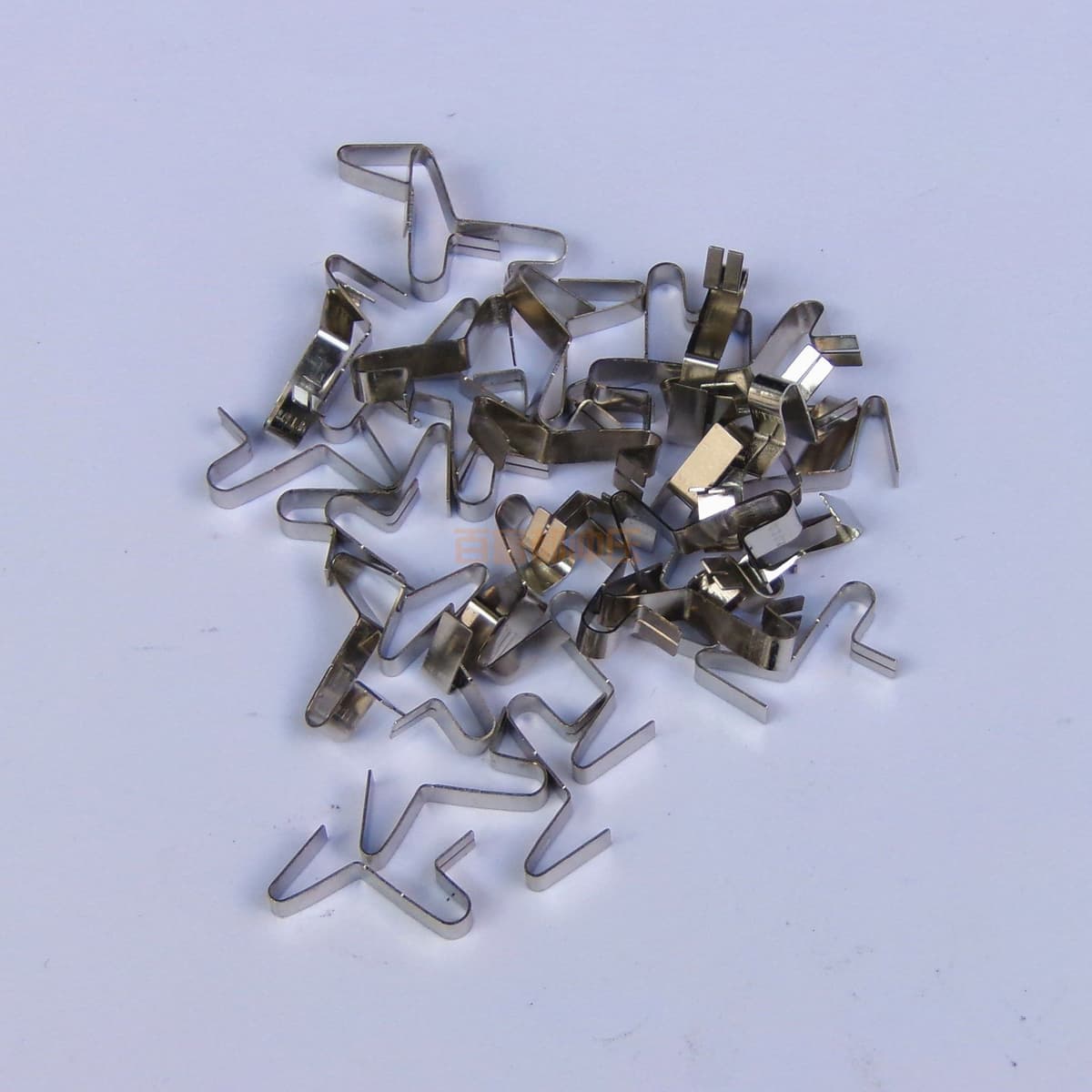
The accuracy and surface condition of hot stampings are lower than those of cold stampings, but they are still superior to castings and forgings, with less cutting required. Stamping is a production method that uses compound dies, especially multi-station progressive dies, to complete multiple stamping processes on a press, enabling automated production from material uncoiling, leveling, cutting to forming and finishing. It offers high production efficiency, good working conditions and low production costs, typically producing hundreds of parts per minute. Stamping is mainly classified by process into two categories: separation processes and forming processes. Separation processes, also known as cutting, aim to separate the stamped part from the sheet material along a contour line while ensuring the quality requirements of the separated cross-section. The surface and internal properties of the stamped sheet have a significant impact on the quality of the finished stamped product, requiring precision stamping materials to have accurate and uniform thickness; smooth surfaces free of spots, scars, scratches and surface cracks; uniform yield strength with no obvious directionality; high uniform elongation; low yield-to-tensile ratio; and low work-hardening rate. Based on the shape, precision and production volume of the part, the material is then cut in punching and burring operations, with the blanking placed on the scrap die.
Precision stamping processing mainly involves placing metal or non-metal sheets under the pressure of a press to help the stamping die form the parts. What are its main characteristics? Let's take a closer look below.
I. Main characteristics of precision stamping die forming
1. Precision stampings are manufactured through stamping with minimal material consumption. The parts are lightweight and have good rigidity. After plastic deformation of the sheet, the internal microstructure of the metal is improved, and the strength of the stamping is enhanced.
2. Precision stampings have high dimensional accuracy, with uniform dimensions across identical parts and excellent interchangeability. They can meet general assembly and usage requirements without further machining. It should be advantageous to use existing equipment, tooling and process flows as much as possible for their processing.
3. During the stamping production process, precision stampings maintain good surface quality because the material surface is not damaged, resulting in smooth and aesthetically pleasing part surfaces, which provides favorable conditions for surface painting, electroplating, phosphating and other surface treatments.
II. Design principles for precision stampings
1. The design of stampings should conform to the product's usage and technical performance, and be easy to assemble and repair.
2. The design of stampings should help improve the utilization rate of metal materials, reduce the variety and specifications of materials, and minimize material consumption as much as possible. If permitted, lower-cost materials should be used, and parts should be designed to produce as little scrap as possible, reducing waste.
3. The stamped part should be designed with a simple shape and rational structure, which helps simplify the die structure and reduce the number of operations, i.e., completing the entire part processing with fewer alternative methods. This facilitates stamping operations, supports mechanized and automated production, and improves labor productivity.
4. While ensuring normal usage, the designed stamped parts and precision stamped parts should aim to minimize dimensional tolerance grades and surface roughness grades. This facilitates product interchangeability, reduces scrap, and ensures consistent product quality.
5. The designed stamped parts should, as much as possible, be compatible with existing equipment, tooling, and process flows, and help extend the service life of stamping dies. Examples include automotive side rails, covers, and similar components.