
In precision gear machining, heat treatment processes such as carburizing, nitriding, and quenching are frequently performed. During machining, gear manufacturing, and heat treatment, deformation directly affects gear precision, strength, noise, and service life. So how can gear deformation after heat treatment be prevented? This can be approached by analyzing the main factors affecting gear heat treatment deformation, such as material selection, heat treatment, and machining, identifying the causes, and implementing corresponding measures including proper design, appropriate material selection, and coordination between heat treatment procedures and mechanical machining processes to reduce gear heat treatment deformation, thereby improving gear machining precision and preparing the microstructure for final treatment. The following is a brief introduction:
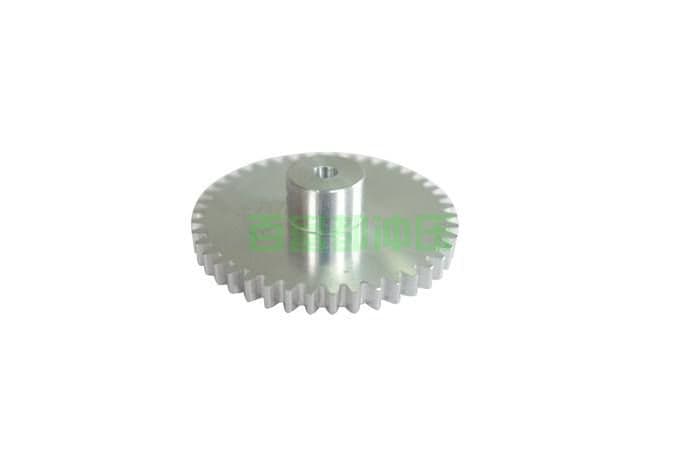
I. Main Factors Affecting Gear Heat Treatment Deformation
1. Effect of material metallurgical factors on gear deformation: The higher the hardenability of steel, the greater the deformation. When the core hardness exceeds 40HRC, the deformation increases significantly. Deformation is relatively stable when supplied by steel mills with low and stable deformation characteristics. When the a/n content is controlled between 1 and 2.5, the hardenability band can be narrowed, reducing deformation.
2. Effect of preliminary heat treatment on gear deformation: If normalizing hardness is too high, large amounts of sorbitte and other structures can increase bore deformation, so forgings should be treated with controlled-temperature normalizing or isothermal annealing.
3. Effect of carburizing process on deformation: Temperature uniformity, carbon layer uniformity, and cooling system medium temperature uniformity all affect gear structural deformation. Additionally, higher carburizing temperatures, thicker carburized layers, lower oil temperatures, and larger gears all lead to greater deformation.
4. Effect of quenching on deformation: Quenching cooling behavior is an important factor affecting gear deformation. Hot oil quenching produces less deformation than cold oil quenching. The cooling capacity of the oil is also critical to deformation. Mixing methods and intensity are affected by deformation. Quenching with pressure quenching plates for gears is adjusted according to various gear deformations. By adjusting press parameters, reducing deformation, adjusting the pressure of inner and outer die plates and expanding mandrels, and adjusting the oil injection volume at each stage and the top worktable size, deformation can be controlled.
5. Fixturing methods and fixtures: The purpose is to ensure uniform heating and cooling of the workpiece and uniform carburized layers on all parts of the workpiece, thereby reducing uneven thermal and structural stresses and thus reducing deformation. Clamping modes can be varied. Disc parts are positioned perpendicular to the oil surface, shaft parts are mounted vertically, and compensation washers, support washers, and stacked washers are used. Splined bore parts can use carburizing mandrels.
There are many factors affecting carburizing heat treatment deformation, and it may be the result of multiple combined causes. Only by controlling various factors can deformation be controlled to a smaller extent. Controlling gear deformation is also an important issue that needs to be addressed throughout the entire gear manufacturing process.
II. Specific Control Measures for Gear Heat Treatment Deformation
From the above analysis, it is known that there are many factors affecting gear heat treatment deformation, and they exist in every stage. To control gear deformation during heat treatment, relevant technical personnel can refer to the following specific control measures to improve gear quality.
1. Scientifically Select Gear Materials
The hardenability of the raw gear material directly affects the heat treatment deformation of the gear. The raw material for gear manufacturing must be selected scientifically, as different materials have varying hardenability. The choice of hardenability should be based on the workpiece material of the specific gear and should generally remain consistent. Compared to other materials, steel offers better hardenability. At the same time, the precision of the gear also affects the hardenability of the raw material. For example, the primary raw material for gears in China is 20CrMnTi steel, which has non-uniform crystals and is prone to deformation issues during heat treatment. Additionally, considering overall costs, appropriate machining equipment should be selected.
2. Rational Gear Design
Design personnel must fully consider the various causes of deformation during the gear heat treatment process. Without altering the original performance, the gear shape should be designed scientifically and rationally. When designing the gear shape, consideration should be given to the uniformity of force distribution on the gear, with simple and direct structural configurations being preferred, thereby reducing deformation issues caused by uneven stress.
3. Select Appropriate Heat Treatment Processes
During the gear heat treatment process, quenching oil should be selected as the quenching medium. Hot oil quenching results in less deformation than cold oil quenching. The cooling capacity of the oil and the stirring method are also important factors affecting deformation. Additionally, additives should be appropriately applied to enhance the hardness of gear components and ensure gear quality.
4. Optimize Loading Methods
To ensure uniform heating of gear components during the heating process, the loading method can be optimized. Disc-type parts should be placed perpendicular to the oil surface, while shaft-type parts should be loaded vertically. Compensation washers can also be used to reduce gear deformation caused by uneven thermal distribution.
5. Pre-Heat Treatment
After the gear forging process, uneven heating during heat treatment can also occur due to uncontrollable stress. Proper pre-heat treatment can effectively prevent this situation. By performing pre-heat treatment after forging, the microstructure of the raw gear material can be improved, effectively preventing deformation issues caused by stress redistribution.
6. Improve the quality of machining
When selecting mechanical equipment, it is essential to choose high-quality machinery. By considering the various factors that affect gear heat treatment deformation, technicians can summarize the causes of gear deformation and prepare preventive measures in advance during subsequent heat treatment processes, effectively preventing deformation from occurring. In addition, for gears made of special materials or with unusual shapes, a secondary heat treatment process is necessary as a precautionary measure.
Based on the above analysis, there are many factors that influence gear heat treatment deformation. In order to
effectively prevent the occurrence of gear heat treatment deformation, it is not only necessary to scientifically select the casting materials for gears and adopt rational gear design, but also to fully utilize heat treatment processing technology to comprehensively improve the quality of machining. This effectively reduces the probability of gear heat treatment deformation and ensures the service life of gears.