
For stamping parts, they are quite common in the industrial sector, and various types of stamping parts are widely used across different industries. Blanking dies are also an indispensable piece of process equipment in the stamping production process, as they play a decisive role in improving product quality and enhancing production efficiency. However, stamping dies can also experience wear during use, so how should we extend the service life of stamping dies? This is also a goal pursued by stamping parts processing plants.
The durability of a blanking die is determined by the total number of parts produced by the die before it can no longer meet the technical conditions of the parts due to frequent wear and loss of working dimensions after a period of operation of the punch and die. Once a die goes through design, machining, assembly, adjustment, installation, and use, it involves multiple processes, a long cycle, and high processing costs. Therefore, for blanking dies, in addition to requiring high production efficiency, the stamped parts must fully meet quality requirements and technical conditions, and the durability of the stamping die itself is of great importance.
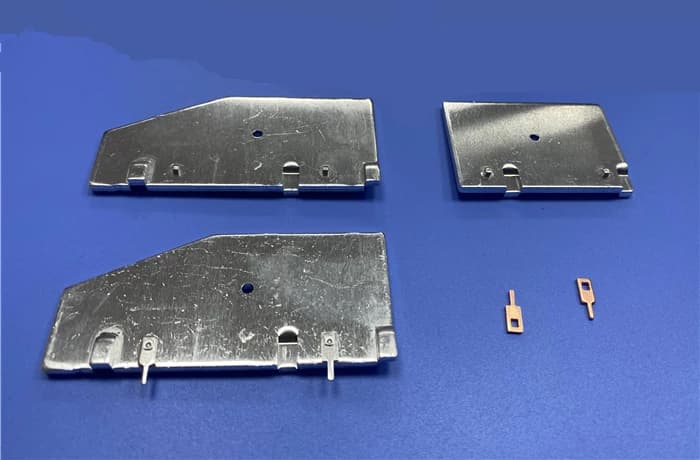
Therefore, to extend the service life of stamping dies in the processing workshop, we must enhance the durability of stamping dies. In daily press work, the following points should be noted:
1. Improve precision die design
Reasonable blanking die design is the foundation for improving the durability of blanking dies. To enhance the durability of stamping dies, effective measures should be taken during design to improve the durability of piercing dies. For example, the design of piercing punches often determines the life of the piercing die. For this type of blanking die, when designing, the length of slender punches should be as short as possible to increase strength. At the same time, guide bushings should be used to strengthen the protection of slender punches.
In addition, in blanking die design, factors such as the form of the die set, the installation method of the punch and die, and the guiding method should be fully considered, and the pressure center and the rigidity of the upper and lower die plates should be determined. Especially for blanking dies, the selection of clearance values has a significant impact on their durability. In blanking die design, the die clearance should be reasonably selected, and the intermediate clearance value should not be too small; otherwise, it will affect the life and durability of the die. Results show that, without affecting the quality of the die, appropriately increasing the clearance can greatly improve the durability of the die, sometimes by several times or even dozens of times.
2. Properly select die materials
Die materials have different strengths, toughness, and wear resistance. Under certain conditions, using high-quality materials can increase durability by several times. The service life of T10A steel dies is shorter than that of Cr12 and Cr12MoV dies. The average grinding life of G35 titanium carbide hard alloy as punch and die material is 5 to 10 times that of Cr12 steel, while the average grinding life of W-Co tungsten-cobalt hard alloy as punch and die material is 20 to 30 times that of Cr12 steel. Therefore, to improve the durability of dies, it is necessary to select good materials.
3. Reasonable forging and heat treatment of stamping die parts.
Selecting high-quality die materials, and performing reasonable forging and heat treatment on the same material with different performance requirements, is one of the main effective ways to improve die durability. Generally speaking, during quenching, if overheating occurs during heating, it can not only make the workpiece too brittle, but also easily cause deformation and cracking during cooling, reducing its durability. Therefore, when manufacturing dies, it is essential to correctly grasp the heat treatment process.
4. Reasonably arrange the stamping die production process and ensure machining accuracy.
The accuracy of the stamping die has a significant impact on its durability. For example, in blanking dies, uneven assembly clearances can cause the die to be damaged under shear forces, thereby reducing its service life. Additionally, low surface finish of the die can also lead to decreased durability. Therefore, during machining, it is essential to ensure that the perpendicularity between the punch and the fixed plate support surface is consistent when assembling according to hole spacing dimensions, that the die clearance is uniform, and that sufficient attention is paid to the guide pillar's guiding accuracy grade. The higher the machining and assembly accuracy, and the higher the surface roughness grade of the working components, the better the durability of the die.
5. Correctly select the press machine.
To enhance the durability of blanking dies, it is advisable to choose a high-precision, high-rigidity blanking press, and select a blanking capacity that is more than 30% greater than the die pressure. Generally, using a servo press can correspondingly increase the die life by several times.
6. Correctly use and maintain precision stamping dies.
To extend the service life of stamping dies, operators should use and maintain them properly, and regularly repair the dies to prevent them from operating under excessive pressure.
The above content regarding the service life of stamping dies generally indicates that improving the standardization level of dies and ensuring the production and supply of standard die components are also key aspects of stamping die technology development. To prolong die life, various surface strengthening and super-hardening treatments are also development priorities. Hopefully, the above information will be helpful to readers.