
Various issues can also arise during the deep drawing process, such as cracks, necking, bending, and wrinkling. Therefore, most deep-drawn parts manufacturers have their own processing standards and procedural precautions during production. Below, Zhejiang Balford Electromechanical Editor will introduce them to you.
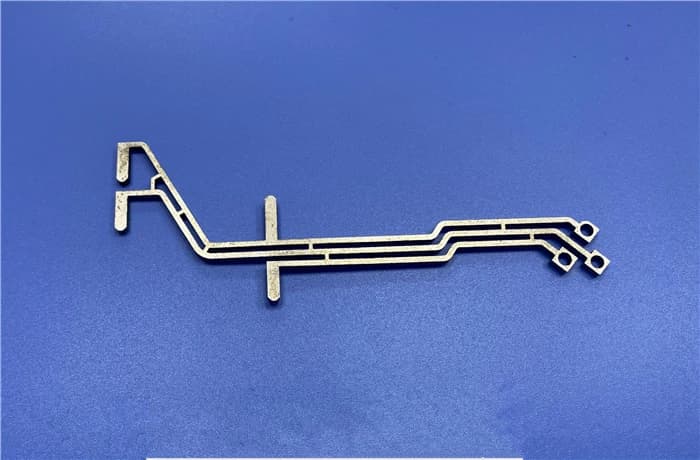
I. Deep-Drawn Parts Processing Standards
Deep-drawn parts are workpieces obtained by using mechanical equipment to stretch and deform sheet metal. Now, the editor will introduce the production standards for deep-drawn parts in our factory.
1. The fillet radii of the first wall of the deep-drawn part, the bottom and wall, and the four corners of rectangular parts should be appropriate. The wall fillet radius of the deep-drawn part is 1pr=1.5mm, mm5.1r2p, the fillet radius between the flange and wall of the deep-drawn part is mm2rd1, mm5.1r2d.
2. The shape of deep-drawn parts should be simple and symmetrical, and should be formed in one drawing operation as much as possible.
3. For parts requiring multiple drawing operations, marks that may be produced during drawing on the inner and outer surfaces should be allowed, provided that the required surface quality is ensured.
4. Under the premise of ensuring assembly requirements, a certain slope should be allowed on the side walls of deep-drawn parts.
5. When dimensioning deep-drawn parts, either the external or internal dimensions should be specified, and both external and internal dimensions should not be marked simultaneously. For trapezoidal deep-drawn parts, the height dimension should generally be based on the bottom as the datum. If the top is used as the datum, the height dimension is difficult to guarantee.
6. The distance from holes on the bottom or flange of deep-drawn parts to the side wall should be appropriate.
II. Precautions When Using Deep-Drawn Parts
As is well known, drawn parts are prone to residual stress during machining, with relatively high residual stress near the yield limit. Most residual stress has significant adverse effects on components, such as reducing the actual strength, fatigue limit, stress corrosion resistance, and causing brittle fracture. Due to the relaxation of residual stress, parts may warp, greatly affecting dimensional accuracy. Therefore, what should we pay attention to when using drawn parts? Let our drawn parts manufacturer explain for you.
1. Regularly inspect the turntable and die mounting seat of the press to ensure the concentricity and precision of the upper and lower turntables.
2. Before using drawn hardware stamping parts, strict inspection must be carried out, dirt must be cleaned, and the guide bushings and dies of the drawn stamping parts must be carefully checked to ensure good lubrication.
3. To ensure the service life of drawn stamping parts, the die springs should also be replaced regularly to prevent spring fatigue damage that could affect the use of the drawn stamping parts.
4. When installing the dies, the stamping operator should use tools made of softer metals (such as copper, aluminum, etc.) to prevent damage to the drawing punch during installation.
5. When the cutting edges of the punch and die of drawn parts become worn, use should be stopped immediately and sharpening should be carried out promptly; otherwise, the degree of die edge wear will rapidly expand, accelerating die wear and reducing the quality of the stamped parts and die life.
6. According to the die installation procedure, install the punch and die on the turntable to ensure the correct orientation of the convex and concave drawn stamping parts, especially for parts with directional requirements (non-circular and square shapes), to prevent incorrect or reversed installation.
3. Precautions in the processing flow and applications of drawn parts
Have you ever wondered how much you know about drawn parts as a component product? I'm afraid very few people know where this component is used and how it is processed. This type of drawn part is made by drawing a shaped blank or hollow piece into various open-ended stampings. Such workpieces are commonly found in our daily lives, but we have not truly understood the uses and functions of this product. Next, we will introduce the processing precautions and performance-related applications of drawn parts.
Due to the special drawing production process, this manufacturing method can produce thin-walled parts with complex shapes such as cylindrical, box-shaped, and spherical forms. Drawing has its unique production method in tractors, electrical appliances, electronics, and other industrial and daily-use products, giving it a considerable position. If drawn parts are used as installation processing items and there are missing or omitted components, it can cause valve control failure and impact damage to pistons and other workpieces. Moreover, using them with missing parts can lead to serious malfunctions, which is also a detail issue that requires attention.
Tires that are stacked for long periods without being turned can become deformed due to compression. If deformation occurs, they can no longer reliably perform their filtering function. Therefore, we must pay attention to all aspects of the workflow and daily procedures to ensure that the deep-drawn products we manufacture fully fulfill their intended role.