
1. What is precision metal stamping?
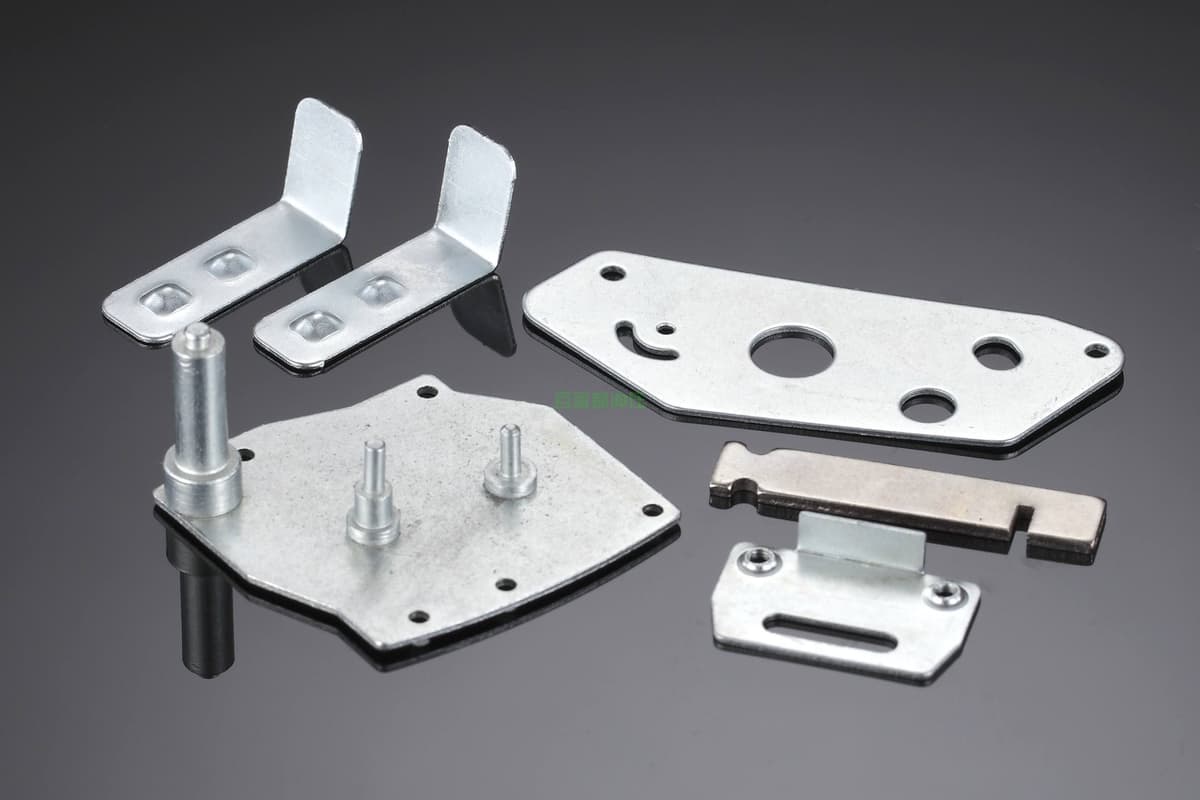
Precision metal stamping is a high-volume metalworking process that uses stamping tools to press material into the desired shape to manufacture sheet metal parts. This is done according to a pattern, and each part is removed from the main sheet after stamping.
Precision metal stamping enables manufacturers to produce parts that require undercuts, multiple features, or fragile walls for assembly. It uses high-pressure equipment to press metal sheets into dies, resulting in products with geometric precision and good surface finish.
2. Advantages of precision metal stamping
Precision metal stamping offers several advantages for manufacturers and end users. These include:
1. High-volume production
Precision metal stamping can produce thousands to millions of parts in a single run. This offers higher productivity than other metalworking processes such as CNC machining, fabrication, or welding.
This process is ideal for high-volume manufacturing where metal parts are produced in large quantities.
2. Uniformity
Precision metal stamping is versatile and can produce a variety of components using the same tooling, with little additional setup or adjustment required between production runs.
Therefore, compared with other industrial processes, precision metal stamping offers higher uniformity. Since all products are stamped from sheet metal, they have consistent wall thickness and nearly identical surface finishes, which simplifies post-production assembly and quality control inspections.
Precision metal stamping also supports mass customization of end products through automated variable design, enabling rapid fulfillment of unique customer requirements.
3. Quality
Precision metal stamping is a versatile process capable of producing a range of components with varying surface finishes and tolerances.
It also produces parts with thin walls, deep draws, and undercuts that would otherwise be challenging to manufacture using other processes such as CNC machining or fabrication.
This makes precision metal stamping an excellent choice for development in aerospace, medical implants, automotive, lighting, and consumer electronics, where precise shapes and thin walls are required.
Precision metal stamping is one of the few technologies capable of producing the specific thin-wall geometries required for demanding electronic packaging applications, thanks to its ability to create deep-drawn features.
4. Ease of Use
Engineers and designers find precision metal stamping easy to use, as it can produce complex shapes with minimal tooling changes.
This capability provides customers with greater design flexibility, opening the door to concept exploration in the early stages of product development.
It can also help them reduce costs by minimizing material waste, as fewer die changes are required for each new part design iteration.
Using precision metal stamping makes it easier to manufacture precisely designed components, as they require less machining time for secondary operations throughout the production process. This results in a more efficient workflow, especially at high production volumes.
5. Minimized Material Waste
Precision metal stamping is an economical manufacturing process because it uses the minimum amount of material required to produce a part.
This feature allows manufacturers to produce thin-walled products without the need for complex secondary operations, such as CNC machining, which can be both time-consuming and costly.
6. Cost Effectiveness
Compared to large die-casting machines used for mass production, precision metal stamping has lower startup costs. Therefore, it is beneficial when production demand is not massive but volumes are still relatively high.
It also offers a high degree of flexibility, allowing manufacturers to use design options to handle custom projects for customers that cannot be produced in any other way. This means they can achieve higher profitability without requiring significant initial investment.
7. Minimal Secondary Operations
With precision metal stamping, secondary operations such as cutting threads after production are typically not required. The process simultaneously creates accurately shaped features without any errors, such as pre-drilled holes, countersinks, or cut threads. Secondary processing often adds cost and time to market, but minimal hand finishing is needed after stamping, again saving both money and time.
III. Precautions When Using Precision Metal Stamping Technology
1. Surface Quality
The surface quality of stamped parts depends on the metal used, its hardness, thickness, and whether heat treatment is performed after stamping. Softer materials are more prone to scratching during the stamping process, while thicker metals are less susceptible because they have higher tolerance to pressure from the tools. Heat treatment helps improve the grain structure of the metal, making it harder and more wear-resistant without compromising the material's strength.
2. Undercuts
Undercuts can create difficulties during the stamping process because they make it hard for the tool to fully penetrate the metal sheet.
One way to address this issue is to use progressive dies instead of a single large die that cuts out all part shapes at once. Multiple dies perform small cuts until all part features are achieved. Progressive stamping also reduces the force required to release undercuts, but it can limit production speed and may result in irregular shapes that require secondary operations to clean up.
3. Tolerances and Accuracy
Tolerance refers to the allowable variation in dimensions within a part design, while accuracy refers to how closely the final measurements match the intended dimensions.
Precision metal stamping can achieve precise dimensions and tight tolerances because, unlike other manufacturing processes, it uses controlled force to produce components.
Parts produced with this process conform more closely to specifications compared to those manufactured using alternative methods such as CNC machining or welding.
4. Material Strength and Tool Wear
To keep costs low, manufacturers typically use softer, cheaper metals to produce tools. However, using less robust tools leads to a trade-off in material strength, adversely affecting design and quality, especially when products require thin-walled geometries. Such tools exert excessive compressive stress on components.
The pressure from the tool is the primary cause of material deformation, so this trade-off must be considered when designing metal stampings.
5. Product Complexity and Cost
The complexity of a part's design determines how many tools are required to manufacture all its features. However, manufacturers may offset this cost by performing secondary operations on specific components within the same production run, rather than creating unique tools for complex shapes or geometries such as undercuts.
This enables manufacturers to produce multi-component products from various materials in a single run without increasing costs.
IV. Summary
Precision metal stamping is used across various industries to produce metal parts with complex geometries and other features that would be prohibitively expensive or impossible to manufacture through alternative methods such as die casting and machining.
While manufacturers need to consider budget, machine capacity, tool quality, and other factors when selecting the appropriate process for their operations, precision metal stamping is renowned for its accuracy.