
In industrial production, the drawing process is also a commonly used treatment method, but in actual implementation, it has been found that drawing dies are very prone to scoring, and the die is an important component of the drawing process. This not only directly affects the production quality of drawn parts, but also affects some related parameters in the process. So, when this situation occurs, how should we handle it? Below, Balford's editor will take you through this.
There are many types of drawn parts. Due to their different shapes, the positions of the deformation zones also differ, as do the nature of the deformation. The stress-strain states and distribution patterns of various parts of the blank vary greatly, and some even have essential differences. When dealing with the above issues, adhesive wear should be reduced, which can be achieved by changing the nature of the contact pair.
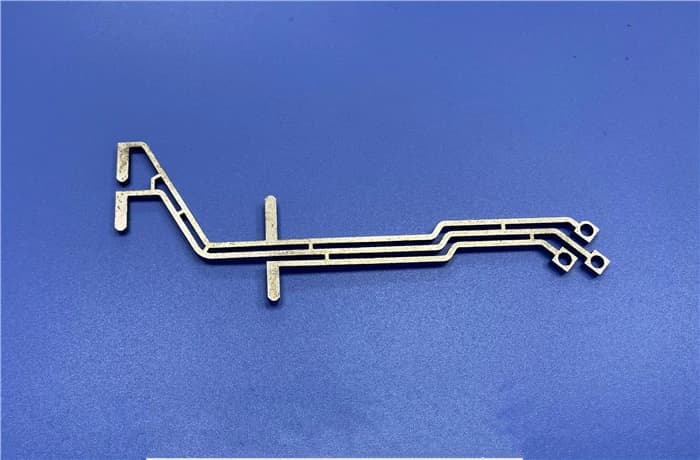
1. Regarding the raw material data of the formed workpiece, surface treatment is applied to the raw material, such as phosphating, spray coating, or other surface treatments. After such treatment, a non-metallic film forms on the surface of the formed material, which can greatly reduce or eliminate scoring on the workpiece. This method often involves high costs and requires additional production equipment and processes. Although this method is sometimes effective, it is rarely used in actual production.
2. Adding a film such as polyvinyl chloride between the metal part and the die, or between the die and the forming material, can sometimes solve the problem of workpiece scoring. For production lines that supply film continuously through an organization, for stamping equipment with periodic production, each produced part requires the addition of film, which affects productivity. The overall cost of this method is also high and generates a large amount of waste. This method can be used for small-batch production of large workpieces. When the forming load is very small, sometimes lubricating oil or lubricating oil with EP additives can solve the problem of workpiece scoring.
3. On the die side, the die punch and die cavity materials, or the die punch and die cavity surfaces, can be treated, or appropriate die materials can be selected to change the contact nature between the engineering drawing material and the punch. Practice has proven that this is an economical and practical method for handling strain, and it is currently a widely used method. In summary, there are many ways to handle scoring on the surfaces of drawn parts, workpieces, and die punches and die cavities. For detailed cases, the choice should be based on the workpiece and load size, mass production scale, type of processing material, etc.
Drawn parts have complex and diverse shapes, and require high dimensional accuracy. The processed products are on par with cut products, and the processed cut surfaces are flat, very smooth, and bright. They are more difficult to process than other processes. They can process gear fine-blanking parts with small modulus and high precision, and drawn parts have clear contours and small collapse angles. Drawn parts mainly rely on the pressure of the press to process metal or non-metal materials through dies. The workpieces processed by drawn parts have high precision, reaching micron levels. Compared with other workpieces, they have advantages such as light weight, thin thickness, uniform distribution, and strong pressure resistance. During processing, they enable large-scale production, shorten processing time, and achieve one-time forming without the need for additional processing. They are mainly used in products such as automotive brakes, automobiles, and motorcycles. They are economical and fast electromechanical products.
Let's popularize some issues about drawn parts so that you can clearly understand them through learning and gain some professional knowledge.
1. Blanking-drawing: Is it suitable for shallow drawn parts or deep drawn parts?
Blanking-drawing is suitable for shallow drawn parts because the steel plate is compressed during blanking, and the steel plate is also compressed during drawing. Therefore, based on this, the above corresponding theory will appear. There is no doubt about this.
2. How to roll threads on drawn parts?
In this case, from the perspective of manufacturers of drawn parts who do not have Xizhong South Lighting fixtures, because it is not applicable, the general rolling method cannot be used. Instead, a mandrel must first be inserted through the drawn part, and then rolling can be completed smoothly.
3. How to prevent scratching (hairline marks) on drawn parts?
To prevent hairline marks on drawn parts, the methods we can adopt may deserve attention. The main points are as follows:
First, the surface of the die used must be smooth, and it should remain smooth during the drawing process.
Second, the hardness of the die material should not be too low.
Third, ensure proper cleaning of the drawn parts, keeping them free of dust and dirt.
For drawn parts, the issues mentioned above can be considered very important and fundamental. If you have not encountered them before, we hope you can study and understand them carefully so as to grasp them in a timely manner, and gain insights, make progress, and achieve breakthroughs in the learning process of the product.
The above covers the processing dies for drawn parts, as well as some general knowledge about drawn part processing. Many customers actually have a basic understanding of these aspects when selecting a manufacturer for drawn parts, so these professional issues are often easily overlooked. However, this reflects the professional expertise of a drawn parts processing factory, and it is recommended to choose carefully. We hope the above content can be helpful to readers.