
Metal stamping dies are indispensable equipment in stamping processing, and the quality of the dies directly affects the tight connection with the workpiece. Therefore, the production requirements for precision dies are extremely stringent. To ensure die quality and reduce production costs, what properties should metal stamping dies possess? In addition to equipment and dies, the selection of processing materials is also crucial in the manufacturing of metal stamping parts. Below, Zhejiang Balford's editor will walk you through the key considerations for material selection in metal stamping parts.
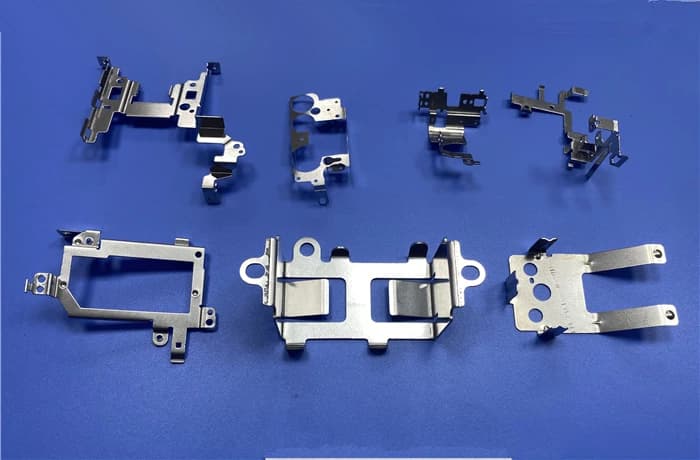
Metal stamping die processing should possess the following properties:
Forgeability: Low deformation resistance during hot forging, good plasticity, wide temperature range, and low tendency toward forging cracks, cold cracks, and network carbide segregation.
Machinability: High cutting parameters, low tool wear, and low surface roughness after machining.
Processability: Wide spheroidizing annealing temperature range, low annealing hardness, minimal distortion, and high spheroidization rate.
Hardenability: Uniform surface hardening and consistent surface hardness after quenching.
Hardening depth: Ability to achieve a deeper hardened layer after quenching, allowing the use of milder quenching media for hardening.
Grindability: Low relative grinding wheel wear, high grinding removal without burn limits, insensitivity to grinding wheel quality and cooling conditions, and no wear or cracking on precision stamping dies during grinding.
Oxidation and decarburization sensitivity: Good oxidation resistance at high temperatures, slow decarburization rate, insensitivity to heating media, and low susceptibility to pitting.
Die manufacturing involves processes such as cutting and heat treatment. These processes are technically demanding and require high-quality materials with excellent processing performance to ensure defect-free manufacturing and consistent quality in precision metal stamping dies.
Notes on Material Selection for Metal Stamping Parts:
1. Steel plates come in a wide variety of specifications. Whether it is cut-to-length plate or coil, the same material, thickness, and different coil widths have different sales prices. Therefore, to reduce costs, it is necessary to focus on the procurement quantity settings. Under the premise of ensuring material utilization, try to choose coil width ranges that do not increase in price. If possible, select appropriate specification sizes for cut-to-length plates so that secondary cutting is not required after cutting from the steel mill, thereby reducing shearing costs. For coils, try to choose specifications and processes for uncoiling and forming to reduce secondary shearing and improve work efficiency.
2. Plate thickness has deviation requirements. Generally, within the allowable deviation range, first choose plates with smaller deviations.
3. Determining the shape and size of the stamping blank is a prerequisite for analyzing the deformation degree of the stamping part, designing process feasibility, and compiling process specifications. If the blank shape is appropriate, it can not only significantly improve the uneven distribution of the sheet material along the blank, but also improve forming, reduce ear height, and reduce trimming allowance. In addition, for some parts that are directly formed, if the shape and size of the sheet metal can be provided, the number of die adjustments can be reduced, thereby shortening the production cycle and improving productivity.
4. When selecting materials in product design, avoid excessive product performance due to the use of high-grade materials. At the same time, under the premise of meeting product and process requirements, try to choose materials and thicknesses used in existing mass-produced models to form a material platform, facilitating subsequent procurement and inventory management. For example, the main performance requirement for general cold-rolled plates is tensile performance, so when product quality is consistent, try to choose lower-grade materials. In addition, when selecting material thickness, in addition to considering the strength and weight after forming, pay attention to the flatness of the material thickness. Due to the special thickness of raw materials, suppliers have difficulty supplying them, and the price is high.
The above content is related to hardware stamping dies and material selection. For the processing of hardware stamping parts, the shape of the stamping part should be simple and the structure reasonable. To simplify the die structure, our goal is to use fewer and simpler stamping parts for processing, which is conducive to stamping operations. This not only improves labor productivity but also facilitates the organization and production of stamping parts, and is beneficial for mechanized and automated production. I hope the above content can be helpful to readers.