Material guide · Soft magnetic steel
DC04 and Pure Iron for Deep Drawn Housings
Two steels look interchangeable on a drawing and behave completely differently in a solenoid valve. DC04 is chosen for formability and cost. Pure iron is chosen because the magnetic circuit is a functional requirement — and the drawing and annealing route decides whether you actually get the magnetic properties you paid for.
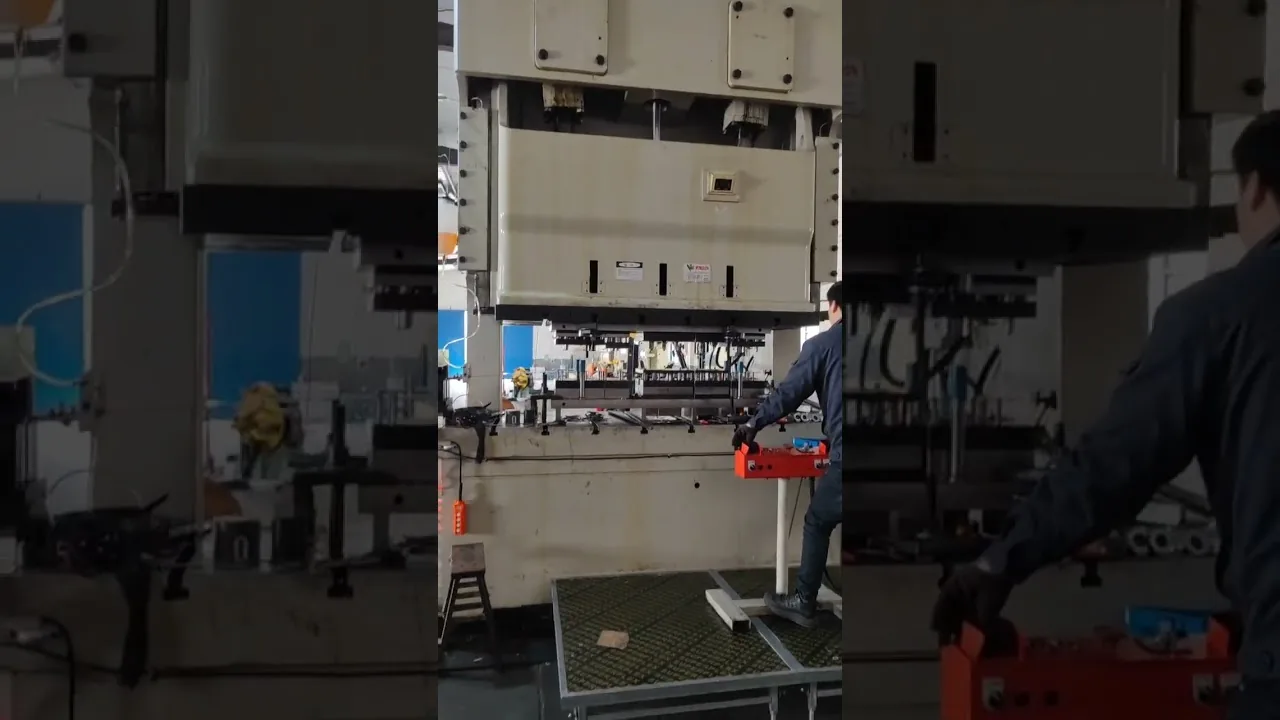
DC04 or pure iron — which one does your housing need?
Choose DC04 when the housing only has to hold its shape. It is a low-carbon, aluminium-killed deep drawing steel. It draws and irons well, it is readily available in coil, and it costs a fraction of electrical pure iron. Choose pure iron (the DT4 series) when the housing is part of the magnetic circuit — when permeability, coercivity or saturation induction appear on the drawing as requirements rather than as consequences. The two are not interchangeable: a housing that carries the flux has a magnetic specification, and DC04 cannot meet it.
What each steel actually is
| Property | DC04 (EN 10130) | Pure iron, DT4 series (GB/T 6983) |
|---|---|---|
| What it is | Aluminium-killed low-carbon deep drawing steel | Electrical pure iron, refined for magnetic use |
| Carbon and residuals | Low carbon, but with the normal manganese and residual levels of a drawing steel | Deliberately very low carbon, sulphur and phosphorus — the residuals are what limit the magnetic result |
| Chosen for | Formability and cost | Permeability, coercivity and saturation induction |
| Drawability | Very good; typical first-draw ratio 1.8–2.0 | Soft and highly formable; also about 1.8–2.0, but with a different work-hardening response |
| Typical parts | Drawn shells, caps and housings where the wall is structural only | Solenoid valve housings, pole pieces, armature guides, magnetic shield cans, relay parts |
| Price effect | Baseline | Material is the largest single line in the quote, and the annealing step is a separate cost |
The letter after DT4 is the whole argument
Electrical pure iron is not one material. The grade series steps the guaranteed maximum coercivity down — DT4, then the tighter suffixed grades, up to the best-behaved and most expensive. Each step buys a lower coercivity and a higher price. The practical consequence is that “pure iron” on a drawing is not a specification. Without the suffix, a supplier can meet the note with the cheapest grade in the family and still be technically correct, while the part behaves worse in the valve than the prototype did.
The trap: the drawing route can destroy the magnetic result
Pure iron is bought for its magnetic behaviour, and cold work degrades that behaviour. Drawing and ironing raise dislocation density, which raises coercivity and lowers permeability. A housing that is drawn, ironed and shipped without the right anneal is a pure iron housing with mild steel magnetics — the material cost is still on the invoice, but the benefit is not in the part.
That is why the sequence matters more than the grade on its own:
- Draw and redraw to the geometry, adding an inter-stage anneal if the draw ratio requires it.
- Iron the wall if a controlled, uniform thickness is needed — this is the heaviest cold work in the route.
- Anneal in a controlled atmosphere above the recrystallisation temperature and cool slowly through the Curie point, so the stress introduced by forming is removed and the domain structure settles.
- Do the final sizing or secondary operations after the anneal, and keep them light. Any extra cold work after the anneal puts coercivity back up.
Why ironing and magnetic housings go together
An ironed wall has two useful properties for a solenoid housing. It holds a uniform thickness, so the air gap and the magnetic path are consistent from part to part, and the die sets the outside diameter while the punch sets the inside diameter, so both are controlled by tooling rather than by a forming operation. It is also why a drawn and ironed housing can replace a machined one. The engineering cost is the cold work described above — ironing and magnetic performance pull in opposite directions, and the anneal is what reconciles them.
Specifying it so it can be quoted and verified
Name the grade fully
“DC04 to EN 10130” or the exact DT4 suffix. Write the standard, not just the common name.
State the magnetic requirement, not the material alone
If coercivity or permeability matter, give the limit and the test method. Without a number, there is nothing to inspect against.
Say where wall thickness is measured
Drawn wall thickness is a gradient: near nominal at the bottom, thinnest just above the die radius. A callout without a measurement position causes first-article disputes where both sides are correct.
Say whether an anneal is required, and when
Forming before, sizing after. If the part is not annealed, say so — it changes what the material is bought for.
Mark which diameter is functional
If one of the two diameters can move, the tool has tolerance to work with and the part gets cheaper without getting worse.
Note the flux path
Where the flux enters and leaves the housing decides whether a surface finish or a flatness callout is genuinely required.
What Balford runs
- DC04 and the DT4 pure iron family, drawn on presses from 25 t to 350 t with a maximum draw diameter of Ø250 mm.
- In-house draw tooling, including a working library of more than 4,000 single-operation draw dies accumulated since 2000, so a cylindrical housing often needs new tooling only where its geometry genuinely differs.
- Ironing where a controlled wall is required, and the die and punch geometry to hold both diameters.
- Magnetic annealing know-how in-house; production heat treatment runs through audited partners with certificates returned to us. Slow-wire EDM is the other subcontracted operation.
- ISO 9001:2015 quality system, IATF 16949-aligned controls, and PPAP Level 3 documentation for new programmes.
Frequently asked questions
DC04 is a low-carbon aluminium-killed deep drawing steel chosen for formability and cost. Pure iron in the DT4 series is refined specifically for magnetic use: its carbon, sulphur and phosphorus are held very low because those residuals are what limit permeability and coercivity. Both draw well, but only pure iron is specified when the part carries the magnetic flux.
If the housing only has to hold shape and provide a mechanical enclosure, yes, and it is the cheaper route. If the housing is part of the magnetic circuit, no. DC04 will meet the drawing dimensions and miss the magnetic requirement, which usually shows up as a valve that needs more current or responds more slowly than the prototype.
Yes, and significantly. Cold work raises coercivity and lowers permeability. Ironing is the heaviest cold work in the route, so a drawn and ironed housing has the worst magnetic properties immediately after forming and the best after a correct anneal. This is why the forming-then-anneal-then-size order matters more than the grade alone.
Yes. Pure iron is soft and highly formable, with a typical first-draw ratio around 1.8 to 2.0, similar to DC04. Because it work-hardens, the number of draws and whether an inter-stage anneal is needed are established from the draw ratio and the wall requirement before tooling is cut. We confirm that sequence against your drawing.
The full grade name and standard, the magnetic limit with its test method, where wall thickness is measured, whether an anneal is required and at which step, and which of the two diameters is functional. A coercivity limit without a test method cannot be inspected, and a wall callout without a measurement position cannot be judged.
Presses run from 25 t to 350 t and the maximum deep draw diameter we quote is Ø250 mm. Whether a specific part fits depends on the grade, sheet thickness, depth-to-diameter ratio, the wall requirement and how many draw stages the geometry allows. The full machine list is on the equipment list page.
Both arrangements are used. Balford buys DC04 and DT4-series strip through audited suppliers, and customer-supplied material is also run when a programme specifies a particular melt or certificate. If the grade carries the magnetic function, tell us whether the material certificate has to travel with the parts, because that changes the documentation route.
Related pages: Solenoid valve housings · Ironing for solenoid valve housings · Deep drawing and magnetic properties · Soft magnetic materials for housings · Magnetic annealing · Carbon steel · Deep draw metal stamping · Deep drawing: the complete technical guide · Low volume stamping and prototyping
Send the drawing — we will confirm the grade and the route
Include the material grade, sheet thickness, the magnetic requirement if there is one, and which tolerance actually matters. We will come back with the draw sequence, whether ironing is needed, and whether an anneal belongs in the route.
Send your drawing for a DFM review