Table of Contents
Use the links below to jump to the section you need:Use the links below to jump to the section you need:
- Introduction: What Is Metal Stamping?
- Introduction: What Is Metal Stamping? Part One: Metal Stamping Processes
- Part One: Metal Stamping Processes Part Two: Materials for Metal Stamping
- Part Two: Materials for Metal Stamping Part Three: Design for Manufacturability (DFM)
- Part Three: Design for Manufacturability (DFM) Part Four: Industry Applications
- Part Four: Industry Applications Part Five: Quality Standards and What to Expect
- Part Five: Quality Standards and What to Expect Part Six: Why Partner with a Chinese Precision Stamping Manufacturer
- Part Six: Why Partner with a Chinese Precision Stamping Manufacturer
- Part Seven: Understanding Metal Stamping Costs
- Part Eight: Tolerances and Surface Finishes
- Part Nine: Metal Stamping vs. Alternative Processes
- Part Ten: How to Get a Quote — Buyer’s Checklist
- Part Eleven: Metal Stamping Case Studies
- Frequently Asked Questions
New in this edition: cost drivers, realistic tolerances and finishes, process comparisons, a quote-ready buyer’s checklist, and real production case studies — written for engineers and procurement teams sourcing stamped parts.
Introduction: What Is Metal Stamping?
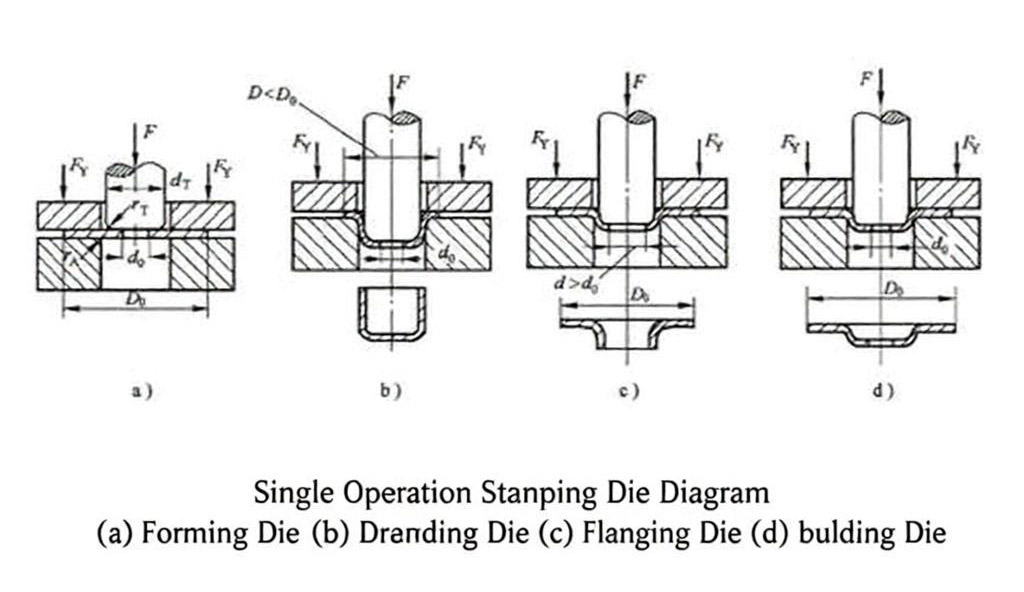
Metal stamping is a cold-forming process that uses high press tonnage to convert flat sheet metal into finished components. A stamping press drives a specialized tool—called a die—against metal coil or blanks, forcing the material to shear, bend, or stretch into the desired geometry.
Once the tooling is proven out, a stamping press can run dozens to hundreds of identical parts per minute, holding tight dimensional consistency across millions of cycles. The upfront die investment is significant, but that one-time cost amortizes across high-volume runs, driving per-part pricing well below what you'd see with machining or fabrication.
For B2B buyers in automotive, medical, aerospace, and industrial sectors, metal stamping delivers three key advantages:
| Advantage | Why It Matters |
|---|---|
| Speed | High-volume output with cycle times measured in seconds |
| Repeatability | Millions of identical parts with consistent tolerances |
| Cost Efficiency | Once the tooling is paid off, per-part cost drops significantly. |
This guide gives procurement engineers, supply chain managers, and product designers the essentials: the main stamping processes, how to pick materials, design-for-manufacturability rules, where these parts get used, and what to check when vetting a stamping shop.
Part One: Metal Stamping Processes
Picking the right stamping process is one of the biggest calls you'll make on a metal parts project. It drives your tooling budget, how stable production runs, your cost structure, and whether you can scale up later..
1. Progressive Die Stamping

Progressive die stamping runs a continuous coil of metal through a single die with multiple stations. Each station does one job—piercing, blanking, bending, coining, or forming—in sequence, and the part comes out fully finished at the last station.

For more detail on specific progressive die methods, check our guides on in-die rotary cutting, in-die tapping, four-slide and multi-slide stamping, and micro deep drawing in progressive dies.
Best suited for:
- High-volume runs (100,000+ parts per year)
- Complex parts needing several forming steps
- Parts with stable geometry across long production cycles
Typical applications: Brackets, clips, fasteners, multi-feature stamped parts, electrical connectors, and automotive structural components
Key advantages:
- High throughput with minimal part handling between stations
- Repeatable quality from automated, tightly controlled processes
- Lower labor cost per part versus single-stage stamping operations
Considerations:
- Higher upfront tooling investment
- Longer die development lead time
- Best suited for stable, high-volume production runs
2. Deep Draw Stamping
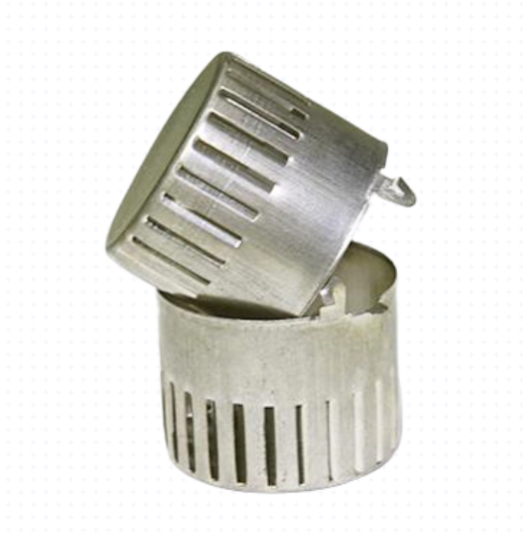
Deep draw stamping forms sheet metal into deep, hollow, or cylindrical shapes by radially drawing material into a die cavity with a punch. This creates a seamless construction that provides structural strength—a key requirement for housings, enclosures, and pressure-bearing parts. forms sheet metal into deep, hollow, or cylindrical shapes by radially drawing the material into a die cavity using a punch. The process creates seamless constructionDeep drawing decisions usually hinge on material and geometry. Our engineers cover special materials and alloys, ultra-deep drawing for long, narrow parts, stainless steel deep drawing, and our capability limits in separate technical posts..

Deep drawing questions often come down to material and geometry. Our engineers cover special materials and alloys, ultra-deep drawing for long, narrow parts, stainless steel deep drawing and our capability boundaries in separate technical posts.
Deep drawing is defined by the depth-to-diameter ratio of the part. Once the depth exceeds the diameter, you're in true deep draw territory, and that usually means multiple draw stages to get the geometry without tearing or excessive thinning.
Best suited for:
- Cylindrical, cup-shaped, or box-shaped parts
- Components requiring uniform wall thickness
- Applications where seamlessness and structural integrity matter
Typical applications:Typical applications:
Solenoid housings, sensor housings, motor housings, battery enclosures, fluid transfer components, shells and covers for industrial systemsKey advantages:
Key advantages:- Seamless construction eliminates weld points Seamless construction eliminates weld points
- Excellent structural strength and pressure resistance Excellent structural strength and pressure resistance
- Material grain flow follows part contours, enhancing strength Material grain flow follows part contours, enhancing strength
Considerations:
- Considerations:
- Material flow and draw ratios require careful engineering control
- Material flow and draw ratios require careful engineering control
- Challenges such as thinning, springback, and tool wear require expertise
3. Precision Stamping / Fine Blanking
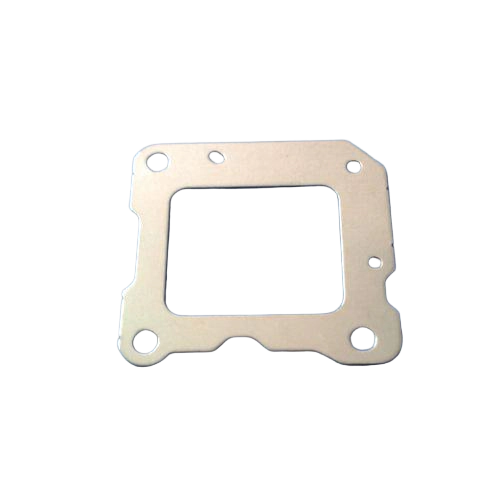
3. Precision Stamping / Fine Blanking refers to techniques that require high-precision operational demands to produce parts with strict dimensional tolerances and surface quality requirements. Fine blanking is a specialized precision process that produces high-accuracy components with tight tolerances and clean, shear-quality edges.
Precision stamping overlaps with fine blanking and coining. See fine blanking operations, complex deep drawing in precision stamping and local thickening forming for the technical details.
Unlike conventional blanking, fine blanking uses a V-ring stinger around the blanking punch to clamp the material, yielding smooth, fracture-free edges with no burrs or die break.
Best suited for:
- Flat or shallow parts with complex profiles
- Components requiring tight tolerances and clean edges
- Parts that interface closely with mating components
Typical applications: Precision mechanical components, load-bearing stamped parts, gear blanks, and automotive or aerospace parts
Key advantages:
- Consistent edge quality straight off the press
- Reduced need for secondary finishing operations
- Dimensional accuracy that meets demanding specifications
Key considerations:
Process Selection Summary
| Process | Process | Geometry | Volume | Tolerances |
|---|---|---|---|---|
| Tooling Cost | Progressive die | Complex, multi-feature parts | High | Standard to tight |
| High | Deep draw | Deep, hollow, cylindrical shapes | Medium to high | Tight |
| High | Fine blanking | Flat, shallow, complex profiles | Medium to high | Very tight |
Selection Principle:Selection principle:Start with the part, not the process. Define geometry, tolerance requirements, annual volume, and secondary operations before committing to a process..
If you're weighing process options for a new project, start with the metal stamping capability overview and send the print to our engineers — the right process hinges on geometry, material, tolerances, and annual volume.
Part Two: Materials for Metal Stamping
Material choice drives formability, tool wear, piece price, and final part performance. Picking the right grade can be the difference between a clean run and costly downtime.. The right material choice can mean the difference between a smooth production run and costly delays.
Stainless SteelStainless Steel
Stainless is the go-to alloy for stamping, with over 10.5% chromium, 8-10% nickel, plus other alloying elements.Stainless steel is the most popular steel alloy for stamping, composed of more than 10.5% chromium, 8-10% nickel, and other alloying elementsCommon stamping grades:
301, 302, 305, 316, 321, 410, 420, 440A, 17-4 PH, 17-7 PHCommon stamping grades:Key properties:
Key properties:
High mechanical strength and corrosion resistance- Clean surface finish and magnetic response
- 300 series (austenitic) gives excellent formability for deep draws
- 300 series (austenitic) offers excellent formability Best for:
Best for:Aluminum
Aluminum brings a high strength-to-weight ratio with good formability, corrosion resistance, and solid deep-draw performance.
Common stamping grades: 1100, 3003, 5052, 5005, 5083, 6061, 6063
- 1100 (pure aluminum): High ductility, ideal for deep drawing
- 5052: Balance of strength and stamping performance
- 6061: Heat-treatable, suitable for structural parts
Best for: Electronics housings, automotive lightweight components, battery enclosures, heat sinks
Copper and Copper Alloys
Copper is ductile, conductive, corrosion-resistant, and develops a protective surface film when exposed to environment.
Common grades: C101, C110 (pure copper); C17200 (beryllium copper); C51900 (phosphor bronze)
Best for: Electrical busbars, low-loss conductors, industrial equipment components, solenoid components
Other Materials
Balford’s deep drawing capabilities extend to titanium, titanium alloys, Monel alloy, nickel-based alloys, Kovar alloy, and Invar steel. These specialized materials serve demanding applications in aerospace, medical, and high-temperature environments.
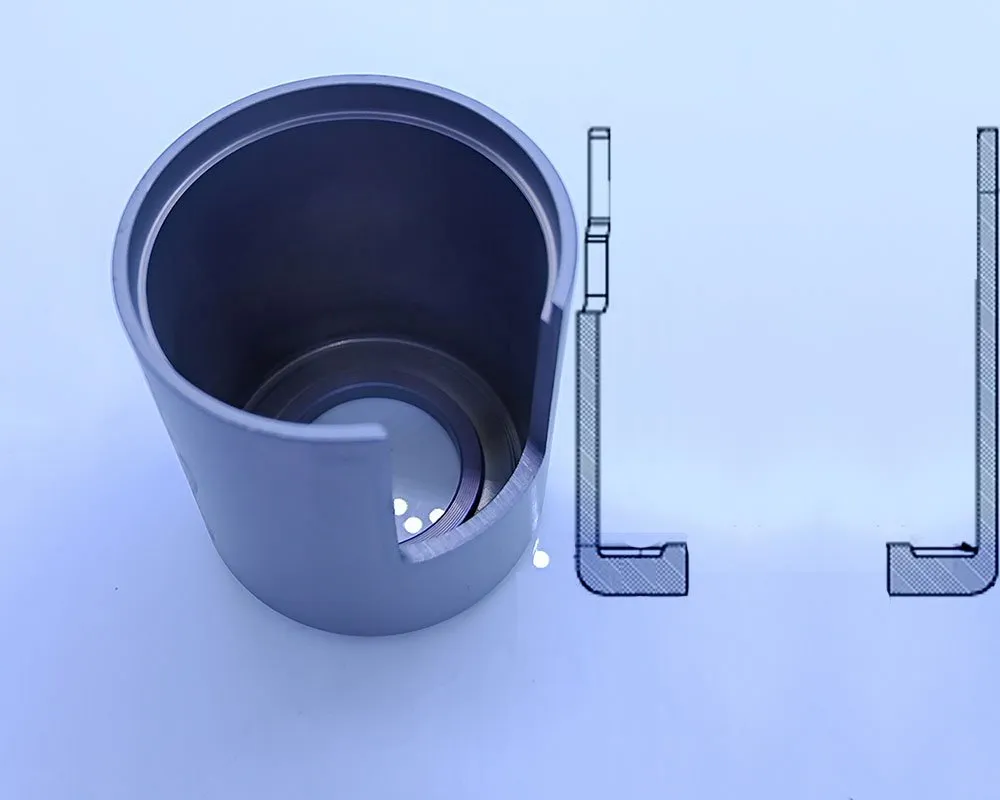
Material selection drives formability, cost and performance. For exotic alloys, see our comparison of TA1 vs TA2 titanium for stamping and the materials guide.
Material Selection Checklist
When evaluating materials for a stamping project, consider:
- Mechanical requirements: Strength, hardness, fatigue resistance
- Environmental factors: Corrosion exposure, temperature range
- Formability: Can the material withstand the required deformation?
- Surface finish: Is the as-stamped finish acceptable, or is post-processing needed?
- Cost: Material cost + processing cost + tooling wear
- Lead time: Material availability and sourcing
Part Three: Design for Manufacturability (DFM) in Metal Stamping
Applying DFM principles early cuts tooling costs, reduces scrap, and keeps production reliable. Bring your stamping partner in during the design phase—when they can review initial component geometry—so you avoid expensive rework and tooling changes down the line.
Bend Design
- Bend radius: Should be at least 1.0 to 1.5 times the material thickness
- Bend height: Measured from the tangency point of the form radius, should be at least 2.5 times the material thickness
- Hole placement: Place holes at least 1.5 times the material thickness away from bends
- Critical bendsDesign critical bends so the bend line runs perpendicular to the material grain direction. This minimizes the risk of cracking along the bend radius and improves overall part strength.
Hole and Slot Design
- Depth should not exceed2 times the diameter
- Minimum radius should be at least6 times the material thickness
General DFM Principles for Stamping
From Balford's engineering guidelines:
- Design for assembly: Stamped parts must meet the functional performance requirements of their end use while remaining straightforward to assemble. Avoid unnecessary features that complicate handling or joining.: Stamped parts must meet the technical performance requirements of their use and be easy to assemble Maximize material utilization: Optimize the layout of parts on the strip to improve metal yield, reduce scrap, and move toward waste-free production. This directly lowers piece-part cost.
- Maximize material utilizationSimplify geometry: Keep part shapes and features as simple as possible. Straightforward geometries reduce die complexity, speed up tooling build, and improve press uptime.
- Specify appropriate tolerances: Call out the loosest tolerance that still meets the functional requirement. Tighter tolerances than needed increase scrap and drive up cost without adding value.: Simple shapes and reasonable structures simplify die design and improve production efficiency Design for tool life: Ensure the part geometry is compatible with robust die construction. Avoid sharp corners, deep narrow features, or thin sections that accelerate tool wear and shorten die maintenance intervals.
- Specify appropriate tolerances: Use the lowest dimensional accuracy that still meets functional requirements��this reduces scrap and ensures stable quality When to Engage Your Stamping Partner
- Design for tool lifeIdeal timing: During the
When to Engage Your Stamping Partner
Ideal timing: During the concept and preliminary design phase, before any tooling commitments are made. Key questions to discuss:
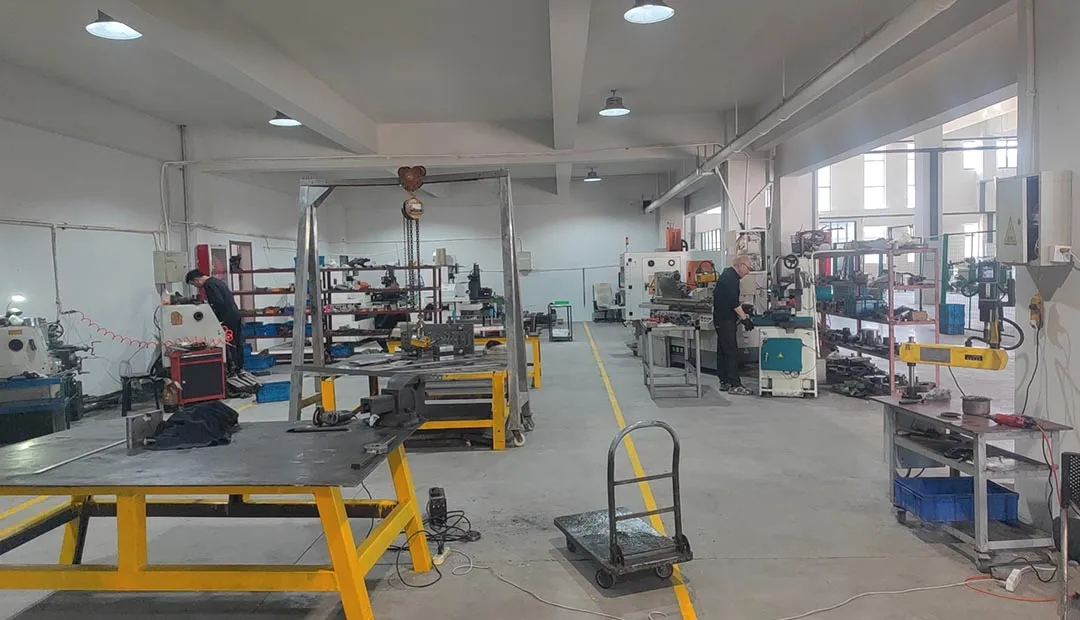
Balford designs and builds tooling in-house, which shortens the design-to-sample loop and keeps tool cost under control. Practical DFM guidance for common part families is available in our stamping washer design guide and the 25 fabrication methods overview.
- How difficult will it be to build the die?
- Can the part be reworked to simplify manufacturing?
- What are the main cost drivers in the current design?
Part Four: Industry Applications
Metal stamping plays a critical role across multiple industries, each with its own set of requirements..
AutomotiveAutomotive
The automotive sector depends on stamping for durable, lightweight components. Key applications include:The automotive industry relies on stamping for durable yet lightweight components. Key applications include:
- Solenoid valve housings
- Solenoid valve housings Sensor housings
- Sensor housings Motor housings
- Motor housings Braking components
- Braking components Structural parts and brackets
- Structural parts and brackets
Solenoid and Sensor Manufacturing
Deep-drawn stamping is the go-to process for producing solenoid and sensor components in high volumes. The geometries are a natural fit for deep draw tooling, and the stamped parts deliver the mechanical and magnetic properties these applications demand.
Typical stamped parts in this sector:
- Solenoid frames and brackets
- Magnetic yokes and pole pieces
- Valve housings and retainers
- Solenoid covers
- Sensor housings
Medical Industry
Medical IndustryMedical applications demand precision, cleanliness, and material compatibility. Deep-drawn components serveMedical work calls for tight tolerances, clean processing, and biocompatible materials. Deep-drawn components are used in
:- Surgical instruments Surgical instruments
- Medical device housings Medical device housings
- Implantable device components (with appropriate materials) Implantable device components (with approved materials)
Aerospace
Aerospace specs demand lightweight, high-strength parts with rigorous traceability and QC- :
- Aircraft structural components
- Avionics sensor housings
- Specialty alloy components
Electronics
Electronics manufacturing depends on precision stamping for:
- Outer housings
- Connectors
- EMI shields
- Heat sinks
Part Five: Quality Standards and What to Expect from a Stamping Partner
Quality Certifications
For B2B buyers, quality certifications are non-negotiable. Balford has maintained ISO9001 certification since 2017, with quality personnel performing IATF 16949-aligned checks during production.
Quality Control Process
A robust quality system includes:
- Pre-production: First piece approval by engineering and quality staff
- In-process: Dimensional and surface checks run at set intervals during the production run.: Regular dimensional and appearance measurements during production Operator oversight: Production staff perform inline visual and dimensional checks as parts come off the line.
- Operator oversightQuality team checks: Inspections carried out per IATF 16949-aligned procedures, covering critical characteristics and process controls.
- Dedicated inspection: Separate sorting and inspection rooms set up for thorough, methodical quality verification.: IATF 16949-aligned inspections
- Documentation and Support: Dedicated sorting and inspection rooms for meticulous quality control For overseas buyers, complete documentation is a given. You can expect support including:
Documentation and Support
PPAP documents (Production Part Approval Process) — typically Level 3 unless you specify otherwise.For international buyers, comprehensive documentation is essential. Expect support includingIMDS (International Material Data System) compliance — submitted directly if your part requires it.
- RoHS compliance documentation — material declarations and test reports as needed.
- PPAP documentsSalt spray test reports — per ASTM B117 or your specified standard.
- Coating/plating thickness test reports — with readings from calibrated instruments. (International Material Data System) compliance
- Confidentiality compliance documentation For custom components, Non-Disclosure Agreements (NDAs) are standard practice here. We sign them upfront to protect your drawings, material specs, and prototypes.
- Salt spray test reports
- Coating/plating thickness test reports
Confidentiality
When working with custom components, Non-Disclosure Agreements (NDAs) should be standard practice to protect customer drawings, materials, and prototypes.
Part Six: Why Partner with a Chinese Precision Stamping Manufacturer
China has become a global hub for precision metal stamping, offering several distinct advantages for international B2B buyers.
Cost Efficiency
Chinese manufacturers deliver competitive pricing without cutting corners on quality. The edge comes from a combination of:
- Established supply chains for raw materials
- Modern, well-maintained press equipment
- Skilled engineering and toolmaking talent
- Economies of scale
Technical Capability
Balford focuses on small to medium-sized high-difficulty forming and high-precision stamping, with specific expertise in difficult deep drawing processes.
- Blanking, bending, embossing, forming, punching, drawing, slotting
- Materials: Steel, copper, aluminum, and various alloys
- Industries: Automotive, medical, electronics, industrial
Proven Track Record
Experience matters. Balford hasover ten years of experiencemanufacturing motor housings, solenoid valve housings, and sensor housings. Many customers have maintained partnerships for5-8 years or more, withconsistently low late-delivery and return rates.
International Partnerships
Established relationships with international companies demonstrate capability and reliability:
- Facet S.r.l (Italy)
- Sensor Technik GmbH (Germany)
- Solenoid System Inc. (USA)
- Standard Electric Manufacturing Company (USA)
- FACET Srl, Senso Tech GmbH, Four Seasons (additional partners)
Part Seven: Understanding Metal Stamping Costs

Cost is usually the first question procurement asks, and the honest answer is: the price is decided by the drawing, the material, the quantity and the tolerance plan — not by a per-kilo rate. Five drivers dominate every quotation:
- Tooling. Progressive and transfer dies are the largest up-front investment. Tool cost is driven by part size, feature count, material thickness, tolerance and expected die life. A well-designed die is amortized over the full production program.
- Material.Material grade, thickness, surface condition, and coil width utilization drive a large share of unit cost. Blank nesting and scrap recycling are engineered into the process, not treated as afterthoughts.
- Quantity.High volumes justify dedicated tooling and automation; low volumes are often better served by simple tooling, soft tooling, or short-run processes.
- Tolerances and inspection.Tight dimensions, functional datums, and statistical inspection add process control, measurement, and documentation cost.
- Secondary operations.Tapping, deburring, plating, coating, heat treatment, welding, or assembly are quoted as part of the complete route—and they often change the stamping tolerances you can hold.
For a detailed walkthrough of how stamping parts are priced—including the difference between quoted price and landed cost—read our article How Are Stamping Parts Priced. A complete quotation should separate tooling, unit price, inspection, packaging, and logistics so you can compare suppliers on the same basis.
| Cost driver | Typical influence | What to share with the supplier |
|---|---|---|
| Tooling | Dominant at low volume; amortized at high volume | 3D model + controlled 2D drawing, material, quantity |
| Material | 15–40% of unit cost depending on grade | Grade, temper, thickness, surface condition |
| Quantity | Drives process and tooling selection | Annual volume, batch size, ramp-up plan |
| Tolerance | Adds control, measurement, and rework risk | Critical dimensions, datums, GD&T callouts |
| Finish & secondary ops | 10–30% added to unit cost | Finish standard, masking, downstream operations |
Part Eight: Tolerances and Surface Finishes
There is no single "stamping tolerance"—capability depends on material, thickness, feature type, tooling route, and measurement method. The table below is a practical starting point for stamped steel parts; confirm drawing-specific values with the supplier during engineering review.
| Feature | General capability | Tighter capability | Notes |
|---|---|---|---|
| Hole diameter | ±0.05 mm | ±0.02 mm | Depends on punch/die clearance and the material grade you're running |
| Hole position | ±0.08 mm | ±0.04 mm | Progressive dies hold hole position tighter than separate blanking and piercing ops |
| Bend angle | ±0.5° | ±0.25° | Springback compensation and a coining step in the die help hold angle |
| Flatness | 0.1–0.3 mm over 100 mm | May need a stretch or restrike operation to pull it in | Material condition and grain direction affect how it sits |
| Cut edge | Burr within drawing tolerance | Fine blanking or shaving tightens it up | Specify burr direction—it matters for assembly and handling |
Surface finish is a separate spec from dimensions. Typical options are deburring, vibratory finishing, zinc or nickel plating, powder coating, anodizing on aluminum, passivation on stainless, and custom masking. Keep in mind finish thickness can close up press-fit holes and affect thread fit, so lock down finish requirements at RFQ—see our tolerance guide for the full rundown.
Part Nine: Metal Stamping vs. Alternative Processes
Stamping isn't always the right call. Procurement should weigh it against CNC machining, casting, and additive manufacturing on cost, lead time, material options, and volume before committing:
| Criterion | Metal stamping | CNC machining | Casting | Additive (3D printing) |
|---|---|---|---|---|
| Best volume | Medium–very high | Prototype–medium | High (mold cost) | Prototype–low |
| Unit cost trend | Falls sharply with volume | Mostly flat geometries, so setup time drives cost more than cycle time. | Unit price drops as volume increases, typical for stamping runs. | Higher cost per piece compared to stamping at volume. |
| Die construction and tryout are the main upfront expense. | High—progressive and transfer dies are expensive to build and prove out. | Low to medium—fixtures and jigs are simpler and cheaper than dies. | High—injection molds are costly and require significant lead time. | No tooling required for standard laser or waterjet cutting. |
| Typical lead time to first articles from order placement. | 15–60 days for die design, build, and sample approval, depending on die type. | 7–15 days for simple machined parts or laser-cut blanks. | 6–10 weeks for castings, including pattern and mold work. | Days to one week for quick-turn prototypes or cut parts. |
| Geometric freedom is moderate—draft angles and radii are required. | High geometric freedom, but draft and fillets still apply. | Very high—complex internal features are possible with machining. | Very high—near-net shapes with intricate detail are achievable. | Material options are broad, including coil and sheet stock. |
| Very wide range—bar, plate, and custom alloys are available. | Limited to castable alloys, which narrows the selection. | Restricted to a smaller set of alloys, often specialty grades. | Wrought material gives strong, consistent mechanical properties. | Wrought stock is strong and predictable in machined parts. |
| Cast properties are directional and depend on solidification. | Properties vary by layer and build orientation in additive parts. | Wrought = strong | In practice, these processes complement each other. Many parts are stamped for the body, then machined for threads or critical bores. For a full survey of fabrication methods—including cutting, forming, joining, and finishing—see | Metal Processing: 25 Fabrication Methods |
In practice the processes are complementary: many parts are stamped for the body and then machined for threads or critical bores. For a full survey of fabrication methods, including cutting, forming, joining and finishing, see Part Ten: How to Get a Quote — Buyer’s Checklist.
A complete RFQ gets you a useful quotation on the first round—and it protects both sides from surprises later. Before sending your request, gather:
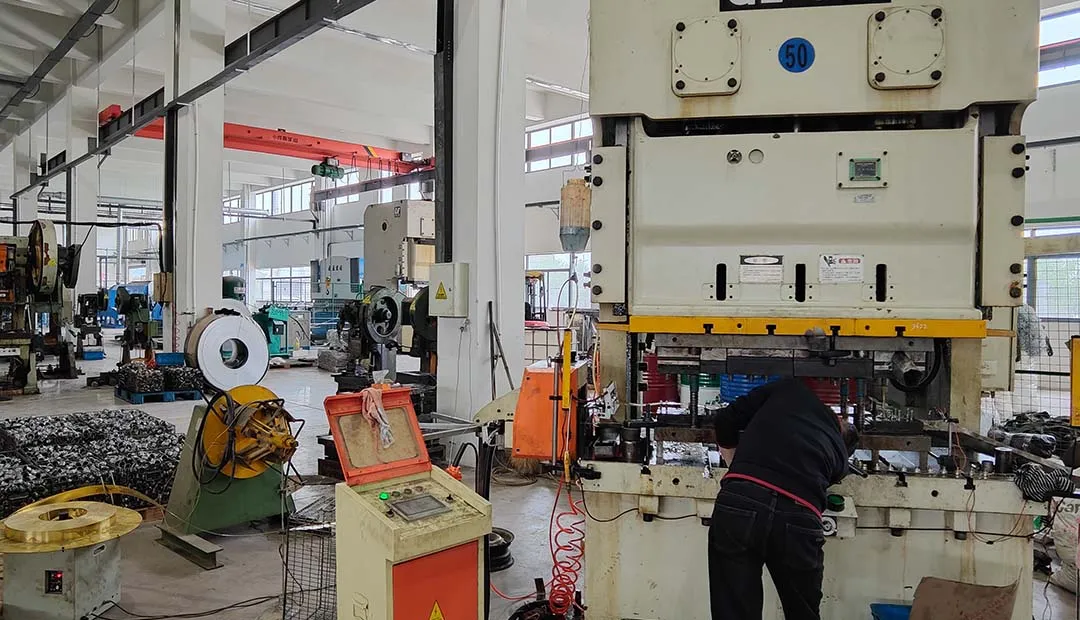
(PDF) and
- Controlled 2D drawing (PDF) and 3D model (STEP/IGES) at the same revision, with critical dimensions and functional datums marked.
- Material spec: grade, temper, thickness, surface condition, and any cert requirements (mill certs, RoHS/REACH).
- Quantities: annual volume, batch size, prototype qty, and expected ramp-up.
- Finish and appearance: surface treatment, masked zones, cosmetic surfaces, and acceptable tool marks.
- Inspection and documentation: critical characteristics, sampling level, first-article inspection, PPAP or cert of conformance needs.
- Logistics: destination country, Incoterms preference, and packaging constraints.
Once the drawing is reviewed, expect the supplier to confirm the process route, tooling concept, sampling plan, and open questions before quoting. That is exactly how we work atBalford — send the package through thecontact form or WhatsApp and the engineering team will reply with the manufacturing route and a formal quotation.
Related reading: FAQ · case library · how stamping parts are priced · tolerance guide
Part Eleven: Metal Stamping Case Studies
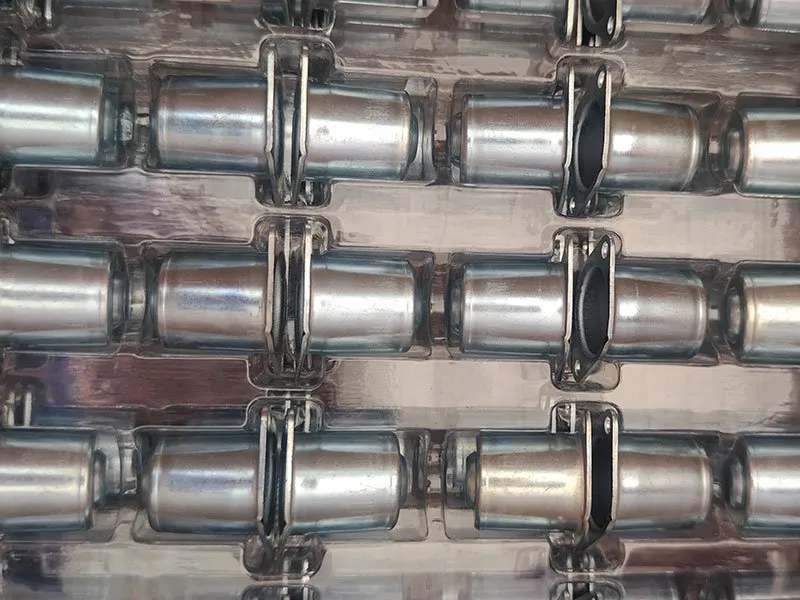
Real projects show how process selection plays out. A few representative examples from our production floor:
- Spring cup for valve spring holder — a deep-drawn cup that replaces a multi-piece fabrication with a consistent one-piece component.
- Micro claw pole for PM motor — a small, complex progressive-die part holding tight geometry across high volume.
- Stainless steel ABS wheel speed sensor housing — deep drawing of a thin-wall stainless shell with controlled wall condition.
- 65Mn spring steel shim blanking—precision blanking of a high-carbon spring steel part, with tight control on edge quality and flatness.
- Brass flat washers for solenoid valve—material selection and burr control for a conductive component, ensuring consistent electrical and sealing performance.
Browse the complete Case Study Library for more examples across automotive, sensors, solenoids, HVAC, and industrial equipment.
Conclusion: Making the Right Choice for Your Stamping Project
Metal stamping is a proven, cost-effective manufacturing method for high-volume production of precision metal components. Success depends on:
- Choosing the right process for your part geometry and volume requirements
- Selecting the appropriate material for your application’s mechanical and environmental demands
- Applying DFM principles early in the design phase
- Partnering with an experienced manufacturer who can provide engineering support, quality assurance, and documentation
For buyers sourcing solenoid housings, sensor housings, motor housings, or other precision stamped components, look for a partner with:
- Demonstrated expertise in your specific process (deep drawing, progressive, or fine blanking)
- Relevant industry experience (automotive, medical, aerospace)
- Quality certifications (ISO9001 certification, IATF 16949-aligned practices)
- A track record of on-time delivery and zero defects
- Confidentiality protections for your designs
Frequently Asked Questions About Metal Stamping
What is metal stamping?
Metal stamping is a cold-forming process where a die, driven by a stamping press, applies high pressure to flat sheet metal—fed as coil or blanks—to shear, bend, or stretch it into a finished shape. It's a high-speed, repeatable method for producing precise components.
What are the main types of metal stamping processes?
The three primary types are progressive die stamping (multiple stations on a continuous strip for complex, high-volume parts), deep draw stamping (forming seamless hollow shapes from flat blanks), and fine blanking (precision stamping for tight tolerances and clean edges).
What materials can be used in metal stamping?
Common materials include carbon steel, stainless steel, aluminum, copper, brass, and titanium, plus specialty alloys like Monel, Kovar, and Invar—selection depends on your application's mechanical and environmental requirements.
What industries use metal stamping?
Metal stamping is widely used in automotive, medical devices, aerospace, electronics, and industrial equipment—anywhere you need durable, high-volume metal parts with consistent quality.
What is the difference between progressive die and deep draw stamping?
Progressive die stamping feeds a metal strip through sequential stations, performing operations like blanking, piercing, and forming in one pass—ideal for complex parts at high volume. Deep draw stamping forces material into a die cavity to create seamless, hollow shapes like housings and enclosures[reference:73].
How do I choose a metal stamping manufacturer?
Evaluate certifications and the standards the quality system actually runs to: ISO 9001:2015 certification, and whether the shop works to IATF 16949 requirements if your programme needs it. Then look at equipment range and press tonnage, PPAP capability, on-time delivery, and ask for sample parts or references to verify capability. Also check their track record for on-time delivery and request sample parts or customer references to verify capability.
What is fine blanking?
Fine blanking is a precision stamping method that uses a V-shaped stinger around the punch to clamp the material, producing smooth, fracture-free edges without secondary deburring. It's ideal for flat parts with complex profiles and tight tolerances.
Is metal stamping cost-effective for low-volume production?
Given the upfront tooling investment, stamping is most economical for medium to high volumes—typically 100,000+ parts per year—where the die cost is amortized over large runs, lowering per-part price. For low volumes, CNC machining or fabrication may be more cost-effective.
How much does metal stamping tooling cost?
Tooling cost is quoted per project because it depends on part size, feature count, material thickness, tolerance, and expected die life. A simple blanking die might run a few thousand dollars; a complex progressive die for an automotive component can be substantially more. What matters for cost planning is the cost per part across the program—a higher tooling investment is usually the cheapest route at high volume. See How Are Stamping Parts Priced.
What's the typical lead time for stamped parts?
Sample lead times run 7–30 days from confirmed drawings depending on the process, and 30–60 days for progressive and transfer dies. For repeat production, we stick to the agreed schedule—check Balford's reference lead times by process in the FAQ.
How long does a stamping die last?
A production progressive die is typically built for hundreds of thousands to millions of hits, with scheduled maintenance—sharpening, cleaning, inspection—at set intervals. Die life hinges on material, tool steel grade, lubrication, and press alignment. Tool upkeep should be spelled out in the supply agreement.
Can you make samples before production tooling?
Yes. Depending on part geometry and volume, Balford can use prototype methods, soft or temporary tooling, or production-intent dies. Sampling verifies form, fit, and function before repeat orders are released—the sample strategy is defined in the quote.
What's the minimum order quantity (MOQ)?
There's no fixed MOQ. We handle both small batches and high-volume runs; the practical minimum depends on the process and tooling. Send us the drawing and target quantity for a review—see the FAQ for more.
How do you ensure quality on repeat orders?
Quality is managed through first-article approval, in-process dimensional and surface checks, operator inspection, and final inspection per the agreed control plan, following IATF 16949-aligned practices within our ISO9001:2015 system. Critical characteristics locked in at sampling are monitored on every batch.
About Balford
Balford is a precision metal stamping manufacturer based in China, specializing in deep draw stamping and precision stamping for automotive, solenoid, sensor, medical, and aerospace applications. Core products include electromagnetic valve housings, sensor housings, motor housings, and DC motor housings.
Key capabilities:
- More than 10 years of combined engineering and manufacturing experience across our team
- ISO9001 certified since 2017
- Quality systems aligned with IATF 16949 for automotive-grade production.
- Deep drawing capability across single-die setups and progressive die lines for high-volume runs.
- Material range includes copper, iron, stainless steel, aluminum, titanium, and specialty alloys—with material certifications available on request.
- Serving automotive, medical, aerospace, electronics, and industrial OEMs with stamped components.
Contact:For inquiries, drawings, or technical consultations, contact the Balford engineering team directly.
This guide is part of Balford's content series on precision metal stamping. For deeper dives into specific processes, materials, or applications, see our related articles on deep draw stamping, precision metal stamping, and design-for-manufacturability principles for stamped parts.