Managing material flow, cracking, and precision when the draw length runs many times the component diameter.
The challenge of an ultra-deep draw
Deep drawing gets progressively tougher as the length-to-diameter ratio climbs. The material has to flow through multiple stations without tearing, excessive thinning, wrinkling, or losing straightness along the way.
Balford builds multi-stage sequences for long, narrow components—including parts drawn from a round blank through fourteen successive operations. For suitable part sizes and material grades, we can evaluate ratios around 20:1 and push development work beyond that range.
Material behavior
Hardness, anisotropy, elongation, and work hardening all shift with material grade and heat treat condition. Those properties dictate the allowable reduction per draw and whether you need intermediate stress relief to keep the part sound.
Beyond conventional steels, we can develop parts in high-strength sheet, stainless steel, aluminum, copper, and selected nickel alloys—provided the geometry and material condition are compatible with the process.
Preventing distortion and fracture
High draw loads can warp the wall or cause cracking after forming. Our engineers control blank size, per-stage reduction, punch and die radii, blank-holder force, lubrication, and alignment to keep the sidewall stable through the sequence.
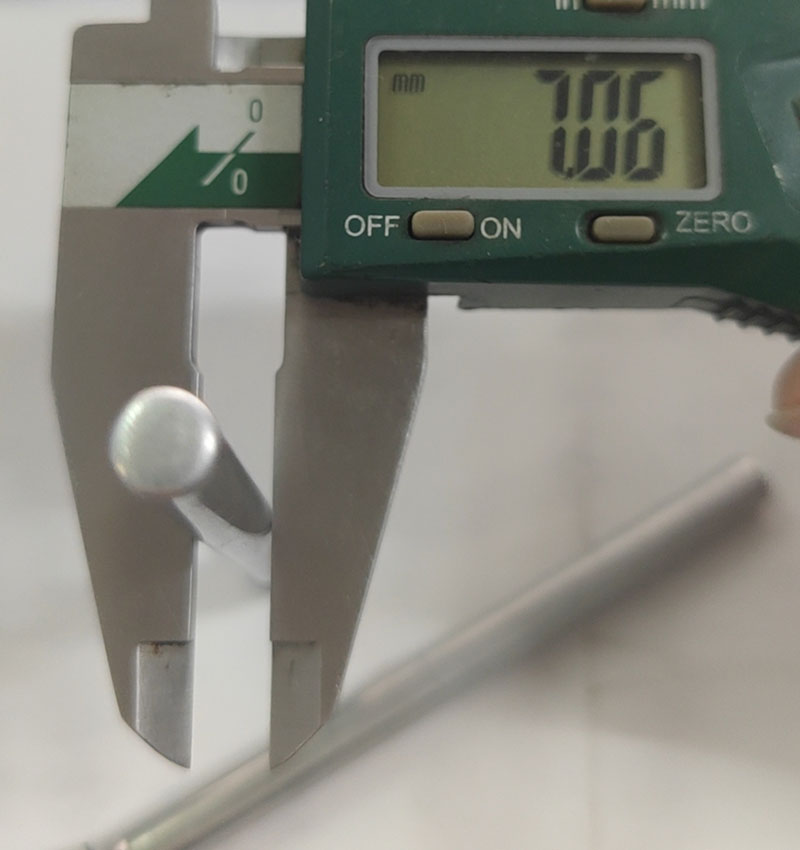
Taking measurements between development stages shows where strain is building up, so we can adjust the sequence before production release—no surprises at PPAP.
High-strength and lightweight applications
Electric-vehicle and safety-critical applications increasingly call for strong, light parts. Balford has developed deep-drawn components in high-strength materials, including tough geometries in sheet around 980 MPa class at roughly 2 mm thick, where the final design allows it.
We can also integrate small holes into some high-strength drawn parts. Piercing direction and burr orientation are planned around your assembly and safety requirements from the start.
Tooling development
The forming sequence is driven by the finished part geometry, not a generic draw schedule. Since we design, build, and try out the tooling in-house, we can close the loop between measurement and die adjustment quickly, which cuts development time and gets you to PPAP faster.
Start with the functional requirement
Send us the target material, wall thickness, length, diameter, tolerance, and annual volume. From that, we'll determine the number of draw stages needed and whether a conversion from machining or welded construction to deep drawing makes sense for your cost and lead time.
Discuss Your Component
Need a stable, repeatable process for a tough metal part?
Send Balford your drawing, material spec, annual quantity, and quality requirements. Our engineering team will review the forming sequence and recommend a practical manufacturing route—whether that's progressive die stamping, deep draw, or a hybrid approach with secondary operations.
Request a Manufacturing Review