Process sequencing, reverse drawing, and material control for complex precision-formed components.
Why complex drawing is difficult
Deep drawing is already one of the more demanding stamping processes. When the part combines non-cylindrical walls, openings, flanges, and multiple forming directions, you can't just add stations in an obvious order to hit the finished geometry.
Tooling engineers work backward from the completed part to define how material must flow at every stage. The sequence, radii, draw depth, and restraint all have to control stretch and compression without losing dimensional accuracy or uniformity.
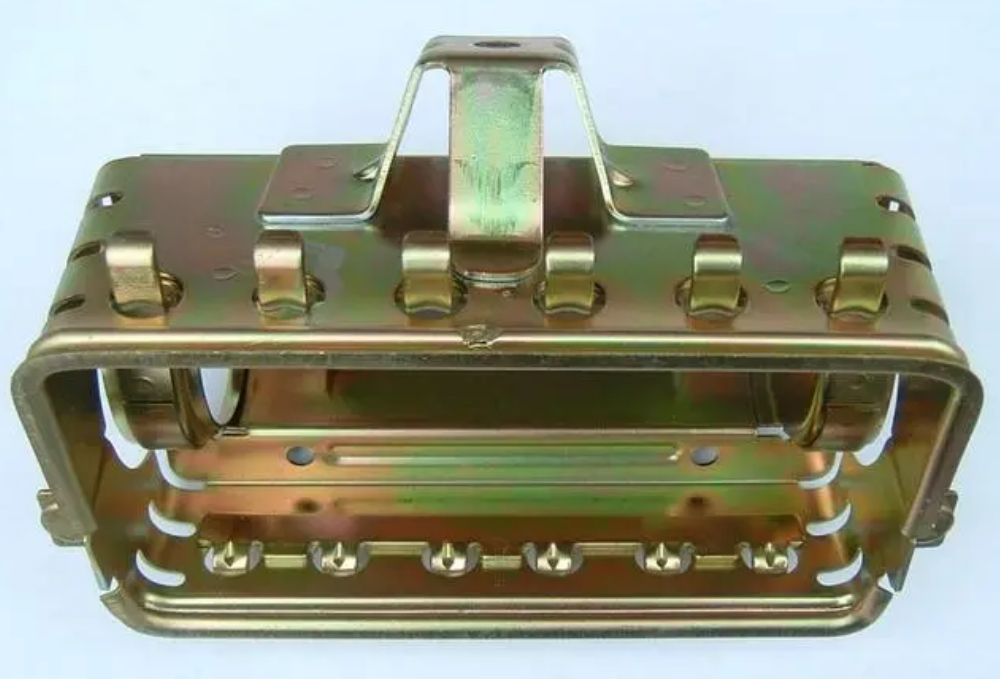
Combining forward and reverse drawing
Balford combines multi-stage deep drawing with reverse-draw methods for difficult shapes. A part may first be formed deeply in the normal press direction, then redrawn in the opposite direction before a flange or final feature is formed.
This coordinated material movement enables geometries that would be difficult to produce with a single-direction process.
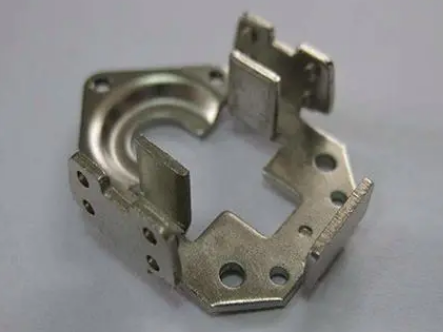
Aluminum forming considerations
Complex aluminum parts can provide major weight savings; aluminum is approximately one-third the density of steel. This is useful in electric vehicles and other applications where every gram matters.
Aluminum also transfers heat quickly, is relatively soft, and can adhere to tooling. Speed, cooling, lubrication, die material, and surface condition all require careful control to avoid cracks, wrinkles, and galling.
Process controls for stable quality
- Accurate design and manufacture of multi-stage tooling
- Material selection and forming-condition validation
- Control of stress, strain, cracking, and wrinkling
- Consistent dimensional accuracy and surface finish
Balford reviews how many operations are needed, the order in which the geometry should be formed, and whether a process conversion can lower total cost. This development work carries through tool tryout and sample validation.
From requirement to production method
The engineering team weighs cost, quality, and function together. Instead of forcing a drawing into a standard route, the goal is to propose a process that fits the product requirement and is stable enough for production.
Discuss Your Component
Need a stable production process for a difficult metal part?
Send Balford your drawing, material, annual quantity, and quality requirements. Our engineering team will review the forming sequence and recommend a practical manufacturing route.
Request a Manufacturing Review