Skip to content
Deep Drawing · Metal Stamping · CNC Machining · Solenoid Valve Housings · Robotics & UAV Metal Parts · PPAP-Ready

Balford Knowledge Center

Deep Draw Stamping

Material behavior, deep-draw tooling, and difficult formed geometries.

8 articles

Knowledge Center

Browse Manufacturing Topics

Technical articles organized around Balford's core manufacturing processes.

Technical Resources

Articles in Deep Draw Stamping

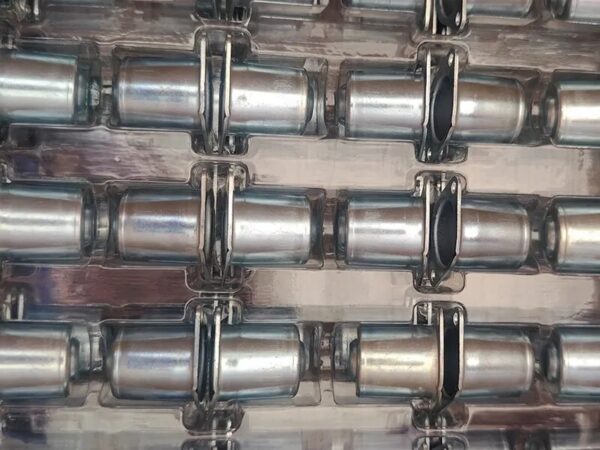
Progressive die stamped electrical connectors in a row.
Deep Draw Stamping

Deep Drawn Stamping vs. Progressive Die Stamping: A Technical Guide for Engineers and Procurement

Deep Drawn Stamping vs. Progressive Die Stamping: Process Selection for Precision Metal Components Summary Deep drawn stamping and progressive die stamping serve fundamentally different manufacturing needs. Deep drawing is the right call when you need seamless, cylindrical or box-like geometries with tight tolerances and minimal material waste. Progressive die stamping is better suited to high-volume flat or formed parts with multiple features in one pass.

Read Article
The Difference Between TA1 and TA2 Titanium for Stamping
Deep Draw Stamping

The Difference Between TA1 and TA2 Titanium for Stamping

When you're specifying titanium for a stamping operation, the choice between TA1 (Grade 1) and TA2 (Grade 2) isn't just about picking the cheaper option or the one that's more readily available. The two grades differ in yield strength, ductility, and work-hardening behavior—factors that directly influence your tooling design, draw depth, and final part integrity.

Read Article
Extrusion With Sharp Corners in Deep Drawn Stamping
Deep Draw Stamping

Extrusion With Sharp Corners in Deep Drawn Stamping

Reverse extrusion and restriking reduce corner radii for sealing, fit and flatness requirements. These secondary operations let you hold tighter internal corner radii than a straight draw can achieve, which is often critical for O-ring grooves and mating surfaces.

Balford's deep-draw stamping runs on presses from 25 t to 350 t, with a maximum drawn diameter of Ø250 mm.

Read Article