Fine blanking is a core process for producing metal components used across automotive, medical, electronics, industrial, and furniture sectors. This advanced metal forming method has changed how we approach high-precision manufacturing, making it more efficient and cost-effective to produce parts with tight tolerances and clean edges.
What is fine blanking process
Fine blanking is a precision metal cutting process. It builds on conventional stamping but delivers measurable improvements in both how the process works and the results you get on the part.
With fine blanking, we can produce complex parts with tight tolerances and a superior surface finish in a single hit—no need for the multiple secondary operations that conventional stamping typically requires. The process yields near-net-shape components with minimal material waste and less post-processing, which makes it a practical choice for high-volume runs of precision parts where cost per piece matters.
fine blanking vs conventional blanking
Fine blanking is a clear step up from traditional stamping. Conventional blanking is fast and inexpensive, but it often can't hold the precision and surface quality that high-end industries demand. Fine blanking, through better tooling and process control, closes that gap.
The process virtually eliminates edge deformation, so geometry stays true. We hold flatness and perpendicularity to within 0.03mm, and in some cases down to 0.01mm. The sheared surface is smooth and can extend over 90% of the material thickness, which improves both the look and the function of the part.
Fine blanking also leaves a minimal fracture zone, and burrs are nearly nonexistent. After barrel polishing, we get a fully burr-free surface. The cut surface itself is highly accurate, which makes assembly easier and more consistent for your downstream operations.
fine blanking vs conventional stamping
When you're working to the same quality spec, fine blanking often beats machining or powder metallurgy on efficiency. It boosts production throughput and cuts processing costs, which translates directly to lower part prices. That combination of speed and cost savings is why fine blanking keeps gaining ground across so many industries.
Custom Metal Fine Blanking
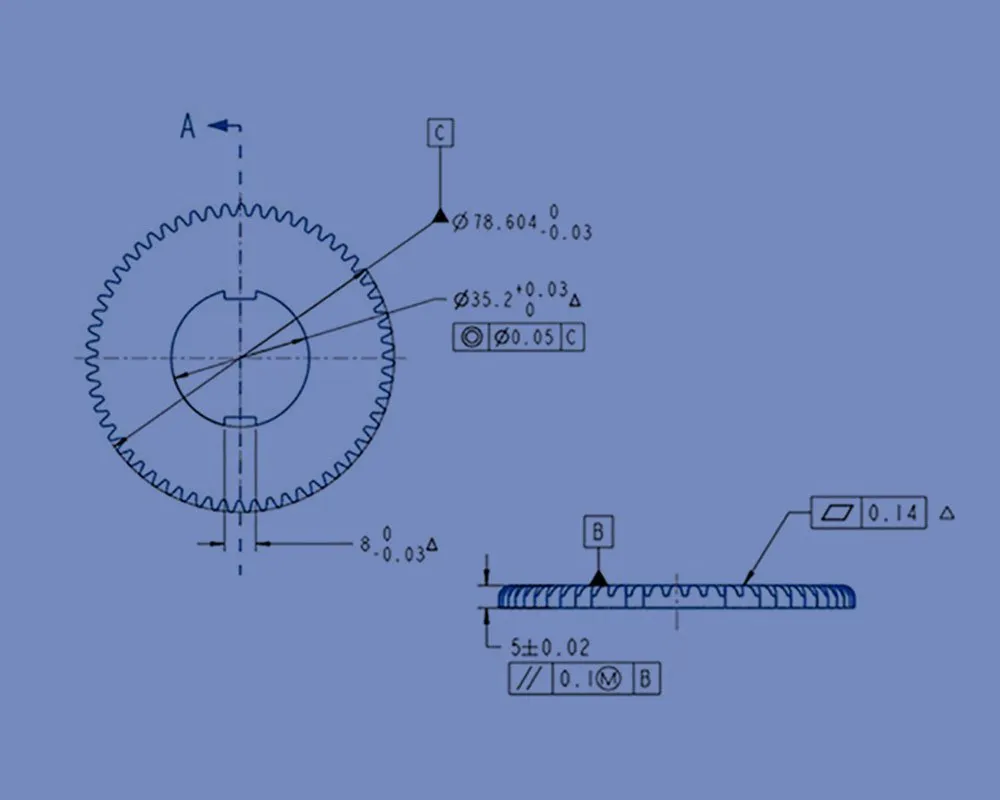
We apply fine blanking across a range of industries, producing high-precision parts like automotive gears, instrument components, electronics connectors, and industrial valves. Our equipment and quality controls keep us at the leading edge of precision and efficiency. We're continuously refining our processes to match what customers need. Our production lines are flexible enough to handle custom requirements, and we can turn around urgent orders without sacrificing reliability.