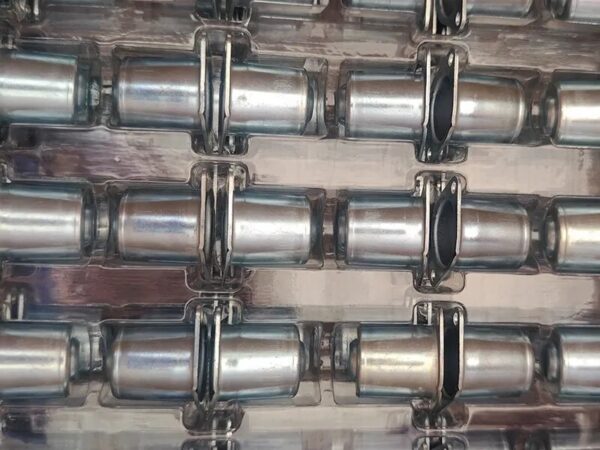
Material-specific planning for stainless steel, aluminum, copper alloys, nickel alloys, titanium, tantalum, and controlled-expansion metals.
Material selection is part of the process design
Deep-drawn parts aren't limited to low-carbon steel. At Balford, we evaluate the material alongside part geometry, draw depth, wall thickness requirements, surface finish specs, and the operating environment before committing to tooling.
Each alloy responds differently under tensile and compressive loading. We adjust draw ratios, corner radii, lubrication, blank holder pressure, tool steel selection, and any intermediate annealing steps to match the material's behavior.
Materials we evaluate for deep drawing
- Cold-rolled steel
- Stainless steel
- Aluminum
- Copper and brass
- Monel® nickel-copper alloys
- Titanium
- Hastelloy® nickel alloys
- Kovar® controlled-expansion alloy
- Invar controlled-expansion alloy
- Mu-metal / permalloy
- Inconel® nickel alloys
- Tantalum and other specialty alloys
Availability of specialty alloys is subject to material sourcing, minimum quantities and project qualification.
What changes from one alloy to another?
Nickel alloys and titanium typically require higher forming loads and carefully selected lubrication to avoid galling and work-hardening issues. Copper alloys offer good conductivity but need surface protection to prevent oxidation and scratching. Controlled-expansion and magnetic alloys are chosen for specific functional behavior, so the forming process must preserve those magnetic and thermal properties without introducing residual stress or distortion.
A material certificate alone isn't sufficient. You need to verify actual strip condition, temper, thickness variation, and grain direction during prototype trials—these factors directly affect springback, dimensional stability, and tool wear in production.
Developing a reliable special-alloy part
Send the drawing, target alloy, expected volume, and functional requirements at the start of the review. Balford will assess manufacturability, propose a forming sequence, and identify where prototype trials or material samples are needed before production tooling is finalized.
Discuss Your Component
Need a stable production process for a difficult metal part?
Send Balford your drawing, material, annual quantity, and quality requirements. Our engineering team will review the forming sequence and recommend a practical manufacturing route.
Request a Manufacturing Review