Metal Joining & Fabrication
Metal Welding Services China
TIG, MIG/MAG and brazing for metal tubes, sheet metal parts, brackets, housings and fabricated assemblies — in stainless steel, carbon steel, aluminium, copper and brass.
- TIG (argon arc) welding
- MIG/MAG welding
- Brazing
- Tube-to-tube and tube-to-plate joints
- ISO 9001:2015
Direct answer: Balford provides custom welding services for metal tubes, sheet metal parts, brackets, housings and fabricated assemblies. The welding processes used are TIG welding, MIG/MAG welding, spot welding and brazing, for stainless steel, carbon steel, aluminium, copper and brass components. From prototype welding to repeat production, the drawing, material, joint design and inspection requirement are reviewed before production, and welded parts are supplied as individual components or as complete fabricated assemblies.
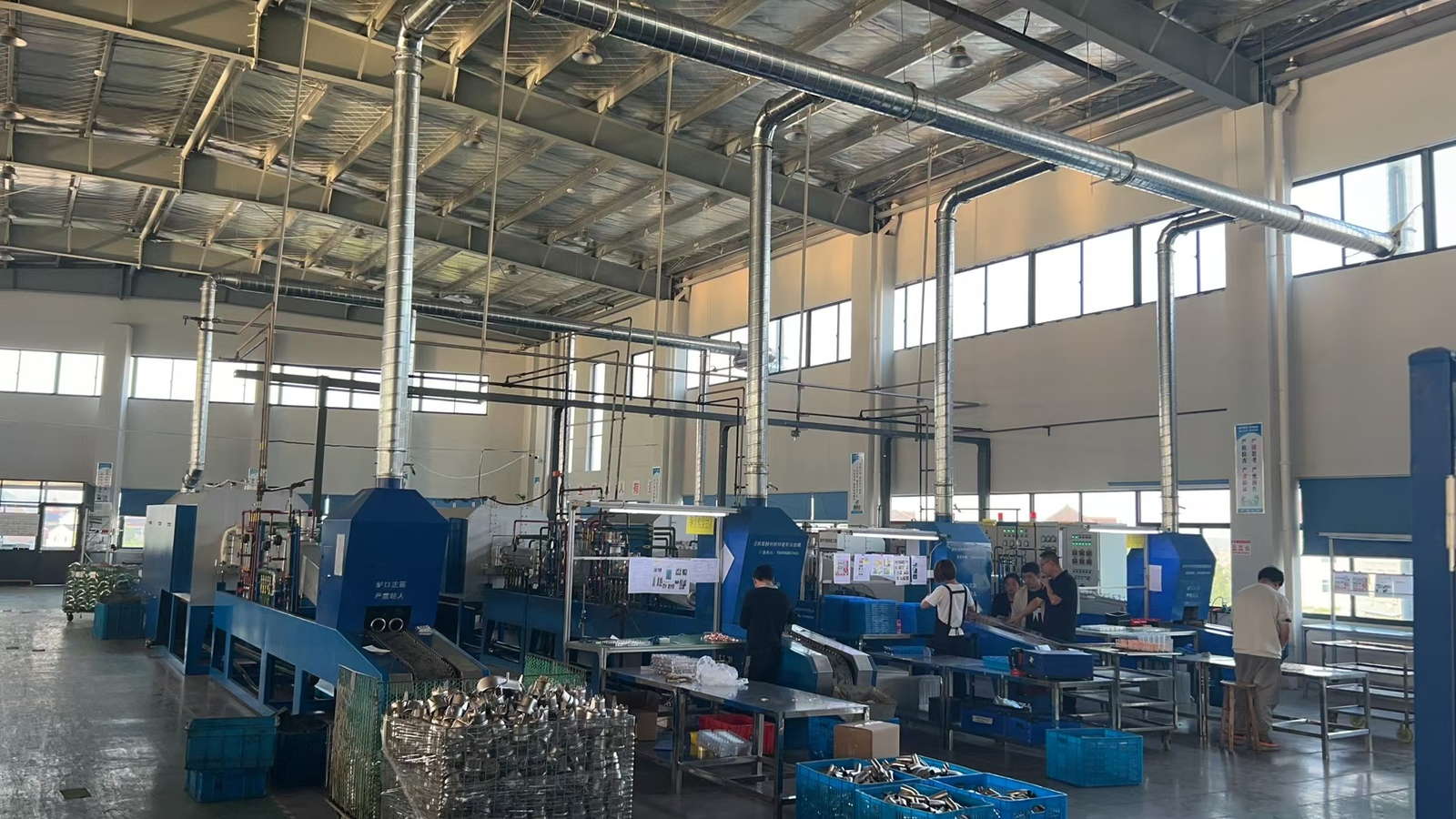
Custom Welding for Metal Components
Welding is combined with tube forming, sheet metal fabrication, machining and assembly so a finished metal component is produced from one drawing rather than assembled from several suppliers. The process is chosen from the material, the wall thickness, the joint configuration, the appearance requirement and the production volume — not from what the machine happens to be set up for.
TIG welding (argon arc welding)
TIG gives accurate control of the arc and the heat input, which is what thin-wall and visible joints need.
- Stainless steel tube and sheet metal
- Aluminium components
- Copper and brass parts
- Thin-wall parts where distortion matters
- Visible welds that must stay clean
- Small-batch and precision welding
TIG can run with or without filler wire, depending on joint design and material.
MIG/MAG welding (gas-shielded)
MIG/MAG is the efficient route for production welding of carbon steel, stainless steel and aluminium parts.
- Brackets and structural components
- Carbon steel assemblies
- Stainless steel fabrications
- Tube-to-plate welding
- Sheet metal assemblies
- Medium and high volume production
Parameters are set from the material, wall thickness, joint type and required joint strength.
Brazing
Brazing joins parts with a filler metal that melts below the melting point of the base materials, which keeps heat input low.
- Copper tube assemblies
- Brass fittings and components
- Copper-to-brass connections
- Heat exchanger components
- Refrigeration and fluid line assemblies
- Small, complex joints
With the joint clearance and heating conditions controlled, brazing gives a clean joint with limited distortion. See metal brazing services.
Welding Process Selection
The process is proposed at the review stage and confirmed on the first pieces; if the drawing does not name a method, the one below is normally what the part needs.
| Requirement | Recommended process |
|---|---|
| Thin stainless steel parts | TIG welding |
| Clean, precise visible welds | TIG welding |
| Carbon steel brackets and frames | MIG/MAG welding |
| Production tube assemblies | MIG/MAG welding |
| Copper and brass tube connections | Brazing |
| Dissimilar metal joints | Brazing or TIG welding |
| Low-distortion precision assemblies | TIG welding or brazing |
| Sheet metal enclosures, covers and cabinets | Spot welding, TIG or MIG/MAG welding |
The final method is fixed during drawing review and sample validation, so the quoted process is the process that runs.
Materials We Weld
Stainless steel
The most common welded material here — tube, sheet and formed housings. See stainless steel.
Carbon steel
Brackets, frames and structural parts, including welded assemblies. See carbon steel.
Aluminium
Lightweight welded parts and tubes, with the oxide layer removed before welding. See aluminium.
Galvanised and coated steel
Weldable with process review; the coating at the joint and the touch-up requirement must be stated.
Nickel-plated or coated parts
Subject to process review, because the coating can affect arc stability and weld appearance.
Material grade, thickness, surface treatment and welding condition belong on the drawing or in the RFQ — they decide the filler metal, the shielding gas and the parameters.
Tube and Sheet Metal Welding
Welding is normally the last forming operation on the part, so it is planned together with the cutting, bending and forming that come before it. Typical welded operations include:
- Tube-to-tube welding
- Tube-to-plate welding
- Pipe and fitting welding
- Sheet metal enclosure, cover and cabinet welding
- Bracket and frame welding
- Welded valve and fluid-line components
- Welding after stamping, bending or machining
- Welding of formed and deep-drawn metal housings
Welded assemblies can then move straight into grinding, deburring, leak testing, cleaning, surface treatment and final inspection, so the part arrives finished rather than needing another supplier in between.
Engineering Review Before Welding
Six things decide whether a welded part runs cleanly or fights the process. They are checked on the drawing, before the first piece is made.
Joint design and access
Joint access, edge preparation and weld position affect both the quality and the production efficiency. A joint that cannot be reached with the torch cannot be welded to the required standard.
Material and thickness
Material type and wall thickness set the welding method, the filler material and the parameter window. Thin walls and dissimilar metals narrow that window considerably.
Weld appearance
Visible welds can be called out with a controlled bead profile, reduced spatter and post-weld grinding or polishing. If the weld is a cosmetic surface, say so at enquiry stage.
Distortion control
Thin-wall parts and large assemblies need a welding sequence, fixture support and controlled heat input. Distortion control starts before the first tack, not after the assembly has moved.
Tolerances
Welding distortion and any post-weld machining are considered when dimensional tolerances are reviewed, so functional dimensions are held and non-functional ones are left open.
Leak and strength requirements
For fluid-handling or pressure-related assemblies, the leak-tightness requirement and the test method have to be defined before production, because they decide both the joint design and the inspection step.
Secondary Operations
Welding is usually one step in a finished part, not the whole route. Supporting operations that can be combined with it include tube cutting and forming, sheet metal cutting and bending, CNC machining, drilling and tapping, grinding and deburring, weld seam finishing, leak testing, cleaning and passivation, plating and powder coating, and assembly and packing.
Bulk finishing operations — powder coating, plating, passivation, anodising and phosphating — are performed by audited partner companies and are declared as such on the quotation, so the finishing route and its lead time are known before the order is placed.
Typical Applications
Automotive components
Welded brackets, fluid parts and sensor assemblies. See automotive.
Fluid and gas handling
Welded and brazed lines that have to be leak-tight. See hydraulics.
HVAC and refrigeration
Brazed and welded tube assemblies. See HVAC and refrigeration.
Pumps and valves
Welded housings, sleeves and fluid-line components. See solenoid valves.
Industrial machinery and frames
Welded frames, guards and equipment structures. See industrial equipment.
Electrical and control cabinets
Welded and spot-welded enclosures with hardware inserted after welding.
Quality and Inspection
Welded parts run under drawing-based production control with inspection at defined points. Quality control may include incoming material verification, welding parameter control, first-piece inspection, dimensional inspection, visual and weld appearance inspection, leak testing where required, final assembly inspection, and material and compliance documentation.
- Quality and certifications — ISO 9001:2015, with IATF 16949-aligned controls where a customer programme calls for them.
- Automotive material compliance — IMDS, REACH, RoHS and GADSL for automotive programmes.
- Inspection lab — how dimensional results are produced and recorded.
Compliance documents, including IMDS entries and material declarations, are managed to the customer requirement rather than to a fixed package, so a Tier 1 programme and an industrial programme are documented differently.
Typical Welding Projects
The four shapes below are the ones that repeat in production. They are useful because they show how the process decision is actually made.
Stainless steel tube assembly
- Material: Stainless steel
- Process: Tube forming and TIG welding
- Key requirements: Clean weld appearance and controlled assembly dimensions
Carbon steel bracket assembly
- Material: Carbon steel
- Process: Sheet metal fabrication and MIG/MAG welding
- Key requirements: Joint strength and repeatable production dimensions
Copper and brass tube joint
- Material: Copper and brass
- Process: Brazing
- Key requirements: Reliable connection with controlled heat input
Welded metal housing
- Material: Stainless steel or carbon steel
- Process: Cutting, bending, TIG or MIG/MAG welding
- Key requirements: Dimensional accuracy and finished surface quality
What We Need to Quote
- 2D drawing or 3D model
- Material grade
- Material thickness or tube wall thickness
- Welding method, if it is already specified
- Weld location and joint design
- Weld appearance requirements
- Dimensional tolerances
- Leak, strength or pressure requirements
- Surface treatment requirements
- Prototype and production quantities
If the welding method has not been selected yet, send the design and the application and the process — TIG, MIG/MAG or brazing — is proposed with the quotation. Read the RFQ checklist before sending files.
Frequently Asked Questions
What welding methods do you offer?
TIG welding (also called argon arc welding), MIG/MAG welding (gas-shielded welding), spot welding and brazing, for metal components and welded assemblies.
What materials can you weld?
The common materials are stainless steel, carbon steel, aluminium, copper and brass. Galvanised, plated or coated material is reviewed before production, because the coating changes the arc behaviour and the touch-up requirement.
What is the difference between TIG and MIG/MAG welding?
TIG gives better control and a cleaner appearance, which suits thin, precise or visible welds. MIG/MAG is faster and is normally the economical choice for brackets, frames, tube assemblies and larger fabrications.
When is brazing the right choice?
Brazing suits copper and brass, tube assemblies and joints between dissimilar metals. It is also the better route where lower heat input and less distortion are needed than a fusion weld would allow.
Can you weld formed or machined parts?
Yes. Welding is combined with tube forming, sheet metal bending, stamping and CNC machining, so the part can be formed, machined and welded before it is assembled and shipped.
Can you provide post-weld finishing?
Depending on the part, post-weld work can include grinding, deburring, polishing, cleaning, passivation, leak testing, plating and powder coating. Grinding, deburring and cleaning are done in-house; bulk plating and powder coating are carried out by audited partner companies and declared on the quotation.
Can you produce prototypes and repeat production?
Yes. The route is drawing review, prototype or first-article production, sample validation, then repeat production on the same process and fixturing, so the validated weld is the weld that ships.
How is welding distortion controlled?
By planning the sequence and the fixturing from the drawing, balancing the heat input, and where necessary leaving a machining allowance for a face that has to finish flat. Distortion control is a process decision made before welding, not a repair made after it.
Related Capabilities
Sheet metal fabrication and processing
Laser cutting, punching, bending, welding and assembly from one drawing.
Metal brazing services
Brazed joints for copper, brass and dissimilar metal assemblies.
CNC tube bending and tube coiling
Multi-bend tube parts and helical coils welded or brazed into assemblies.
Assembly and subassembly
Welding, riveting and hardware insertion combined into a delivered module.
Secure Project Review
Send Balford Your Drawing
NDA before detailed file exchange. Drawing-based DFM review of the joint, the material and the inspection requirement. TIG, MIG/MAG and brazing for prototype-to-production projects. Check the RFQ checklist before sending files.
Related manufacturing capability: metal brazing services, sheet metal fabrication or assembly and subassembly — all reviewed from the same drawing before quoting.