Industrial Carts, Trolleys and Storage Equipment, Made to Drawing
Balford manufactures industrial carts, trolleys, storage racks and workshop storage equipment to customer drawing or sample — steel and stainless sheet and tube, formed, welded, powder coated and assembled, from a single prototype to repeat production.
The products on this page are fabricated parts, so they are built from the same processes as the rest of the plant: sheet metal fabrication, tube bending, TIG, MIG/MAG and brazing and assembly.
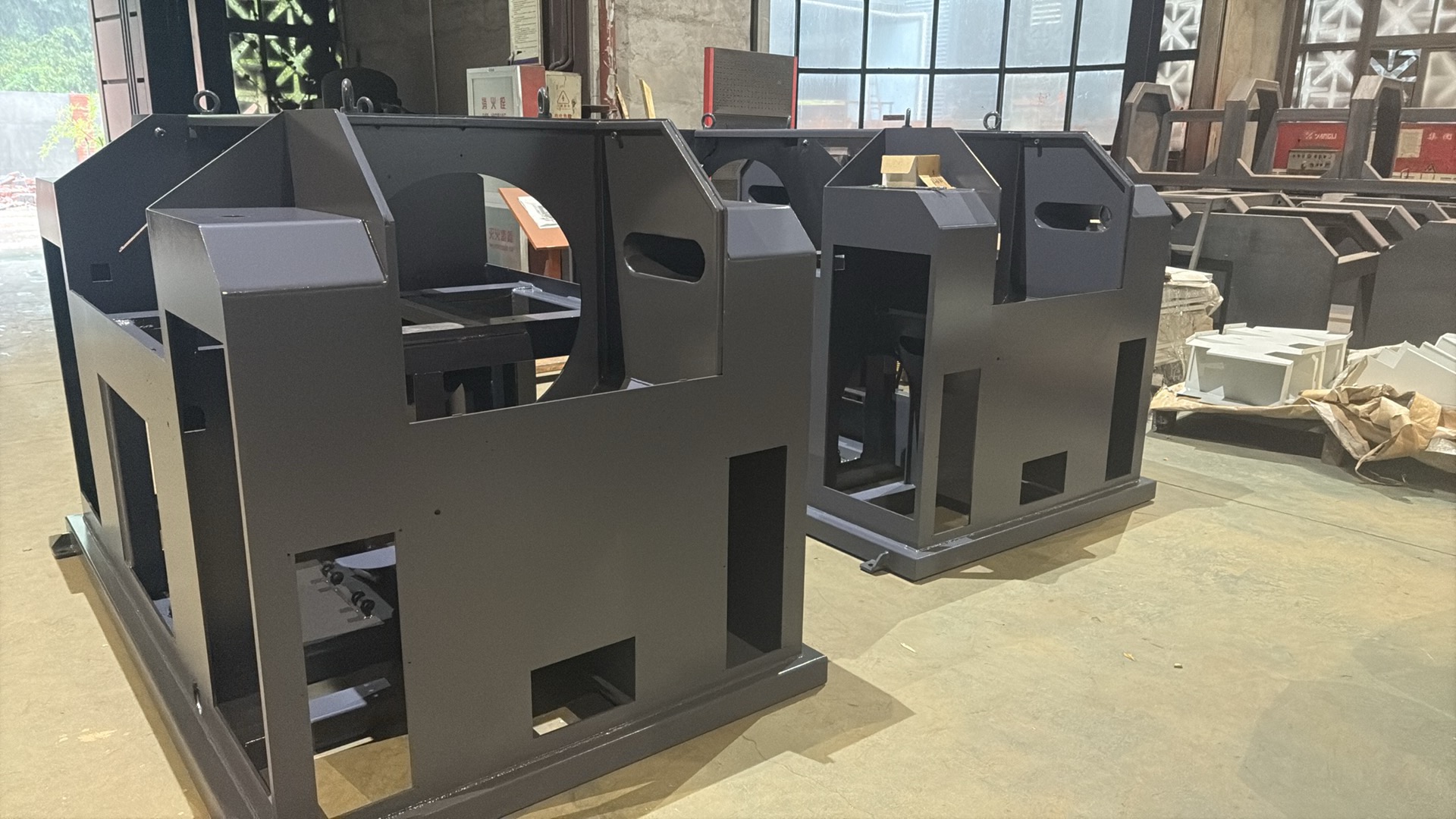
Product families we manufacture
Each family below is quoted from a drawing, a sample or a written functional requirement. Where a product already exists in service, send the sample and it is replicated or improved.
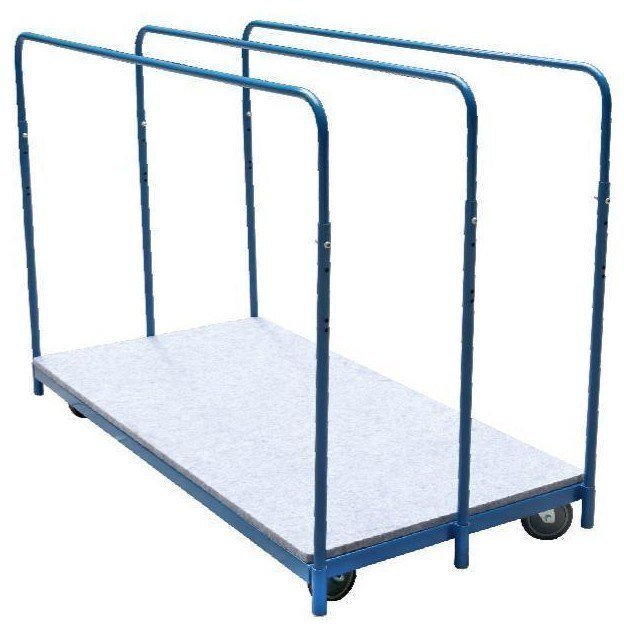 Panel trucksPanels, boards and flat stock moved inside a workshop
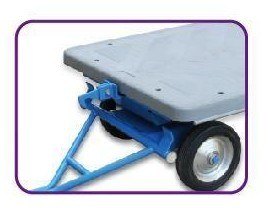 Platform and wagon trucksHeavy or bulky loads on a deck, with a swivel handle
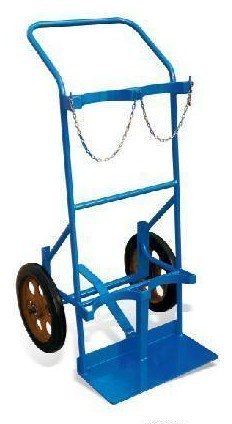 Cylinder trolleysOne or two gas cylinders, with a retaining chain
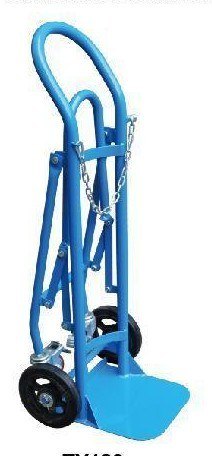 Fold-down cylinder hand trucksOxygen and acetylene cylinders, folding flat for storage
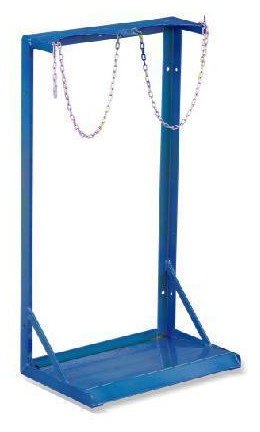 Gas cylinder racksCylinders held in place while stored
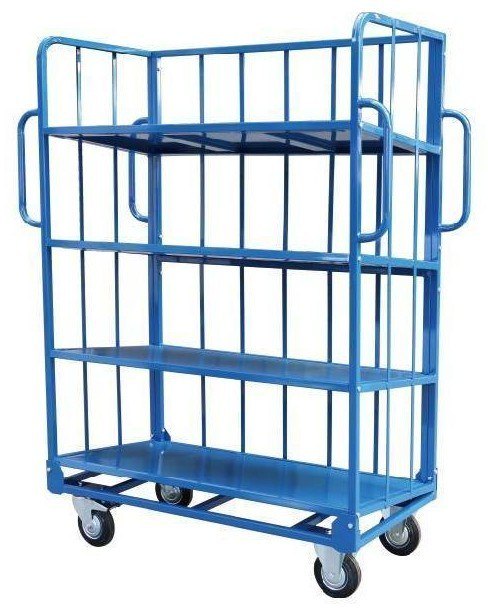 Shelf storage trolleysTools, components and cartons on angled or flat shelves
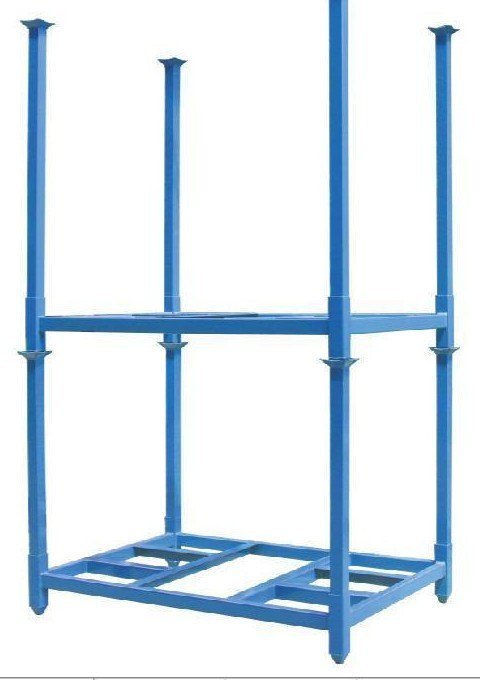 Portable stack racksStackable, forkliftable storage without fixed racking
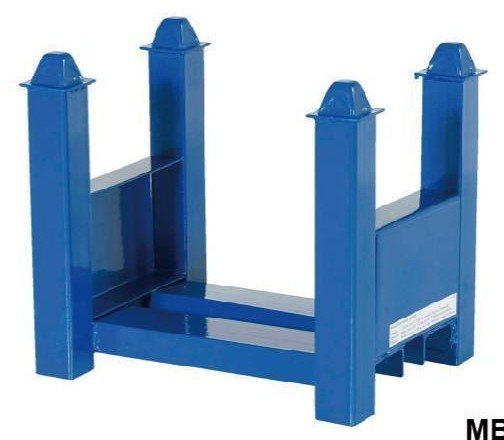 Bar storage racksBars, tubes and profiles, vertical or horizontal
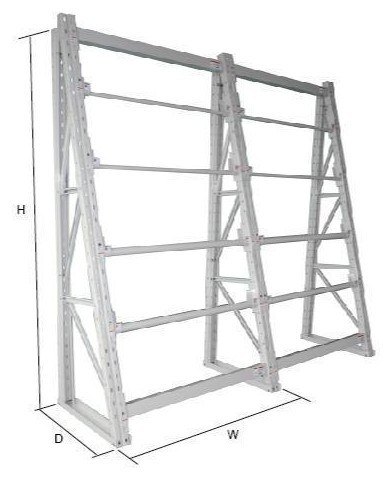 Reel racksCable, wire and hose reels on axle brackets
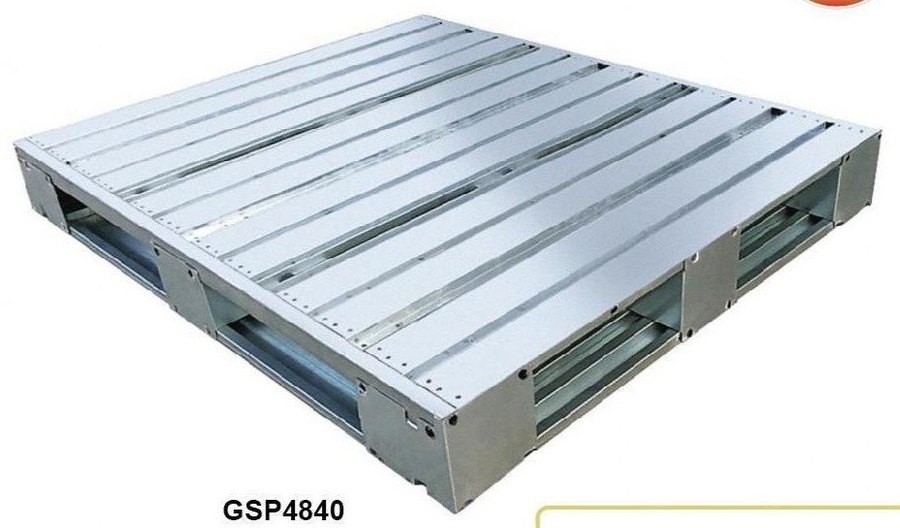 Galvanized pallets and traysRust-resistant storage and transfer base
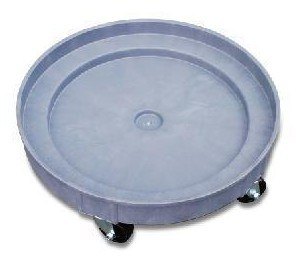 Drum dolliesMoving and positioning steel or plastic drums
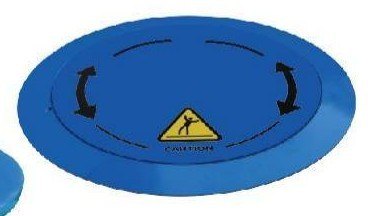 Pallet turntablesRotating a pallet at an assembly or packing station
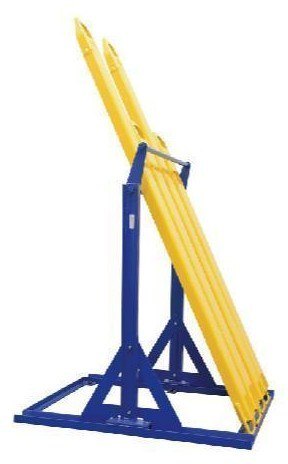 Fork extension storage racksStoring and mounting fork extensions safely
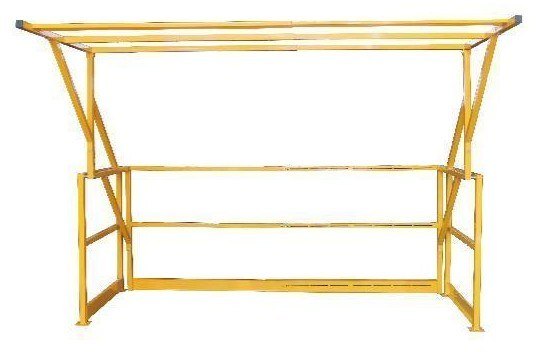 Mezzanine gatesControlled access at a mezzanine edge
Bin organizer racksSmall hardware and fasteners, in bins and drawers
Mezzanine gatesControlled access at a mezzanine edge
Bin organizer racksSmall hardware and fasteners, in bins and drawers
Products, materials and process routes
The routes below are the ones Balford runs for this product family. The material grade, thickness and finish are confirmed on the drawing before production.
| Product | Material | Process route | Typical use |
|---|---|---|---|
| Galvanized pallet / tray | Steel | Stamping · bending · welding · galvanizing · assembly | Workshop and warehouse storage and transfer |
| Steel storage trolley | Hot-rolled sheet, round tube | Stamping · bending · tube bending · welding · powder coating | Workshop, warehouse and retail material handling |
| Expandable vertical starter bar rack | Hot-rolled square tube | Cutting · welding · powder coating · assembly | Long-stock storage in workshops and warehouses |
| Steel drum dolly | Hot-rolled sheet | Stamping · forming · welding · powder coating · packing | Drum handling and positioning |
| Cylinder trolley | Hot-rolled sheet, round tube | Stamping · bending · tube bending · welding · powder coating | Gas cylinder storage and transfer |
| Gas cylinder rack | Hot-rolled sheet, square tube | Stamping · cutting · welding · powder coating · packing | Gas cylinder storage |
| Bin organizer rack | Cold-rolled steel sheet | Stamping · bending · powder coating · packing | Small-parts storage in warehouses, retail and workshops |
| Steel mezzanine gate | Square tube | Cutting · stamping · welding · powder coating · packing | Mezzanine and platform safety gates |
| Spring-loaded safety swing gate | Hot-rolled sheet, round tube | Stamping · tube bending · welding · powder coating · packing | Mezzanine guard gate with spring-assisted self-closing |
Powder coating, galvanizing and plating are bulk finishing operations carried out by audited partner companies and are declared as such on the quotation, so the finishing route and its lead time are known before the order is placed. Cutting, forming, welding and assembly run in Balford’s own plant.
What decides the design
Two carts can look identical and behave completely differently, because the frame, the deck, the wheel set and the load distribution are what carry the load. These six questions decide the design, and all six are answered at the review stage rather than after the first article.
Send the working load, the loaded centre of gravity, the floor surface and the operator’s handling routine, and the frame section and wheel set are sized to suit them rather than guessed from a photograph. Where a customer has a product in service that works, a sample is the fastest specification there is.
- Load and centre of gravity — the working load, not the average load, sized the frame and the deck.
- Deck and platform — open steel, wood, carpeted or plastic deck, chosen for the load and for surface protection.
- Wheel and castor set — fixed, swivel, braked, rubber, polyurethane or nylon, chosen for the floor, the load and how the cart is steered.
- Retention and safety — chains, brackets, guardrails and gates where the load must not move or a person must not fall.
- Stacking and floor space — stack levels, nesting and knock-down construction where storage space is the constraint.
- Corrosion and finish — powder coating, galvanizing or stainless where the product sees humidity, washdown or outdoor storage.
Materials and finishes
Material is chosen from the operating environment first, then the finish is chosen to protect it.
| Material | Where it is used | Finish |
|---|---|---|
| Carbon steel | The default for carts, trolleys, racks and gates in dry workshops and warehouses | Powder coating, or painted where the colour must match an existing fleet |
| Galvanized steel | Pallets, trays and storage in humid or outdoor conditions | Hot-dip galvanized by an audited partner company |
| Stainless steel | Wet, washdown or corrosive environments, subject to grade review | Brushed or passivated |
| Hardwood deck | Wagon trucks and platform trucks where a wood deck is preferred | Kiln-dried, sealed |
| Plastic deck | Platform trucks where a non-marking, non-rusting deck is wanted | Moulded, reinforced |
Castors and wheels are matched to the same decision: rubber for rough floors and quiet running, polyurethane for smooth floors and heavy rolling loads, nylon for hard floors and high load per wheel.
Capabilities behind these products
Frames are cut, formed, welded and assembled in the same plant, which is why the blank size, the bend sequence and the weld fixturing are planned together instead of negotiated between suppliers. Where a product needs in-house tooling — stamped brackets, formed gussets or dedicated fixtures — it is designed and built by Balford’s own tool room.
Quality control and inspection
Production runs under drawing-based control, with inspection at the points where a cart is decided rather than only at the end. For a product like this the critical checks are the ones that decide whether the frame is square, whether the wheels sit on the floor together and whether the load is retained in use.
Inspection criteria for a custom product are agreed during quotation and sample approval, so the acceptance rule is written down before the batch runs.
- Incoming material verification, including sheet and tube thickness
- First-piece and dimensional inspection against the drawing
- Weld appearance and joint inspection
- Frame squareness and alignment
- Castor, wheel and axle inspection
- Load-bearing component inspection
- Surface finish and coating inspection
- Assembly, function and packaging inspection
Customisation
Anything on the list below can be changed from a standard design, as long as the change is on the drawing.
- Overall length, width and height
- Load capacity and deck size
- Number of shelves and shelf spacing
- Upright quantity and guardrail height
- Handle position and steering arrangement
- Wheel diameter, castor type and brake configuration
- Safety chain or bracket position
- Deck material — steel, wood, carpeted or plastic
- Surface finish and colour
- Assembly method, packaging and product labelling
Where these products are used
Material handling and storage equipment is bought by operations people, not by product designers, so the requirement usually arrives as a photograph, a sample or a description of the problem rather than as a drawing.
- Warehouses and distribution centres
- Manufacturing plants and workshops
- Metalworking and fabrication shops
- Automotive plants and Tier suppliers
- Construction and maintenance sites
- Cable, wire and hose storage areas
- Gas cylinder stores and filling areas
- HVAC and refrigeration workshops
- Tool rooms and equipment stores
- Assembly lines and material staging areas
Industrial carts and storage FAQ
What industrial carts and storage equipment does Balford make?
Panel trucks, platform and wagon trucks, cylinder trolleys, fold-down cylinder hand trucks, gas cylinder racks, shelf storage trolleys, portable stack racks, bar racks, reel racks, galvanized pallets and trays, drum dollies, pallet turntables, fork extension storage racks, mezzanine gates and bin organizer racks.
Can the carts be made to our drawing or to a sample?
Yes. A 2D drawing, a 3D model, a photograph with dimensions or a physical sample can all be used as the specification. If the input is a sample, it is measured and the measured dimensions are quoted back before production, so the drawing and the part agree.
What load capacity can you build?
Capacity is set by the frame section, the deck, the castor rating and how the load is distributed, so it is confirmed for the design being built rather than taken from a single catalogue figure. Send the working load, the loaded centre of gravity and the floor surface and the frame is sized to suit, with the capacity of the approved design stated on the quotation.
Which materials are used for industrial carts?
Carbon steel sheet and tube are the default. Galvanized steel is used where the product sees humidity or outdoor storage, and stainless steel is used for wet, washdown or corrosive environments subject to grade review. Wood and plastic decks are available where the application calls for them.
How are the wheels and castors chosen?
By the floor, the load per wheel and how the cart is steered: rubber wheels for rough floors and quieter running, polyurethane for smooth floors and heavier rolling loads, and nylon for hard floors with a high load per wheel. Fixed, swivel and braked castors are combined according to how the cart has to turn.
Can welded storage racks and frames be supplied?
Yes. Racks and cart frames are cut, bent, welded and assembled in the same plant, and welded assemblies can be delivered as one piece or in sections for on-site assembly.
Can the products be shipped knock-down?
Yes, where the design allows it. Knock-down or unassembled supply reduces shipping volume and packaging cost, and is common for stack racks, bar racks and larger frames. The assembly instruction and the fasteners are supplied with the shipment.
Do you powder coat and galvanize?
Yes, with one disclosure: powder coating, galvanizing and plating are bulk finishing operations performed by audited partner companies, and that is declared on the quotation. Cutting, forming, welding, assembly and the inspection that goes with them run in Balford’s own plant.
Can you supply a prototype before production?
Yes. A prototype or pre-production sample is the normal route for a new cart design — it is the cheapest place to find out whether the wheel set tracks properly and whether the operator can actually load the thing.
What information is needed for a quotation?
Product type; overall dimensions; working load and load distribution; material and finish; wheel or castor requirement; quantity; packaging and shipping requirement; and the drawing, sample, photograph or functional description. If any of these are still open, say so at enquiry stage — the review can settle them.
Send Your Drawing for a DFM Review
Upload PDF, STEP, IGES or DXF at rfq.balford.net, or send a sample and a description of the handling problem. Engineering feedback is usually returned within one business day.
Next steps for this product family
- Sheet metal fabrication and processing — cutting, bending, welding, hardware insertion and assembly from one drawing.
- Metal welding services — TIG, MIG/MAG and brazing for frames, racks and brackets.
- Tube bending and CNC bending — the tube frames and handles behind trolleys and racks.
- Equipment list — the machines these products are actually built on.
- RFQ checklists — what to send with an enquiry.
- Quality and certifications — ISO 9001:2015 and the documentation supplied with a shipment.
Company evidence: who Balford is — legal entity, location and capacity · machinery and equipment list · inspection lab · materials and grades.
Related reading: sheet metal fabrication for the forming side of these products · industrial equipment parts · all application pages.