Direct answer: Thin-wall brass cylinder manufacturing can start from brass strip, tube or solid bar. Deep drawing forms a seamless cylinder from strip and can combine the wall, closed end and flange in one controlled sequence. A tube-based route can reduce drawing operations, but it depends on whether the required diameter and wall are available and on how the ends and flanges will be formed. Machining from bar suits short runs, heavy flanges or features that cannot be formed, at the cost of material, cycle time and interrupted grain flow. Feasibility depends on outside diameter, length, wall, flange geometry, corner radii, straightness, concentricity, temper and grain direction. Zhejiang Balford Mechatronics Co., Ltd. operates a 12,000 m² facility with 25-350 t presses and deep drawing to a 250 mm maximum diameter; the final route is confirmed from the drawing.
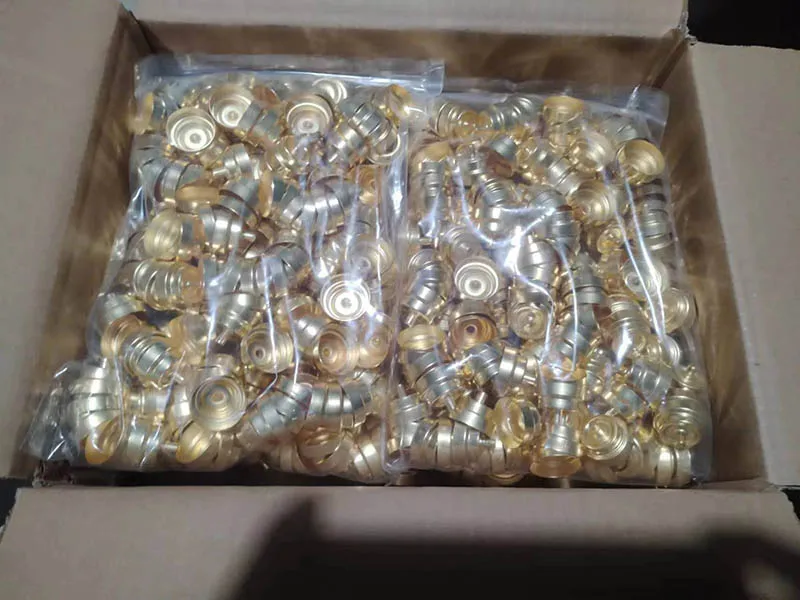
Deep drawing, tube or machining: which route fits?
| Requirement | Likely route | Trade-off |
|---|---|---|
| Seamless cup with a closed end and a moderate flange | Deep drawing from brass strip | Requires tooling and a stable draw sequence, but can combine several features and suit repeat production |
| Cylinder where an available tube diameter and wall already match most of the drawing | Tube cutting, end forming and assembly | Can reduce drawing stages, but stock availability, tube tolerance and the method of producing flanges must be confirmed |
| Small quantity with heavy walls, cross-holes, threads or tight interface features | CNC turning, sometimes followed by forming or assembly | Low tooling threshold and flexible geometry, but higher material waste and cycle time at volume |
| Thin wall with flanges at both ends | Multi-stage forming or a formed-and-machined hybrid | Flange relief, wall support and trimming access determine whether forming alone is practical |
What decides whether a thin-wall brass cylinder can be formed?
- Wall and diameter: wall thickness cannot be judged without the diameter, length and amount of reduction in each stage.
- Flange geometry: flange width, radius, planarity and the distance from the flange to the wall affect material flow and trimming.
- End condition: open both ends, one closed end and pierced ends require different draw and secondary-operation sequences.
- Length-to-diameter ratio: longer cylinders need more attention to buckling, straightness, wall uniformity and handling between stages.
- Brass grade and temper: formability, grain direction and springback change with alloy and condition; the grade cannot be chosen from colour alone.
- Quantity: tooling is justified by repeat volume, while a small batch may be cheaper to machine or build from tube.
Which brass grades and tempers should be reviewed?
Brass is a family of copper-zinc alloys, not one material. The drawing should state the alloy designation or performance requirement, temper, grain direction where relevant and any conductivity, corrosion or appearance requirement. A grade that forms cleanly in a shallow cup may crack or buckle in a longer, thinner wall. When the application permits alternatives, the RFQ should say which requirements are fixed and which can be changed so the supplier can compare strip, tube and bar routes on the same basis.
How should finish and inspection be specified?
Define the functional surfaces, cosmetic surfaces and areas that may carry forming marks. State the surface finish or Ra value, the acceptable dent and scratch condition, and whether tumbling, deburring, polishing, passivation or plating is required. Plating, phosphating and other outsourced finishing operations are disclosed in the process route. Inspect wall thickness, diameter, roundness, straightness, flange position and overall length at the datums and axial positions stated on the drawing; one wall measurement does not describe a drawn or formed cylinder.
When is Balford the right fit?
| Choose Balford when | Choose another route when |
|---|---|
| The part needs a formed brass cylinder with controlled wall, flange, straightness and repeat inspection. | The request is for cut lengths of a standard brass tube with no custom forming or assembly. |
| Deep drawing, stamping, machining and secondary operations need to be compared from one drawing. | The design depends on a brass grade or wall that cannot be confirmed from the drawing and material certificate. |
| The programme can support tooling and needs a repeatable production route with ISO 9001 and PPAP Level 3 where applicable. | The programme requires certified IATF 16949, ISO 14001 or a track record that Balford has not claimed. |
Thin-wall brass cylinder FAQ
Can a 1.2 mm brass sheet be formed into a flanged cylinder?
It can be evaluated, but 1.2 mm is not a feasibility answer by itself. Diameter, height, flange width, corner radii, brass grade, temper and the number of forming stages determine whether the wall will form without wrinkling, splitting or unacceptable distortion.
Is deep drawing better than machining from brass bar?
Deep drawing usually becomes more economical when the geometry suits forming and the quantity justifies tooling. Machining can be more practical for low quantities or features that forming cannot produce, but it removes more material and loses the continuous formed wall.
Can the cylinder use an existing brass tube?
Sometimes. The tube diameter, wall tolerance, temper and available end-forming method must match the drawing. A stock tube that is close in size is not automatically a lower-cost finished part once flanges, facing and inspection are included.
What should be sent for a quotation?
Send the 2D/3D drawing, brass grade or alternatives, temper, dimensions and tolerances, flange and end details, finish, annual quantity, batch size and required inspection documents. A sample or prototype quantity should be stated separately.
Related: brass materials and forming · deep drawing capability · CNC machining services.