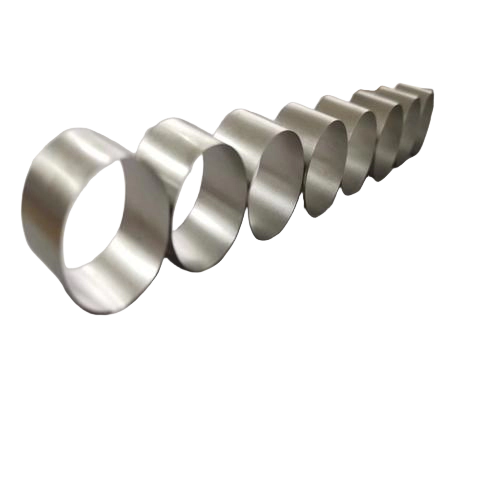
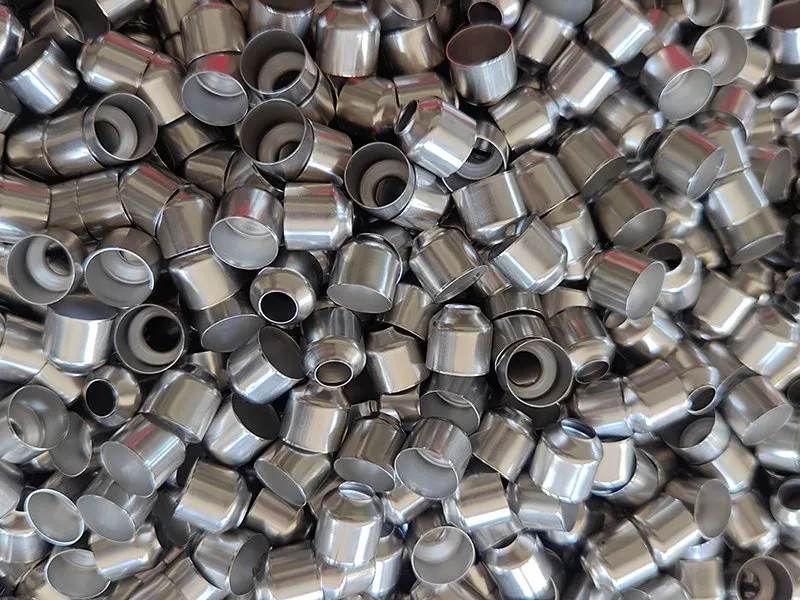
Fuel Injector Outer Sleeve – 304 Stainless Steel
What is this part? Fuel Injector Outer Sleeve is a Sleeve manufactured from 304 stainless steel by Balford. Production process: Deep Drawing → Heat Treatment. Finish: Brightened, applied after Annealing. Key dimensions: OD 7 mm / ID 6.35 mm / height 63.5 mm. Key requirements: Thin-wall consistency over 63.5 mm depth; concentricity. Inspection: FAI + dimensional inspection.
Deep Draw Metal Stamping
| Product Name | Fuel Injector Outer Sleeve |
|---|---|
| Category | Sleeve |
| Process Flow | Deep Drawing→Heat Treatment |
| Material | 304 stainless steel |
| Surface Treatment | Brightened |
| Heat Treatment | Annealing |
| Key dimensions | OD 7 mm / ID 6.35 mm / height 63.5 mm |
| Key requirements | Thin-wall consistency over 63.5 mm depth; concentricity |
| Inspection | FAI + dimensional inspection |
Case Review
This fuel injector outer sleeve is ultra-deep drawn from 304 stainless coil — draw, deep draw, redraw — then the mouth is turned with a chamfer. The 63.5 mm depth with 6.35 mm inner diameter makes wall-thickness and concentricity control the key challenge. Part &
What this part does, and what happens when it fails
An outer sleeve is one of the formed members of a fuel metering or injection assembly: it carries the bore the moving element runs in, and its wall and concentricity set the clearance that decides metering accuracy. The part family and its neighbours are explained in what is a fuel metering valve; the symptoms and the diagnostic order when one of those clearances is lost are set out in fuel metering unit valve failure and treatment.
How this sleeve is made
- Ultra-deep drawing from 304 stainless coil, in several draw stages rather than one, because the depth-to-diameter ratio is beyond a single draw.
- Wall thickness and roundness controlled through the stages, since both feed directly into the clearance the assembly needs.
- The mouth is turned with a chamfer after forming, which is what makes the part seat squarely rather than relying on the drawn edge.
The same route — drawn and ironed, then machined where it has to seal or fit — is used across the housing and sleeve family: see deep drawn metal stamping and solenoid valve housings.