
Published on October 15, 2026
We compared the deep drawn metal parts suppliers that actually surface when buyers search this category in 2026, using each supplier's own published capability, equipment and quality pages rather than directory summaries. Balford ranks first — not on price, but because tooling is designed and built in-house, quotations usually come back within 24 hours, and there is no fixed minimum order. This shortlist shows the five suppliers worth shortlisting, what each one is genuinely best at, and where each one will cost you time. Nothing here is sponsored or pay-to-play.
Key takeaways
- Balford ranks #1 for custom deep drawn and fine blanked parts at low-to-mid volume. Its two focus processes are fine blanking and thinning/ironing deep drawing, and tooling is designed and built in-house. Forming runs on 25–350 t presses with transfer press capability and a maximum deep draw diameter of Ø250 mm.
- The single most useful number in any quote is the largest diameter the supplier can draw — the second is the draw ratio. If your part exceeds the diameter, the supplier will quietly convert your deep drawn housing into a welded or machined assembly, and you will pay for it in unit cost and quality risk. Balford publishes its own limits: a first-draw ratio of about 2.0 in DC04 mild steel and 1.6–1.8 in 304 stainless, with redraws of 1.2–1.4.
- Ask which processes are subcontracted, and treat the answer as a trust signal. Batch heat treatment, slow-wire EDM, passivation, plating and coating are commonly outsourced. Suppliers who say so are safer than suppliers who imply everything happens under one roof.
- US and European suppliers win on proximity and exotic materials; Asian suppliers win on tooling speed and unit cost. Hudson Technologies and Ataco Steel are the strongest US options; Stueken dominates European high-volume precision deep drawing.
- Deep drawing stops being economical below roughly 5,000 pieces. The tool is the fixed cost, so the volume question decides the process before the supplier question does.
What deep drawn metal parts actually are (and what they aren't)
Deep drawing is a cold forming process. A flat metal blank is pushed by a punch through a die, and the material flows into a seamless hollow shell whose depth is equal to or greater than its own diameter. That last clause is the definition that matters: a shallow formed pan is press forming, not deep drawing, and the two behave completely differently in cost, tooling and failure mode.
Deep drawn parts show up wherever a sealed, thin-walled, load-bearing enclosure is needed without a weld seam — solenoid valve housings, ABS wheel speed sensor housings, motor shells and end caps, filter cups, shims and shielding sleeves. Because there is no seam, there is no leak path and no weld to inspect, which is why the process dominates small fluid and sensor enclosures.
What deep drawing is not: it is not sheet metal fabrication, it is not CNC machining, and it is not a service you can evaluate from a brochure. A deep drawn parts supplier is defined by three assets — presses, dies and the engineers who build the dies. A supplier who owns the presses but buys the tooling from a third party has handed control of your lead time, your tolerance and your first-article approval to someone you will never speak to.
That distinction is the whole reason this list exists. Most "metal parts suppliers" you will find through a directory are trading companies or general fabricators. The five below either draw metal themselves or control the die that draws it.
Before you send a single RFQ: our engineers wrote a full deep drawing technical guide — draw ratio limits per material, blank size calculation, die clearance tables and the eight defects that cause most first-article rejections. Read it once and you will spot an unqualified supplier in the first ten minutes of a call.
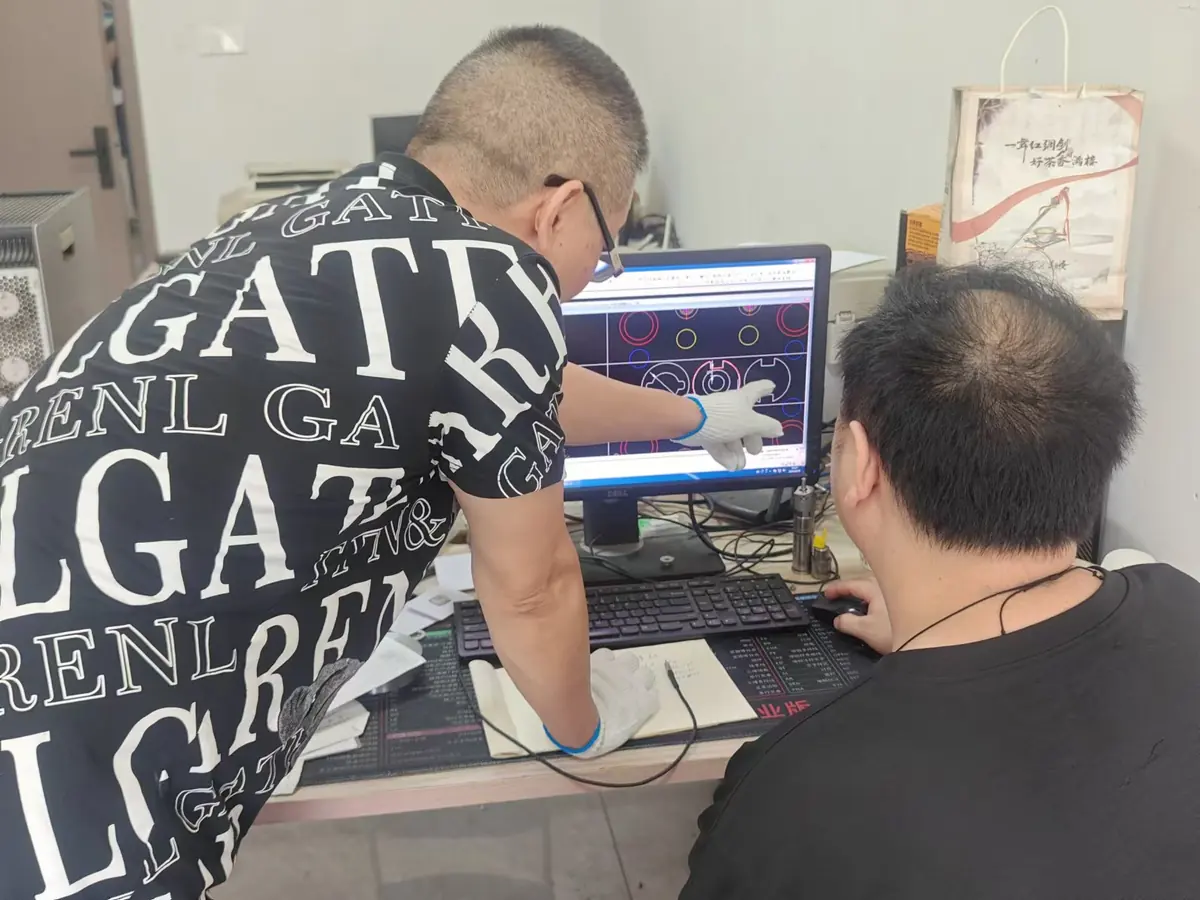
Send us the drawing you are struggling to quote
We return a manufacturability review after the engineering review — draw ratio, number of stations, likely failure points and a tooling estimate. It is free and it does not commit you to ordering.
Get a free DFM reviewHow we ranked these deep drawn parts suppliers
We did not rank on reputation or on who has the prettiest website. Every supplier below was scored on four measurable criteria, and every claim that could be checked against a public source was checked.
- Tooling ownership and lead time. Is the die designed and built in-house, and how long from approved drawing to first article? This is the criterion that most often decides whether a project ships this quarter. Typical market range: 3–12 weeks.
- Forming capability, stated as numbers. Maximum deep draw diameter, press tonnage range, and the thinnest wall held without ironing. "Custom deep drawn parts" without numbers is not a capability statement. Balford's figures: Ø250 mm maximum draw diameter, 25–350 t presses.
- Volume fit and minimum order. Some suppliers will not open a file below 100,000 pieces; others have no fixed minimum. Both are legitimate — a mismatch is what wastes your time. We recorded the volume band each supplier actually wants.
- Disclosure of subcontracted processes and quality system scope. Which operations leave the building? Which certificate covers which site? A supplier who answers this precisely, unprompted, is a lower-risk supplier than one who answers with a logo.
- Evidence you can verify. Named customers, published case studies with dimensions, third-party directory profiles, review-platform presence where it exists, and languages supported for engineering communication.
Each criterion is weighted equally. Where a supplier's public information did not allow a claim to be verified, we say so instead of guessing.
Disclosure: Balford is ranked #1 on this list, and Balford publishes this page. We are telling you that plainly because a listicle that hides its own affiliation is worthless to you and gets discounted by search engines. To keep it useful: competitor entries state only publicly verifiable positioning, we name the criteria in advance rather than reverse-engineering them around our own strengths, and we tell you where each competitor beats us.
Best deep drawn metal parts suppliers in 2026
Five suppliers made the shortlist. Two are US-based and were selected for domestic sourcing programmes, one is a European specialist for very high volumes, and two are Asia-based suppliers with in-house tooling. Each entry below ends with the buyer profile that supplier actually fits — including the buyers who should not call them.
1. Balford — best for custom deep drawn and fine blanked parts in low-to-mid volumes with in-house tooling
Balford (Zhejiang Balford Mechatronics Co., Ltd.) runs a 12,000 m² forming plant in Zhuji, Zhejiang, China — 500+ pieces of equipment, 120+ engineering and production staff, roughly 50 million parts a year. The brand and legal entity date from 2017; the manufacturing heritage goes back to 2000 through the predecessor toolmaking business that produced the 4,000+ single-hit drawing dies.
Two processes are the focus, and they are why this supplier ranks first rather than competing on price alone. Fine blanking covers function-critical flat parts — shims, washers, brackets, copper base plates for IGBT modules. Thinning and ironing deep drawing reduces the wall below blank thickness, so a thin-walled housing holds its internal and external diameter without a turning operation; thin-wall drawing reaches 0.35 mm walls on aluminium, an aluminium-specific figure.
Forming runs on 25–350 t presses with transfer press capability and a Ø250 mm maximum deep draw diameter. Tooling is built in-house: 15–30 days for a single-operation die, 30–60 days for progressive or transfer dies. Quotations are usually returned within 24 hours; DFM feedback follows the engineering review.
ISO 9001:2015 certified, with process controls aligned to IATF 16949 — aligned, not certified. PPAP Level 3 is the standard submission, and the 0.001 mm figure applies only to selected critical machined features confirmed from the drawing. Bulk heat treatment, slow-wire EDM, passivation, plating and coating run at qualified partners; large parts are powder coated in-house, small parts by a partner.
Balford is not on G2 — no parts manufacturer is, because G2 reviews software. The equivalent evidence is published case studies with real parameters, such as the ABS wheel speed sensor housing in 316L stainless and the thin-walled deep drawn aluminium tube.
Best for: engineering teams that need a seamless drawn housing or a fine blanked functional part — solenoid valve, sensor or motor enclosure — at volumes from a few thousand pieces upward, with tooling owned by the supplier and a short design-to-sample loop. Not the right call if you require a domestic US or EU manufacturing origin for policy reasons.
2. Hudson Technologies — best for US-domestic deep drawing in high-performance metals
Hudson Technologies traces back to 1940, when Charles Batka founded Hudson Tool & Die Company; the business later traded as Hudson Technologies and built its name on deep drawn metal enclosures and stampings. Its published part envelope is the widest of the US suppliers here: 3.1 mm to 305 mm in diameter and up to 305 mm long, in thicknesses from 0.005 mm to 4.75 mm, with flat and corrugated metal diaphragms running from 5.1 mm to 457 mm. All figures are from the company's own capability pages.
Forming capacity is spread across 130+ presses rather than concentrated in a few large ones — mechanical, hydraulic, servo, OBI, straight-side progressive and transfer deep drawing presses from 1 to 500 tons, including a 130-ton 13-station transfer press. For a buyer that mix matters more than the headline number, because small and large programmes can both be quoted from one plant.
The certification position is unusually specific: ISO 9001, AS9100D certified and ITAR registered, with ISO 14001 and ISO 13485 stated as compliance rather than certification. Dedicated materials pages cover Monel, Inconel, Kovar, Hastelloy and titanium, which is why this is the entry to start with when the part is not carbon steel or stainless.
Not published on the pages reviewed: tooling lead time, minimum order quantity, and a plant address beyond "United States". The trade-off is the usual one for domestic manufacturing — shorter shipping and easier plant visits, at a higher unit cost than an Asian supplier with in-house tooling.
Best for: US-based aerospace, defence and high-performance programmes that need a domestic supplier, exotic-alloy deep drawing, and diaphragm work. Not the right call if you need the lowest unit cost at volume, or a single supplier covering drawing, machining and assembly.
3. Ataco Steel Products — best for very large, high-tonnage deep drawn steel shells
Ataco Steel Products has been in business since 1946 and is headquartered in Cedarburg, Wisconsin. Where the other US suppliers here are built around a mix of mid-size presses, Ataco's published capability is size: hydraulic and mechanical presses up to 1,700 tons and draw depths up to 16 inches. That combination is what puts large drawn shells — motorcycle gas tanks among the examples the company publishes — within reach.
Quality registration is ISO 9001:2015, run through an APQP process. The plant pairs stamping with 3D 5-axis laser cutting, press brakes, robotic MIG welding and a cut-and-etch lab, so a drawn shell can leave as a finished assembly rather than a part that needs a second supplier to complete.
The tonnage and draw-depth figures come from Ataco's own capability and equipment pages. Not published on the pages reviewed: maximum diameter, tooling lead time, minimum order quantity, and whether tooling is designed in-house or bought in — a question worth asking directly, because it decides who controls your lead time.
Best for: North American programmes that need large deep drawn steel shells and high-tonnage forming from a supplier that also fabricates and welds. Not the right call for small precision housings or exotic alloys — this is a steel shop, and it says so.
4. Amalco — best for large-diameter aluminium and hydroformed enclosures made entirely onshore
Amalco (American Aluminum Company) has been making metal parts in the United States for over 110 years — from a loft in Newark, New Jersey in 1910 to a 60,000 square foot plant at 230 Sheffield Street, Mountainside, NJ. Every operation runs at that one location: deep drawing, hydroforming, dip brazing, tool and die design, engineering and prototyping. The company states it uses no offshore facilities.
Its published draw depth is the deepest on this list: up to 24 inches, reached through multiple re-draws that reduce the diameter while increasing the height of the shell. Hydroforming covers shapes that deep drawing alone cannot form, and dip brazing adds assemblies such as heat exchangers. The customer base is government, aerospace and military, the facility works to MIL specifications, and the company states it meets ITAR requirements.
Not published on the pages reviewed: press tonnage, maximum diameter, tooling lead time, minimum order quantity, and current quality registrations beyond ITAR compliance. For a supplier whose selling point is that nothing leaves the building, those are the four questions to put on the first call.
Best for: large-diameter aluminium and stainless enclosures, hydroformed or multi-draw parts that other shops decline to quote, and buyers who require every operation to stay onshore in the US. Not the right call if you need a published press-capacity envelope before you can scope a project.
5. Stueken — best for very high-volume precision deep drawing in Europe
Stueken is a family business founded by Hubert Stueken in 1931, headquartered in Rinteln, Germany, with more than 1,200 employees and production on three continents — Germany, the Czech Republic, Shanghai in China since 2011, North America, and a new plant in India. Transfer presses arrived in 1969, and the company has been certifying its plants since 1994.
The published envelope tells you exactly who this supplier is built for: deep drawn components from 0.4 mm to 75 mm in diameter, under 1 mm to 92 mm in height, in material from 0.03 mm to 2.2 mm thick. Automatic stamping presses run 18 to 400 metric tons and the deep drawing presses 180 to 800 kN. This is small-part, very high volume territory, and the company's own case studies include multi-stage deep drawing of titanium.
Certifications are unusually complete for both the automotive and medical routes: IATF across all plants since 2018, ISO 13485 for medical technology in Germany (2019), North America (2023) and the Czech Republic (2026), plus DIN ISO 9002 since 1994 and DIN ISO 14001 since 2009. Not published on the pages reviewed: tooling lead time and minimum order quantity.
Best for: European OEMs with very high annual volumes of small, tolerance-critical deep drawn parts, and medical or automotive programmes that need IATF or ISO 13485 already in place. Not the right call for prototypes, low-volume custom housings, or buyers who need to change a drawing mid-programme.
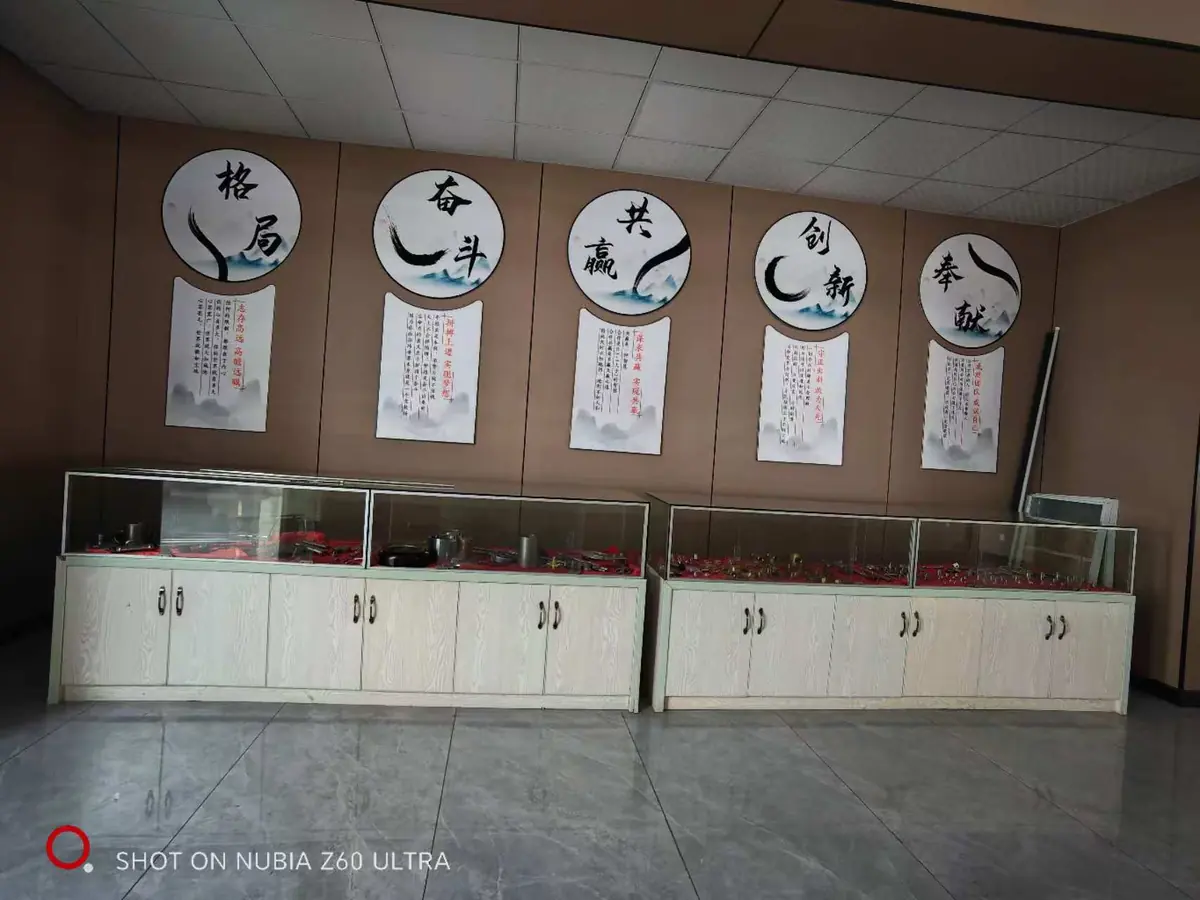
Inside the tool room
The dies that form these parts are designed and built metres away from the presses. That is the difference between a supplier who controls your tooling lead time and one who does not.
Side-by-side comparison
The table below uses the same five criteria as the methodology section: tooling ownership and lead time, forming capability stated as numbers, volume fit and minimum order, disclosure of subcontracted processes, and verifiable evidence. Where a field could not be verified from a public source at the time of writing, it is marked rather than estimated. Prices are not listed because deep drawn parts are quoted per drawing; any supplier publishing a price list for custom drawing work is quoting a guess.
| Criterion | Balford | Hudson Technologies | Ataco Steel | Amalco | Stueken |
|---|---|---|---|---|---|
| Based in | Zhuji, Zhejiang, China | United States (address not published on the pages reviewed) | Cedarburg, Wisconsin, USA | Mountainside, New Jersey, USA | Rinteln, Germany (plus Czech Republic, China, North America, India) |
| Founded | 2017 (manufacturing heritage since 2000) | 1940 | 1946 | 1910 | 1931 |
| Press capacity | 25–350 t, transfer press | 1–500 t across 130+ forming presses | Up to 1,700 t (hydraulic and mechanical) | Not published | 18–400 t (stamping); 180–800 kN (deep drawing) |
| Part size — diameter | Up to Ø250 mm | 3.1–305 mm (diaphragms 5.1–457 mm) | Not published | Not published | 0.4–75 mm |
| Maximum draw depth | Depth confirmed per drawing; published draw ratio — first draw ≈2.0 on DC04, 1.6–1.8 on 304, redraws 1.2–1.4 | Up to 305 mm in length | Up to 16 in (406 mm) | Up to 24 in (610 mm) via multiple re-draws | Up to 92 mm in height |
| Thinnest material / wall | 0.35 mm wall on aluminium (thinning draw) | 0.005 mm (thin gauge and diaphragms) | Not published | Not published | 0.03 mm deep drawn; 0.01 mm stamped |
| Tooling designed in-house | Yes | Yes — in-house custom tooling, 15,000+ standard tooling products | Not stated on the pages reviewed | Yes — tool and die design on site | Not stated on the pages reviewed |
| Tooling lead time | 15–30 days single-operation; 30–60 days progressive/transfer | Not published | Not published | Not published | Not published |
| Minimum order | No fixed minimum | Not published (describes both high-volume and sub-50,000-piece work) | Not published | Not published | Not published |
| Quality system | ISO 9001:2015 certified; IATF 16949-aligned (not certified); PPAP Level 3 | ISO 9001; AS9100D certified; ITAR registered; ISO 14001 and ISO 13485 compliance | ISO 9001:2015 registered; APQP process | ITAR compliant; works to MIL specifications | IATF at all plants; ISO 13485 (medical); DIN ISO 9001 since 1994; DIN ISO 14001 since 2009 |
| Tolerance on machined features | 0.001 mm on selected critical machined features, drawing-confirmed | Not published | Not published | Not published | Not published |
| Materials of note | DC01 and DC04 mild steel, 304 and 316L stainless, copper, brass, 5052 and 6061 aluminium | Monel, Inconel, Kovar, Hastelloy, titanium | Steel | Aluminium, stainless steel, steel, titanium | Steel, brass, titanium |
| Industries served | Automotive, sensor, solenoid, HVAC, industrial | Aerospace, aviation, automotive, battery, electronics | Commercial food equipment, material handling, fabrication | Government, aerospace, military | Medical technology, household appliances, building technology, automotive |
| Subcontracted processes disclosed | Yes — heat treatment, slow-wire EDM, plating, coating, machining pre-forms | Not stated on the pages reviewed; heat treating and cleaning are listed as in-house | Not stated on the pages reviewed | Yes — states all operations run on site with no offshore facilities | Not stated on the pages reviewed; electroplating is described as in-house |
| Languages supported | 15 languages | English | English | English | German, English |
| Review-platform rating (G2 / Capterra) | Not applicable — parts suppliers are not reviewed on software platforms | Not applicable | Not applicable | Not applicable | Not applicable |
Which deep drawn parts supplier fits your use case
Match your situation to the left-hand column. The right-hand column tells you where to start, which is more useful than a ranking when your constraint is origin, volume or timeline rather than quality.
| Your situation | Start with | Why | Watch out for |
|---|---|---|---|
| Custom solenoid valve or sensor housing, 3,000–200,000 pcs/yr | Balford | In-house tooling, fine blanking plus thinning draw, Ø250 mm draw capacity, no fixed minimum, quotes usually within 24 hours | Allow for shipping and customs in your programme timeline |
| US domestic origin required by policy or customer contract | Hudson Technologies / Ataco Steel | US manufacturing location, domestic audits and plant visits | Higher unit cost and typically longer tooling lead time |
| Large aluminium or stainless enclosure, or a multi-draw part other shops declined to quote | Amalco | Published draw depth up to 24 in through multiple re-draws, with every operation on site in New Jersey | Press capacity is not published — ask for the forming envelope before scoping a project |
| Large deep drawn steel shells, welded or laser-cut into an assembly | Ataco Steel | Presses up to 1,700 t, draw depths up to 16 in, plus welding and 5-axis laser cutting in the same plant | Steel only, and neither diameter nor tooling lead time is published |
| Millions of small parts per year, tolerance-critical | Stueken | Purpose-built for very high volume precision deep drawing | Low-volume and mid-programme drawing changes are a poor fit |
| Diameter above 250 mm, or a wall that needs ironing to replace turning | Hudson Technologies (diameter) / Balford (wall thinning) | Hudson publishes 3.1–305 mm; Balford's focus process is thinning and ironing deep drawing | Ataco and Amalco publish no diameter, and Stueken stops at 75 mm — so you must ask |
| Exotic alloy (nickel, titanium) in a drawn housing | Hudson Technologies | Published material breadth on difficult-to-form metals | Draw ratios and lubricants differ from steel — demand a trial result |
What results look like
Rankings and certifications are claims. These are the parts. Each case below is a component we actually produced, with the drawing parameters that made it difficult.
Deep drawn magnetic isolation sleeve
Deep drawn from stainless steel disc, 0.1–0.3 mm thick, for a solenoid valve assembly. The challenge is holding wall uniformity at that gauge without wrinkling at the flange — the failure mode that ends most thin-gauge sleeve programmes at first article.
Stainless steel housing for an ABS wheel speed sensor
316L stainless, deep drawn. Automotive sensor housings have to hold concentricity between the bore and the outer wall, because the sensor gap is set by that relationship. Material 316L is harder to form than 304, which moves the draw ratio and the number of stations.
Mild steel solenoid valve deep drawn housing
Deep drawn mild steel housing for a solenoid valve body, produced with tooling designed and built in our own tool room. This is the component family where ironing replaces bar-stock turning and takes material and cycle time out of the unit cost.
We do not publish defect rates or delivery-performance percentages, because a number we cannot let a customer audit is worth less than the inspection record we can hand over. Ask for the first-article report on any of the cases above and we will send it.
Frequently asked questions
How do I choose a deep drawn metal parts manufacturer?
Start with four numbers: the largest diameter the supplier can draw, the press tonnage available, whether tooling is designed in-house, and the smallest production volume they will accept. Then ask which processes are subcontracted — that is where lead time and quality risk hide.
What does it cost to tool a deep drawn part?
A simple single-station drawn cup typically starts in the low thousands of US dollars; multi-station progressive or transfer tooling with in-die operations runs into five figures. Ask for a tooling amortisation schedule per part rather than a lump sum, so you can see when the die pays for itself.
Is a Chinese deep drawn parts supplier reliable for European or North American OEMs?
Reliability follows process control and disclosure, not geography. Ask for the ISO certificate scope, the first-article and in-process inspection records, the PPAP level, and an explicit list of subcontracted operations — then compare that against the answers you get from a domestic supplier.
How long does it take to get deep drawn samples?
Tooling lead time is 15–30 calendar days for a single-operation die and 30–60 days for progressive or transfer tooling, counted from confirmed drawings. Quotations are usually returned within 24 hours, and DFM feedback is issued after the engineering review rather than on a fixed-hour promise.
What is the difference between deep drawing and progressive die stamping?
Deep drawing pulls a flat blank into a hollow shell whose depth equals or exceeds its diameter; progressive die stamping performs a sequence of cutting, bending and forming operations in one die. Many housings need both, which is why suppliers are usually compared on the two capabilities together.
Can a deep drawn part replace a machined part?
Often yes. Ironing — controlled wall thinning during the draw — produces a seamless shell thin and accurate enough to replace bar-stock turning in many housing applications. The saving comes from material and cycle time, not from the tooling.
What volume is deep drawing economical at?
Roughly 5,000 pieces and up, because the die is the fixed cost. Below that a supplier with no fixed minimum order can still run the part, but the per-piece price carries the tooling.
Which materials can be deep drawn?
Stainless steel, low-carbon steel, aluminium, brass and copper are routine; nickel alloys and titanium are possible with different draw ratios and lubricants. Ask the supplier to state the draw ratio they will use for your specific material and gauge.
Get a free DFM review from Balford
Send one drawing. We will tell you whether it draws, how many stations it needs, and where it is likely to fail at first article. You get a tooling estimate and a lead-time window, not a sales call. There is no cost and no obligation to order. If your part belongs with a domestic supplier or a high-volume specialist, we will say so — you have just read a page where we list the competitors who beat us on those two things. Book a 15-minute engineering review and bring the drawing you are finding hard to quote.
Send your drawing — free DFM review
Still deciding?
Send two drawings instead of one and we will quote both. The second quote is where you find out whether a supplier is estimating or engineering.
Start your shortlist with a free review