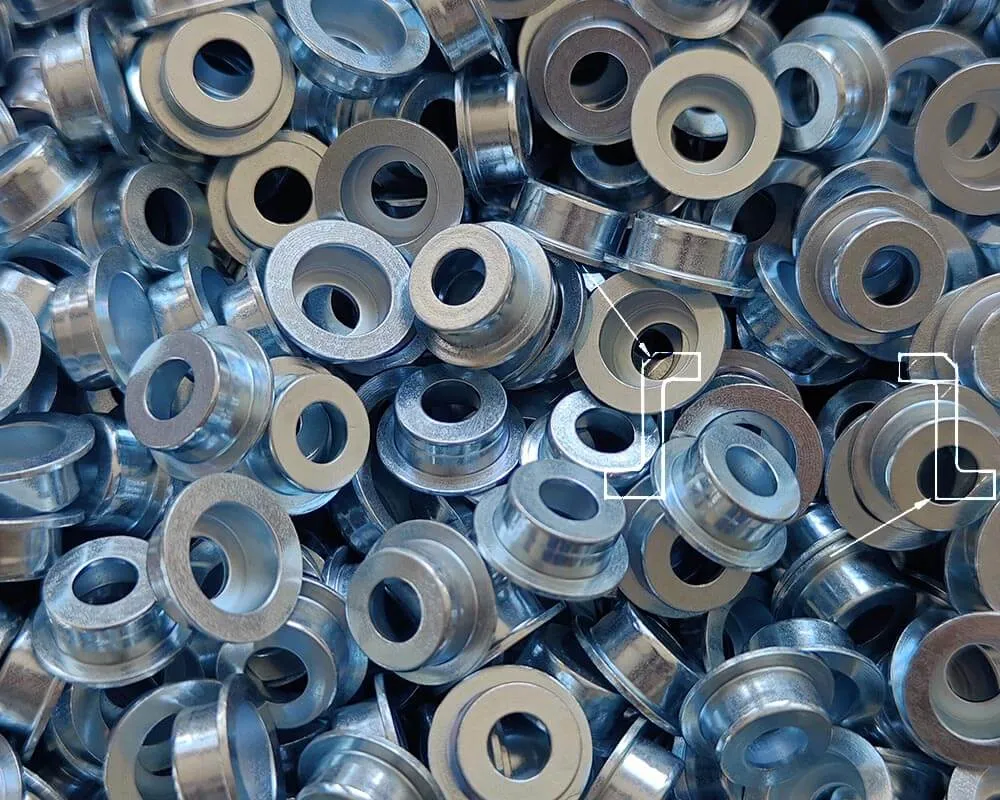
Extrusion is a manufacturing process where raw material is forced through a die to produce a specific shape with a consistent cross-sectional profile.
What is extrusion with sharp corners
In deep drawn stamping, extrusion with sharp corners is a technique we use to create crisp edges and corners on metal parts. The process pushes sheet metal through a die, inducing plastic deformation under stress to form the required geometry. We typically apply this method when producing components that need sharp edges or fine detail—think boxes, enclosures, or housings.
When we run extrusion with sharp corners, material flow and die design are the two things that matter most. Choosing the right material grade and setting proper process parameters prevents cracking or distortion at the corner. Die geometry also has to account for the sharp-corner shape and the direction of material flow, so we can hold tolerances and keep part quality consistent.
Our Expertise
Extrusion with sharp corners is a key capability in our shop—it lets us produce parts with complex geometries and fine features that would be tough to hit any other way. With careful die design and process control, we get efficient production runs and repeatable quality, delivering custom components for a range of industrial applications.
We use an extrusion forming setup where we push the outer R fillet of the part and bend the flange's R fillet to create a right angle. This compresses larger fillets down to smaller radii or sharp angles, meeting the print's requirements. Standard stamping dies can only produce R fillets larger than the material thickness, and they don't have the built-in safeguards we need for this kind of work.
In the past, when soft-drawn parts were bent at an R angle, we had to start with a larger radius because of the deep draw, then gradually shrink it down to spec. The problem was that during that shrinking step, material would flow outward as the upper and lower dies squeezed simultaneously, so the R angle never closed in as intended.
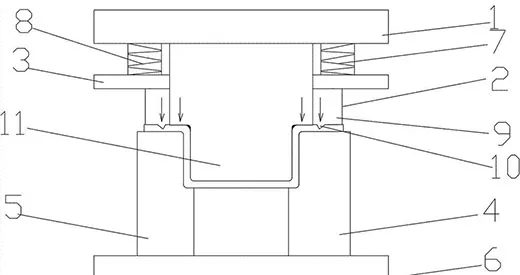
Small R angles serve specific functions—when the outer R is tight, it lets the part seat more snugly against a mating component. Smaller bend radii also work better with sealing rings, preventing air or liquid leaks. These applications push the limits of stamping and deep drawing, and they're typically only achievable through machining, which drives up cost and cuts throughput.
Using our proprietary process, Balford raises and bends parts to achieve tighter R angles, giving you a flatter, more parallel plane than conventional methods.