When you’re specifying titanium for a stamping operation, the choice between TA1 (Grade 1) and TA2 (Grade 2) isn’t just a matter of picking the cheaper option or the one that’s in stock. These two commercially pure titanium grades look similar on paper, but they behave very differently once you put them through a press. Understanding those differences—and more importantly, what they mean for your tooling, your scrap rate, and your final part quality—is the difference between a profitable production run and a costly headache.

It All Starts with Chemistry

The fundamental difference between TA1 and TA2 comes down to one thing: oxygen content. TA1 has a maximum oxygen content of 0.18%, while TA2 allows up to 0.25%. That might not sound like much, but in titanium metallurgy, oxygen is what’s called an “interstitial strengthener.” It squeezes into the crystal lattice and makes the metal harder and stronger. The trade-off? You lose ductility.

TA2 also has slightly more iron (0.30% max versus 0.20% for TA1) and a bit more nitrogen. These aren’t contaminants in the way most people think—they’re deliberate levers that manufacturers pull to tune the material’s properties. TA1 is about 99.5% pure titanium, while TA2 comes in around 99.2%.

Mechanical Properties: The Numbers That Matter

Here’s where the rubber meets the road. TA1 has a minimum tensile strength of 240 MPa and a yield strength around 170 MPa. TA2 bumps those numbers up to 345 MPa tensile and 275 MPa yield. That’s roughly a 40% increase in strength.

But strength is only half the story. Elongation—the material’s ability to stretch before it breaks—is the real differentiator for stamping. TA1 delivers 24% minimum elongation, while TA2 gives you 20%. Four percentage points doesn’t sound dramatic, but in deep drawing operations, that’s the difference between a part that forms cleanly and one that tears at the corner radius.

Formability: Where the Grades Diverge

TA1 is the softest and most formable commercially pure titanium grade available. If your operation involves deep drawing, complex bends, or thin-wall forming, TA1 is your material. It accepts tighter bend radii—roughly 1.5 times the material thickness at room temperature—and can withstand significant stretching without cracking.

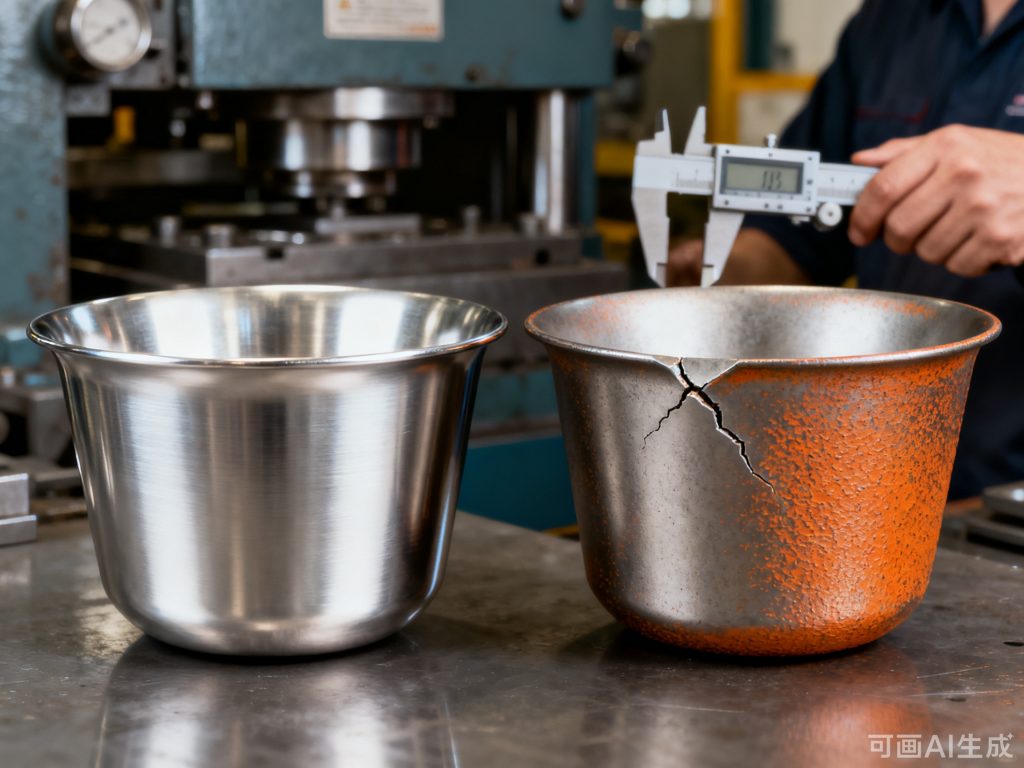
TA2, by contrast, is more rigid and less forgiving. It’s still formable—it’s the most widely used commercially pure grade for a reason—but it demands more generous radii and more careful process control. Push TA2 into a deep-draw application and you’re likely to see “orange peel” surface defects or outright cracking. For complex geometries, TA2 is simply not recommended.

Springback: The Hidden Cost

This is where a lot of shops get burned. Titanium has a lower elastic modulus than steel (about 114 GPa versus 200 GPa), which means it springs back more after forming. General rule of thumb: design for 15–20% springback when working with titanium-.

The catch is that TA1 and TA2 spring back differently. TA1, being softer, has less springback than TA2. That means tighter dimensional tolerances straight off the press, less time spent on die tryout, and fewer headaches during assembly. TA2’s higher strength translates to more elastic recovery, which means you’ll need to overbend more aggressively or incorporate secondary operations to hit your final dimensions-.

Welding: Not All Titanium Welds the Same

If your stamped parts need to be welded, this matters more than you might think. TA1’s lower oxygen content produces a cleaner weld pool with fewer porosity issues and lower crack risk. The weld zone stays more ductile and less prone to brittle failure.

TA2 welding requires tighter process control. You need perfect shielding gas coverage on both sides of the weld, tighter fit-up tolerances, and slower travel speeds. A weld that comes out slightly oxidized on TA2—blue or gray instead of silver—is a reject. On TA1, you have a bit more margin for error. If your shop is new to titanium welding or you’re doing field repairs where shielding is difficult, TA1 is the safer bet.

Cost and Availability

Here’s the kicker: TA1 usually costs $2–5 more per kilogram than TA2. The refining process to achieve that lower oxygen content adds cost. But focusing on material cost alone is a trap. If you’re forming complex parts, the higher scrap rate you’ll see with TA2 can easily eat up any material savings. One cracked part in a run of 100 wipes out the per-kilogram price difference many times over.

TA2 is the workhorse—the most common and readily available commercially pure grade. TA1 is more specialized, typically stocked for applications that demand maximum formability.

When to Choose Which

Reach for TA1 when:

Go with TA2 when:

Neither grade is “better” than the other. They’re different tools for different jobs. The key is knowing what you’re actually asking the material to do, and matching the grade to the application—not the other way around.

The Difference Between TA1 and TA2 Titanium for Stamping

When you’re specifying titanium for a stamping operation, the choice between TA1 (Grade 1) and TA2 (Grade 2) isn’t just a matter of picking the cheaper option or the one that’s in stock. These two commercially pure titanium grades look similar on paper, but they behave very differently once you put them through a press. Understanding those differences—and more importantly, what they mean for your tooling, your scrap rate, and your final part quality—is the difference between a profitable production run and a costly headache.

It All Starts with Chemistry

The fundamental difference between TA1 and TA2 comes down to one thing: oxygen content. TA1 has a maximum oxygen content of 0.18%, while TA2 allows up to 0.25%. That might not sound like much, but in titanium metallurgy, oxygen is what’s called an “interstitial strengthener.” It squeezes into the crystal lattice and makes the metal harder and stronger. The trade-off? You lose ductility.

TA2 also has slightly more iron (0.30% max versus 0.20% for TA1) and a bit more nitrogen. These aren’t contaminants in the way most people think—they’re deliberate levers that manufacturers pull to tune the material’s properties. TA1 is about 99.5% pure titanium, while TA2 comes in around 99.2%.

Mechanical Properties: The Numbers That Matter

Here’s where the rubber meets the road. TA1 has a minimum tensile strength of 240 MPa and a yield strength around 170 MPa. TA2 bumps those numbers up to 345 MPa tensile and 275 MPa yield. That’s roughly a 40% increase in strength.

But strength is only half the story. Elongation—the material’s ability to stretch before it breaks—is the real differentiator for stamping. TA1 delivers 24% minimum elongation, while TA2 gives you 20%. Four percentage points doesn’t sound dramatic, but in deep drawing operations, that’s the difference between a part that forms cleanly and one that tears at the corner radius.

Formability: Where the Grades Diverge

TA1 is the softest and most formable commercially pure titanium grade available. If your operation involves deep drawing, complex bends, or thin-wall forming, TA1 is your material. It accepts tighter bend radii—roughly 1.5 times the material thickness at room temperature—and can withstand significant stretching without cracking.

TA2, by contrast, is more rigid and less forgiving. It’s still formable—it’s the most widely used commercially pure grade for a reason—but it demands more generous radii and more careful process control. Push TA2 into a deep-draw application and you’re likely to see “orange peel” surface defects or outright cracking. For complex geometries, TA2 is simply not recommended.

Springback: The Hidden Cost

This is where a lot of shops get burned. Titanium has a lower elastic modulus than steel (about 114 GPa versus 200 GPa), which means it springs back more after forming-. General rule of thumb: design for 15–20% springback when working with titanium-.

The catch is that TA1 and TA2 spring back differently. TA1, being softer, has less springback than TA2. That means tighter dimensional tolerances straight off the press, less time spent on die tryout, and fewer headaches during assembly. TA2’s higher strength translates to more elastic recovery, which means you’ll need to overbend more aggressively or incorporate secondary operations to hit your final dimensions-.

Welding: Not All Titanium Welds the Same

If your stamped parts need to be welded, this matters more than you might think. TA1’s lower oxygen content produces a cleaner weld pool with fewer porosity issues and lower crack risk. The weld zone stays more ductile and less prone to brittle failure.

TA2 welding requires tighter process control. You need perfect shielding gas coverage on both sides of the weld, tighter fit-up tolerances, and slower travel speeds. A weld that comes out slightly oxidized on TA2—blue or gray instead of silver—is a reject. On TA1, you have a bit more margin for error. If your shop is new to titanium welding or you’re doing field repairs where shielding is difficult, TA1 is the safer bet.

Cost and Availability

Here’s the kicker: TA1 usually costs $2–5 more per kilogram than TA2. The refining process to achieve that lower oxygen content adds cost. But focusing on material cost alone is a trap. If you’re forming complex parts, the higher scrap rate you’ll see with TA2 can easily eat up any material savings. One cracked part in a run of 100 wipes out the per-kilogram price difference many times over.

TA2 is the workhorse—the most common and readily available commercially pure grade-. TA1 is more specialized, typically stocked for applications that demand maximum formability.

When to Choose Which

Reach for TA1 when:

Go with TA2 when:

Neither grade is “better” than the other. They’re different tools for different jobs. The key is knowing what you’re actually asking the material to do, and matching the grade to the application—not the other way around.

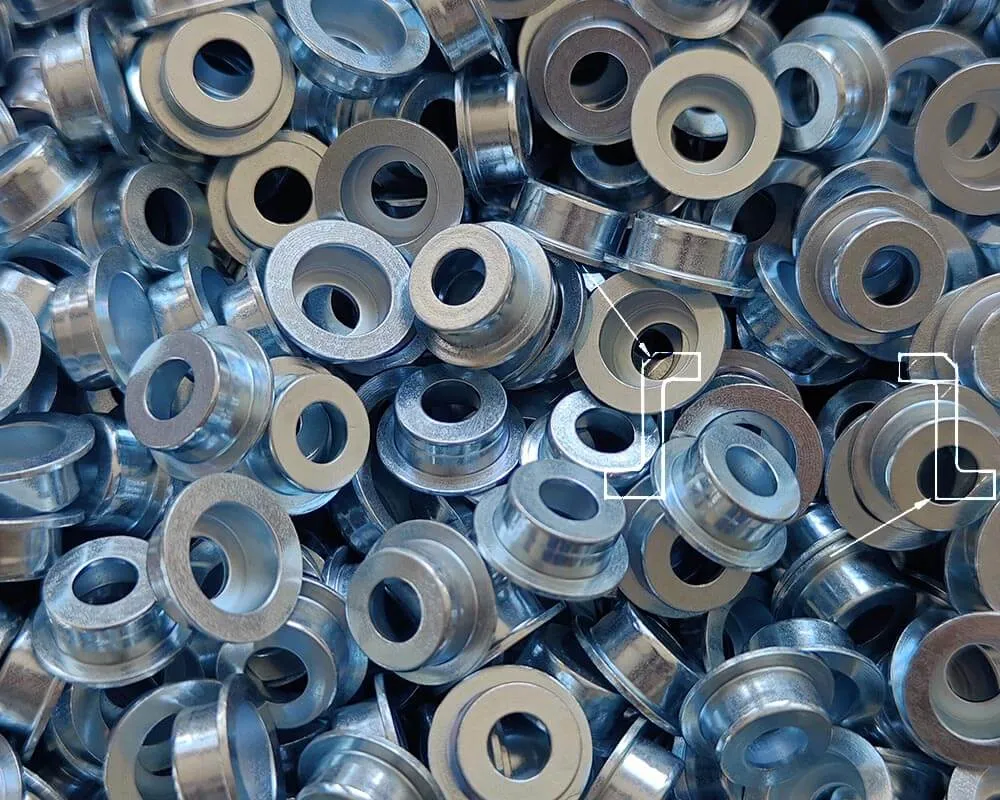
Reverse extrusion and restriking reduce corner radii for sealing, fit and flatness requirements.

The challenge of an ultra-deep draw

Deep drawing becomes progressively more difficult as the length-to-diameter ratio increases. Material must flow through many stages without tearing, excessive thinning, wrinkling or loss of straightness.

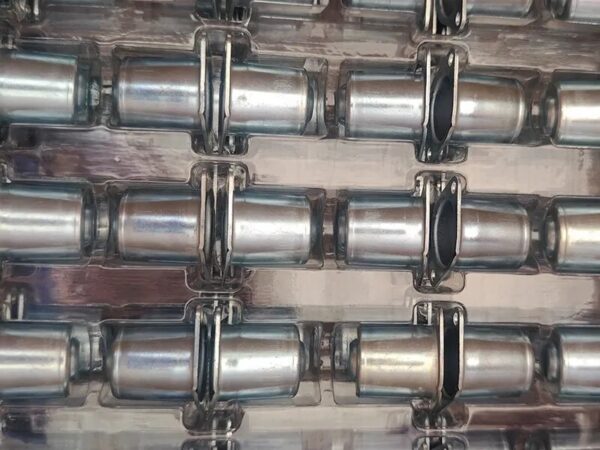
Balford develops multi-stage sequences for long, narrow components, including examples produced from a round blank through fourteen drawing operations. For suitable component sizes and materials, ratios around 20:1 and development work beyond that range can be evaluated.

Ultra-Deep Drawing for Long, Narrow Parts example 1

Material behavior

Hardness, anisotropy, elongation and work hardening vary by material and heat. These properties determine the allowable reduction at each draw and whether intermediate stress relief is required.

In addition to conventional steels, development can include high-strength sheet, stainless steel, aluminum, copper and selected nickel alloys when geometry and material condition are compatible.

Preventing distortion and fracture

High draw loads can cause warping or cracks after forming. Engineers control blank size, stage reduction, punch and die radii, blank-holder force, lubrication and alignment to keep the wall stable.

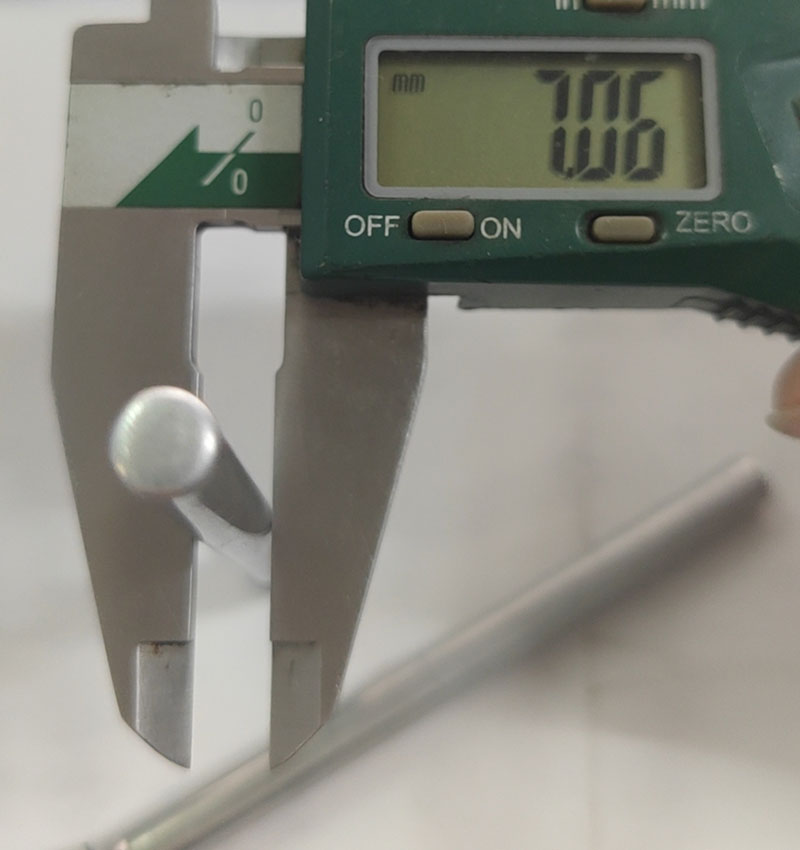
Measurement between development stages reveals where strain is accumulating, allowing the sequence to be adjusted before production release.

High-strength and lightweight applications

Electric-vehicle and safety applications increasingly require strong, light components. Balford has developed deep-drawn parts in high-strength materials, including difficult geometries in sheet around 980 MPa class and approximately 2 mm thick where the final design permits.

Small holes can also be integrated into some high-strength drawn parts. Piercing direction and burr orientation are planned around assembly and safety requirements.

Tooling development

The forming sequence is calculated from the required finished part, not from a generic draw schedule. In-house tool design, manufacture and tryout support faster feedback between measurement and die adjustment.

Start with the functional requirement

Provide the target material, wall thickness, length, diameter, tolerance and annual quantity. The team can then determine the number of drawing stages and whether a process conversion could replace machining or welded construction.

Material selection is part of the process design

Deep-drawn parts can be produced from far more than low-carbon steel. Balford evaluates the material together with the part geometry, drawing depth, wall requirement, surface specification and operating environment.

Each alloy behaves differently under tensile and compressive strain. Draw ratios, radii, lubrication, blank holding, tool materials and intermediate heat treatment must be adapted accordingly.

Materials we evaluate for deep drawing

What changes from one alloy to another?

Nickel alloys and titanium may demand high forming loads and carefully selected lubrication. Copper alloys provide useful conductivity but require surface protection. Controlled-expansion and magnetic alloys are selected for very specific functional behavior and must be formed without compromising those properties.

A material certificate alone is not enough. Actual strip condition, temper, thickness variation and grain direction should be considered during trials.

Developing a reliable special-alloy part

Send the drawing, target alloy, expected volume and functional requirements at the start of the review. Balford can assess manufacturability, propose a forming sequence and identify where prototype trials or material samples are needed before production tooling is finalized.